Leonardo da Vinci's DNA may be embedded in his art — and scientists think they've managed to extract some
In a first, scientists have extracted DNA from a Renaissance-era drawing attributed to Leonardo da Vinci, but they can't be sure that the genetic material belongs to the Italian polymath.
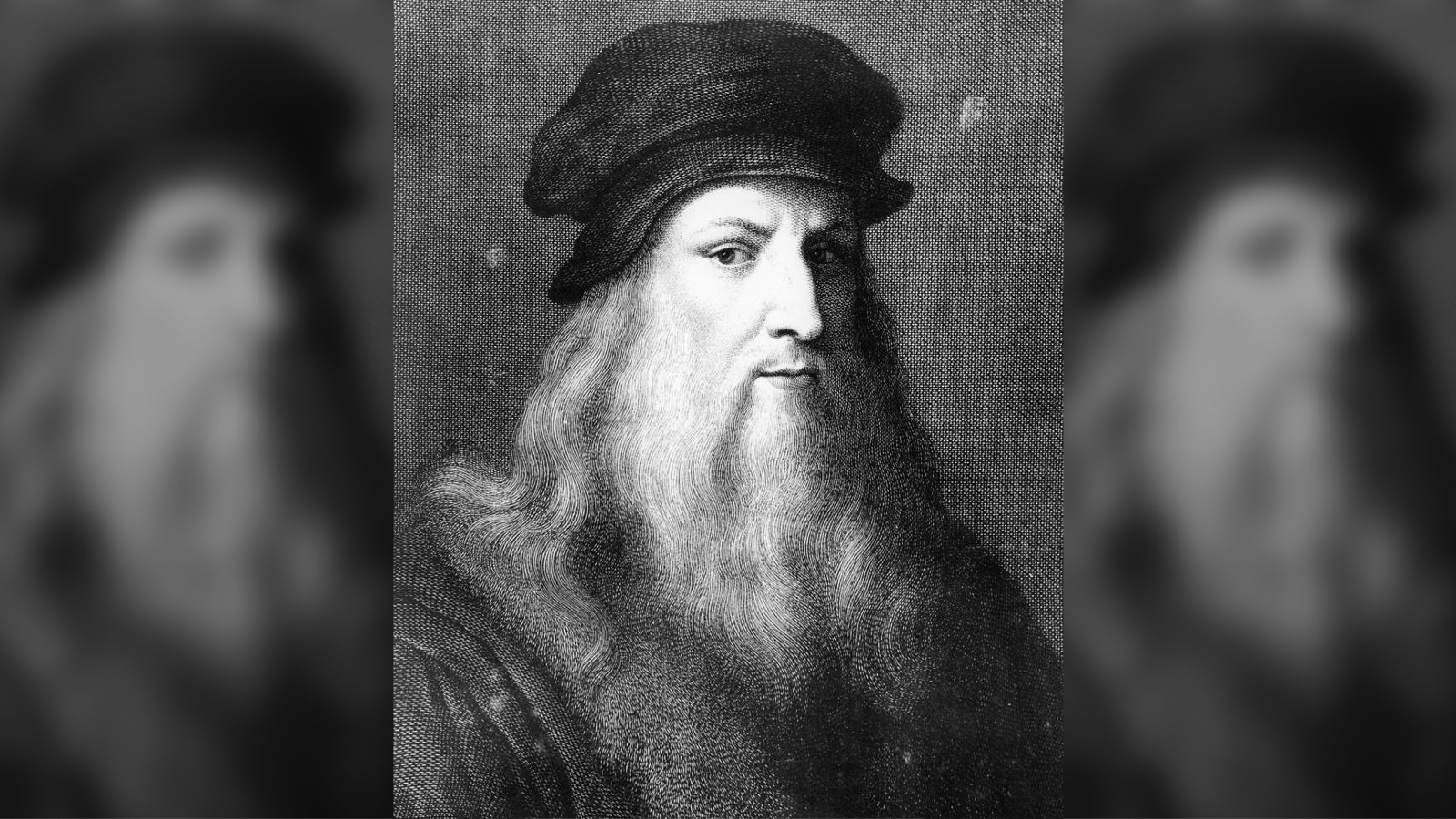
Scientists are looking for the DNA of Leonardo da Vinci (1452-1519). (Image credit: Public Domain via Wikimedia Commons)
Scientists say they may have extracted Leonardo da Vinci's DNA from a Renaissance-era drawing for the very first time.
The trace DNA, embedded in a red chalk sketch called the "Holy Child" that some claim was made by da Vinci, shows similarities with genetic material recovered from a letter penned in the 1400s by Frosino di ser Giovanni da Vinci, a cousin of Leonardo da Vinci's grandfather, Antonio da Vinci.
Because Y chromosome sequences are passed down almost unchanged from father to son, the recovery of these sequences is "a great starting point" for researchers who want to piece together Leonardo da Vinci's DNA, Charlie Lee, a geneticist who leads the Jackson Laboratory for Genomic Medicine in Connecticut who was not involved in the study, told Science.
However, some experts don't think Leonardo da Vinci drew "Holy Child" himself, believing instead that one of his students made the sketch.
As a result, "it's a flip of a coin" whether the DNA from the drawing is da Vinci's, said Lee. The genetic material could belong to a student or to any number of curators with Tuscan roots who handled the drawing over the years, Science reported.
Researchers want to reconstruct da Vinci's DNA to help authenticate some of his art. Some experts also suggest the Italian polymath's genetic material could reveal biological reasons for his exceptional artistic and other abilities, such as better-than-normal vision.
Get the world’s most fascinating discoveries delivered straight to your inbox.
However, there are many hurdles in the way. For one, da Vinci's tomb in France was partially destroyed during the French Revolution, and his remains lost, or at least mixed with others, during a move to a new supposed burial site at the Chapel of Saint-Hubert in Ambroise.
Yet although this grave may contain bones rich in the Renaissance polymath’s DNA, researchers are not granted access to sequence genetic material from the tomb until a reliable comparison sample is found elsewhere.
This has left scientists with few options but to try to extract DNA from da Vinci's artworks. This poses challenges as some pieces are off limits and others — — have no traces of human DNA. "Holy Child" is the only drawing attributed to Leonardo da Vinci that has yielded human DNA to date; however, its authorship is debated.

