LG Display reveals world's first 4K 240Hz OLED gaming monitor with a true RGB "striped" subpixel layout — New panel succeeds WOLED with multi-stack Tandem OLED
OLED screens, while the pinnacle of display tech today, still aren't perfect, and one area where OLED monitors in specific have struggled is text clarity. Either due to the unorthodox subpixel layout of these panels or the addition of a white subpixel, fringing around text has been a persistent issue, but LG has seemingly solved both at one go.
(Image credit: LG Display)
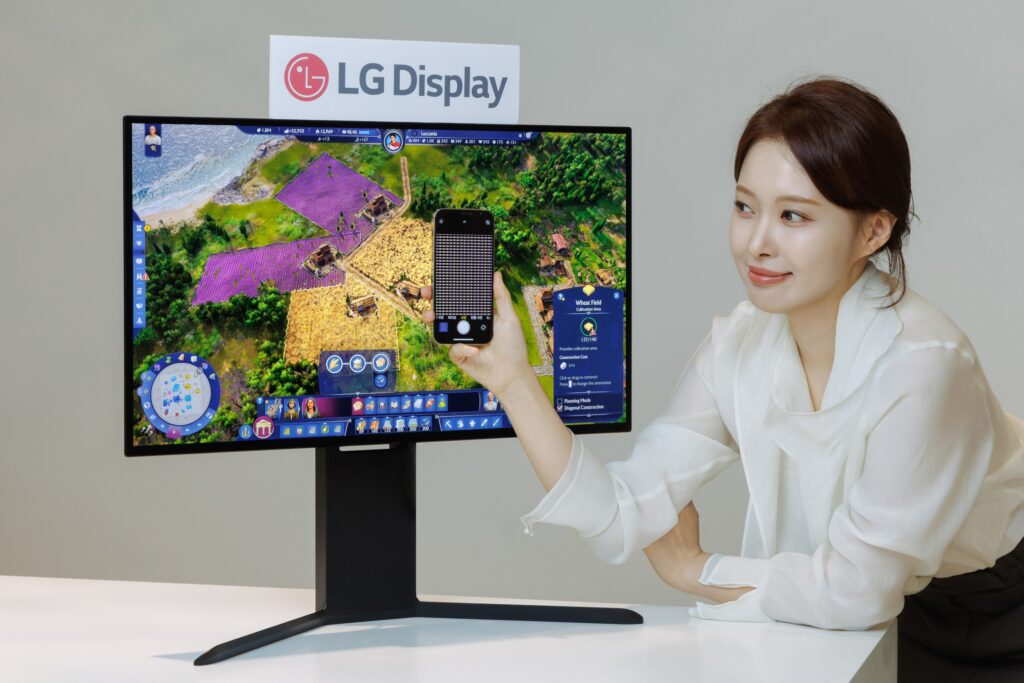
Ahead of CES 2026, LG Display has just announced a seemingly revolutionary development in the OLED world, at least as far as its own panels are concerned. The company has achieved a striped, true RGB subpixel layout in one of its upcoming monitors — in particular, a 27-inch 4K display with a 240 Hz native refresh rate, doubled by dual-mode capabilities.
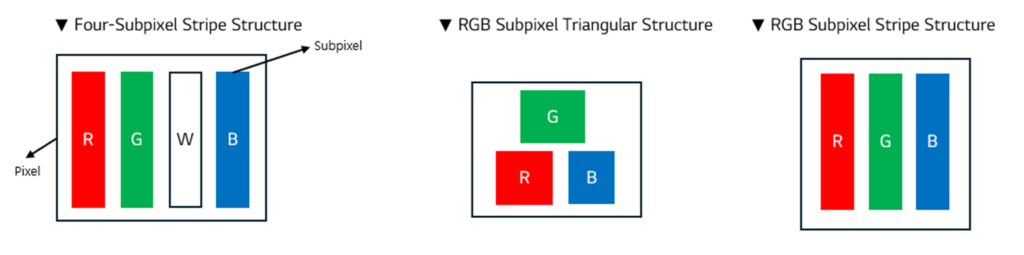
To understand why this is such a big deal, we first have to look at how subpixel structures inform the image quality that you see. Every display has pixels, and each of those pixels are made up of tiny red, green, and blue (RGB) subpixels. However, LG's panels also add a fourth white subpixel in the equation to boost brightness.
(Image credit: LG Display)
Even though the inherent luminance of the image is boosted, the color volume is hurt as a byproduct of what white subpixel essentially bleeding over the other colors. This is why Samsung's QD-OLED panels are touted for their superior color performance, since they don't have a white subpixel and instead emit blue light that passes through quantum dots to filter colors.
Now, getting rid of that white subpixel and reverting back to a true RGB structure does hurt brightness outright, at least in the first-gen implementation, but it could be a worthwhile tradeoff. That's why LG is quoting just 1,000 nits of peak brightness, with 250 nits full-screen APL, noticeably decreased from the 1,500 nits max their latest Tandem OLED panels can achieve.
That's one part of the equation; the other is that striped layout, which is just as important. Instead of putting the subpixels in a triangular or rectangular structure — or really any other pattern — LG places the red, green and blue subpixels right next to each other in a straight line, forming a "stripe." But, again, they've always had that white subpixel in the middle, creating a RGWB pattern instead.
What’s up with the variety of OLED sub-pixel arrangements we see today? What benefits does each provide? How can an iPhone reach 2,000 nits of brightness at 460 PPI, but OLED TVs and monitors struggle with 1,000 nits at much lower pixel densities? I have so many questions the more OLEDs I own. from r/OLED_Gaming