Louis Gerstner, the man who saved IBM, dies at 83 — industry mourns the passing of transformative CEO
Louis Gerstner, who took over IBM in 1993 as it stood on the brink of breakup and bankruptcy, died at 83, leaving behind a legacy defined by preserving IBM as an integrated company and changing its direction nearly entirely.
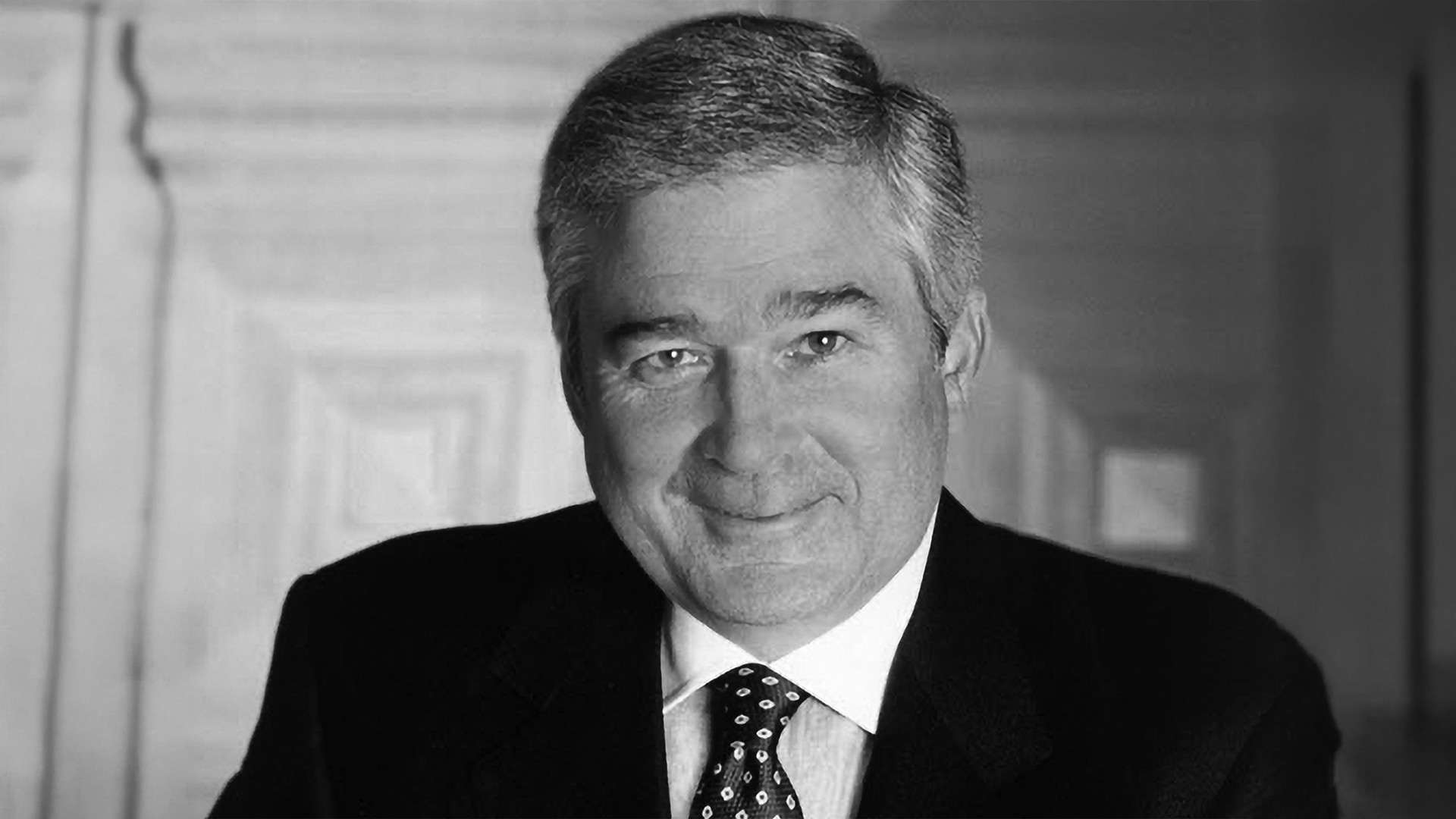
(Image credit: IBM)
Louis Gerstner, the executive who engineered one of the most important corporate turnarounds in the history of the high-technology sector, died at the age of 83 on Saturday. Gerstner took control over IBM in 1993 when it was at the brink of breakup and bankruptcy, rebuilt the company into a services-led enterprise, and restored its strategic relevance by 2002. Multiple prominent high-tech leaders worked at IBM under Gertner's leadership, spreading his skills across the industry nowadays.
IBM's first CEO not from IBM
Louis Gerstner was the first IBM chief executive — and so far, the only — to be hired from outside of the company. When he took the helm in April 1993, IBM was bleeding money, and the previous CEO planned to split the company into multiple semi-independent units to make them more flexible to compete against immediate rivals without being tied to IBM's corporate requirements. Instead of dismantling the company, he did the opposite. He preserved IBM as a single integrated organization with a strong R&D division while radically changing how it operated.
The most important technical shift was a decisive move away from hardware-centric economics toward business services, systems integration, and enterprise software. Under his direction, IBM abandoned its long-standing practice of selling IBM PCs with the IBM's mainframe operating systems, and proprietary applications that its customers were slow to adopt in the 1980s, but which were quickly losing any relevance in the 1990s.
Moreover, product lines that failed to gain market traction were eliminated (e.g., IBM abandoned Token Ring LAN products), so only the fittest survived. After dropping OS/2, IBM became a neutral integrator that supported heterogeneous hardware and software environments and did not force customers into proprietary ecosystems. Furthermore, PCs ceased to be strategically important products, which set the stage for selling the PC unit to Lenovo in 2004. But while hardware was no longer the focus, IBM changed its approach to processes and supply chain discipline to make this business more flexible and stable.
As IBM was kept together, the company continued to offer complete IT solutions for various customers as it had unique pieces that others did not. At the core of IBM's complete solutions were its database software, transaction processing systems, and management tools that sat between hardware and applications, something that still encouraged customers to buy IBM hardware, but this time without unpopular products like OS/2. Furthermore, IBM also put emphasis on the Internet, enterprise networking, servers, and services; forerunners of cloud services in the 1990s.
