Melbourne arts community mourns Dr Ashley Crawford
The much-loved critic had been at the forefront of the burgeoning Melbourne cultural scene since the 1980s.
By Ray Edgar
January 1, 2026 — 5.30am
Melbourne editor, publisher, cultural critic and occasional curator Dr Ashley Crawford has died. Aged 64, Crawford died at his home just before Christmas.
From publishing indie magazines in a South Yarra bedroom to offices in New York and Amsterdam, Crawford had the career trajectory he dreamed of. Getting there took a dozen years and several increasingly lavish magazines. But from Virgin Press in 1980, to Tension and Xpress, to 21•C and World Art, each step brought him closer to fulfilling his internationalist outlook. Whether it was art, music, film or publishing itself, he fervently believed Australia was as vibrant and exciting as anywhere else.
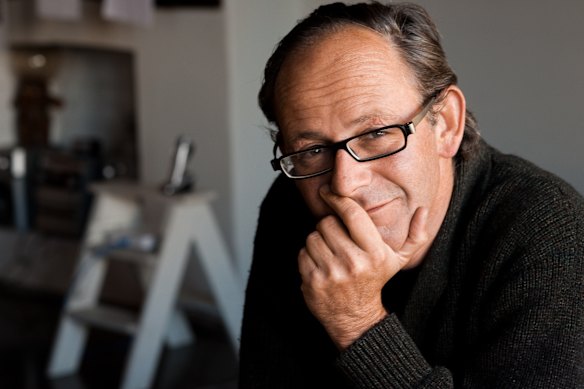
Arts writer, publisher, critic, curator: Dr Ashley Crawford.Credit: Sonia Payes
Influential voices agreed. Soon after _World Art’_s New York launch, Wired magazine declared: “While most art mags cover the dead and the nearly dead of the art establishment, World Art plays with high-voltage wires in the rain … Young and experimental, this is the art forum to be in.” Neuromancer author William Gibson wrote “21•C is, flat out, the best looking and most determinedly eclectic pop-futurological publication in the world”.
Crawford was a gifted editor and natural writer but, by his own admission, no businessman. He left that to others. Like Michael Gudinski he was always a fan, with a voracious curiosity. Ignited by the cross-pollination and DIY attitudes of Punk and New Wave, Crawford left his cadetship at the Melbourne Herald to start his own magazines and record the burgeoning Melbourne cultural scene of the ’80s and ’90s.
“[Crawford] understood art as something that was utterly connected to popular culture, cinema, fashion, comic books, fandom,” says art historian Professor Chris McAuliffe, who wrote for the magazines. “[His] significance is a late flowering of the avant-garde attitude. He understood art as a really energising dynamic fusion of art and ideas and new media, new technologies and new tools and new attitudes. He was absolutely of his time.”
Among the blossoming talents his teams’ publications featured were future artistic luminaries Mike Parr, Jenny Watson, Tony Clark, Howard Arkley and Tracey Moffatt. At the height of postmodern philosophising, Crawford championed accessibility and the voice of the artist rather than just the critic. He gave a fresh platform to fellow journalists, including Richard Guilliatt and Catharine Lumby, and helped launch critics such as Adrian Martin, Philip Brophy and Ted Colless. Academics wrote alongside journalists, musicians and novelists; Nick Cave, Gerald Murnane, Kathy Acker and Rowland Howard among them. Celebrated photographers Polly Borland and Martin Kantor elevated articles with their candid portraiture.

Crawford with the late experimental author and performance artist Kathy Acker.
“He published my edgiest essays of the era, exhorting me to floor the accelerator of radically interdisciplinary, intertextual thought right over the edge,” cultural critic Mark Dery wrote on Instagram. “That many, if not most, of the essays in my 1999 critique of millennial America, The Pyrotechnic Insanitarium, began as articles midwifed by Ash, is testimony to his fructifying enthusiasm and damn-the-landmines intellectual courage as an editor.”
Crawford was a smooth talker and an insatiable reader in thrall to the beauty of print publishing. He appreciated the power of award-winning design (by Terence Hogan, Christopher Waller and Andrew Trevillian) to add authority and seduce.
Visitors to the office were shocked and pleasantly surprised that reality bore no relationship to the sophisticated publishing image. It was more clubhouse than salon. Lunches were long – often a barbecued chop accompanied by beers and red wine. Laughter and tall stories were always served.
In one sense the magazines he edited echoed an American attitude, instilled with the romance of an underground press and a New Journalism spirit. When World Art launched in the US, its cover story on art and the mafia paid homage to National Lampoon’s infamous cover of a dog with a gun to its head and the headline: “If you don’t buy this magazine, we’ll kill this dog.” Mona Lisa replaced the mutt. In no way was this typical for an art magazine.
Loading
Crawford’s eclectic tastes cleaved toward the weird, the gothic, the extreme and the dark. As one of his gonzo heroes, Hunter S. Thompson, declared: “When the going gets weird, the weird turn pro.” Crawford turned it into a doctorate: Dark Gnosis: Religious Imaging in Millennialist America. “Not bad for someone who never went to university,” he said. Naturally, it was published (by Palgrave Macmillan) in 2018.
After World Art and 21•C folded, he wrote a number of artist monographs, edited Photofile and travelled extensively. Through his close relationship with artists he helped organise numerous charity exhibitions over the years and was a co-founder of the anti-establishment contemporary art fair Not Fair. The Not Fair organisers have just announced that it has been renamed Lust for Life to honour Crawford’s “larrikin intellect” and love of Iggy Pop.
In later life Crawford managed a number of health issues with stoicism. He died peacefully at home, days shy of his 65th birthday. He is survived by a sister, daughter and granddaughter.
Ray Edgar worked with Ashley Crawford from 1989 to 1998.
Most Viewed in Culture
Loading