Microsoft CEO on 2026: Will be messy but transformative; if industry gets it right
Microsoft CEO Satya Nadella foresees 2026 as a pivotal year for AI, urging the industry to define its purpose beyond impressive models. He emphasizes building practical, human-amplifying systems and addressing AI's significant resource demands. Nadella's pragmatic vision, driven by Microsoft's future, calls for a fundamental shift in how AI is developed and deployed for tangible societal impact.
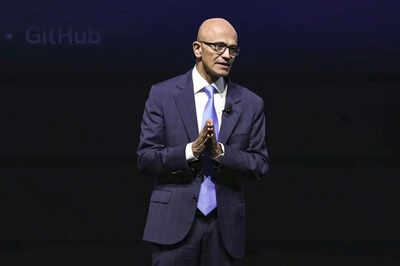
Microsoft CEO Satya Nadella foresees 2026 as a pivotal year for AI, urging the industry to define its purpose beyond impressive models. He emphasizes building practical, human-amplifying systems and addressing AI's significant resource demands. Nadella's pragmatic vision, driven by Microsoft's future, calls for a fundamental shift in how AI is developed and deployed for tangible societal impact.
Satya Nadella believes 2026 will mark a turning point for artificial intelligence—not because of flashier models, but because the industry must finally answer what it's actually building AI for.
The Microsoft CEO wrote a year-end message that cuts through the usual corporate optimism to lay out three uncomfortable priorities. He argues the industry has moved past the "spectacle" phase and now faces harder questions about substance. Companies need to decide whether AI amplifies human potential or replaces it, build systems that work outside labs, and make tough calls about where to deploy AI's massive resource demands.
It's a pragmatic take from someone who's betting Microsoft's future on getting this right."What matters is not the power of any given model, but how people choose to apply it to achieve their goals," Nadella wrote. He's calling for what amounts to a philosophical reset—treating AI as scaffolding that supports human capability rather than a substitute for it.
Microsoft’s Biggest Asia Investment Yet: What The $17.5 Billion India Push Really Means Explained
Capability has outrun usefulness, and Microsoft CEO says that's a problem
Nadella identified what he calls "model overhang." Essentially, AI can do more than anyone knows what to do with.
New models keep breaking benchmarks while the gap between impressive demos and practical applications keeps widening.The fix isn't building bigger models. Instead, companies need to create complete systems that orchestrate multiple AI agents, handle memory and permissions, and let these tools work safely in real-world chaos. "We have learned a lot in terms of how to both keep riding the exponentials of model capabilities, while also accounting for their 'jagged' edges," he explained.In other words: AI excels at some tasks and fails spectacularly at others. The next phase requires engineering that irons out those inconsistencies so AI becomes reliable for everyday use, not just controlled experiments.