Monumental tomb discovered in Turkey might be of royal from King Midas' kingdom
A burial mound in Turkey may have held the remains of a member of King Midas's family. But not all experts are convinced.
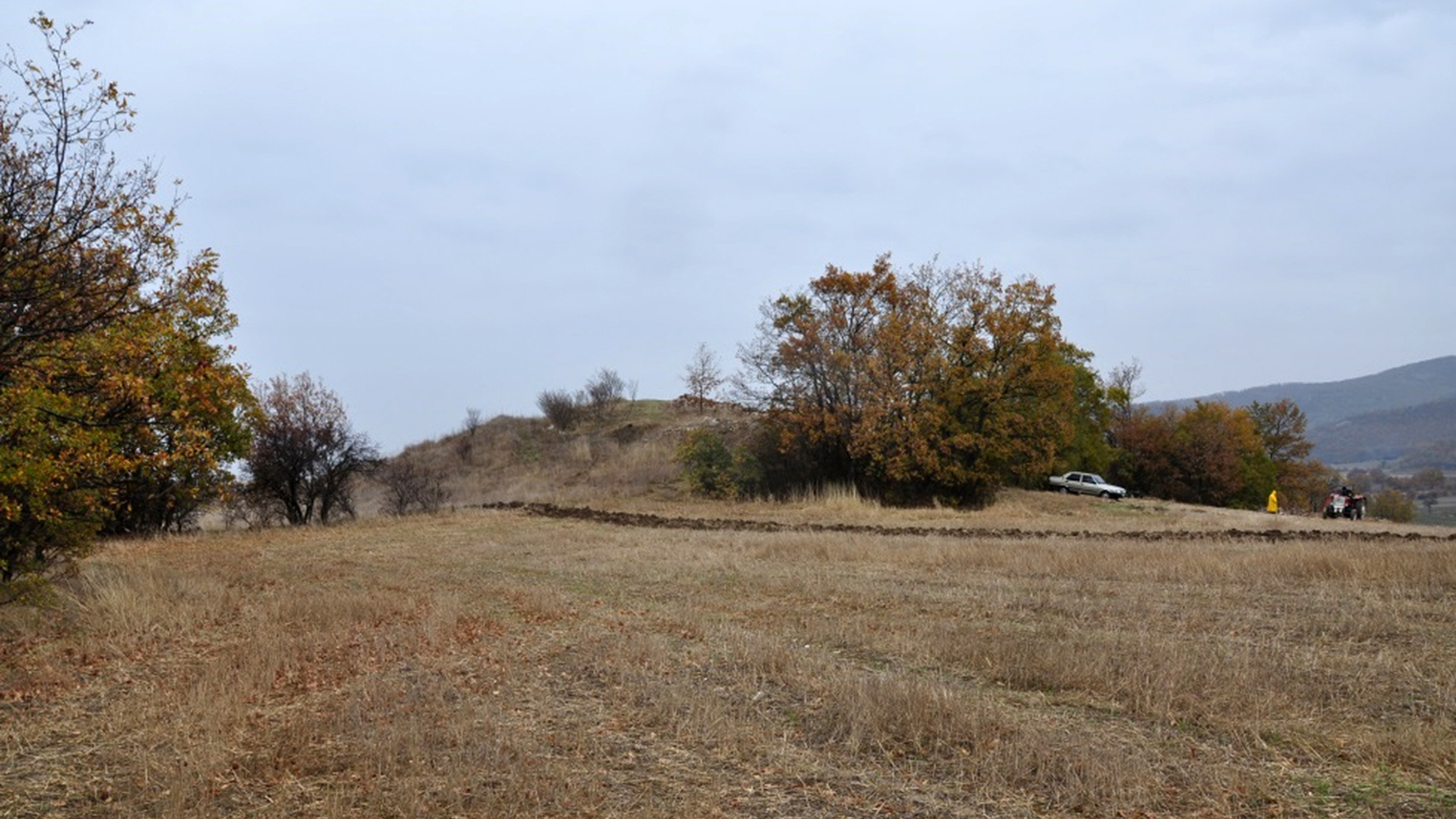
The Karaağaç Tumulus (burial mound) stands atop a natural hillock and more than 100 feet (30 meters) above the surrounding plain. (Image credit: Hüseyin Erpehlivan)
An ancient tomb discovered in Turkey may have been made for a member of the family of the legendary King Midas, who lived in the eighth century B.C. and is renowned for his mythical "golden touch."
The possibly royal tomb, from the ancient kingdom of Phrygia (1200 to 675 B.C.), is more than 100 miles west of the kingdom's ancient capital at Gordion. Its distant location suggests Phrygian society wasn't politically concentrated in the capital city, a new study finds. Rather, it seems that political power was distributed over the ancient kingdom in central Anatolia.
"Historically, Phrygia was often viewed as a centralized kingdom similar to the Assyrian or Urartian empires," archaeologist Hüseyin Erpehlivan of Turkey's Bilecik University told Live Science in an email.
But the tomb, in the Karaağaç Tumulus in Turkey's northwestern Bozüyük district, suggests otherwise; the fact that an elite tomb was made so far from the capital "supports the idea that the Phrygian political organization was not limited to a strictly-centralized, urban-focused system" at Gordion, Erpehlivan said.
However, he acknowledged that the tomb's lavish grave goods might not indicate a royal burial, but rather a royal gift exchange with an important person who had regal connections, such as the area's governor.
Remote tumulus
The tumulus (or burial mound) now stands about 26 feet (8 meters) above a natural hillock and more than 100 ft (30 m) above the surrounding plain, with a diameter of about 110 ft (60 m). It was discovered in 2010 when satellite photographs showed damage from looting, and researchers have been academically excavating it since 2013.
In a new investigation of the tumulus, published in the January issue of the American Journal of Archaeology, Erpehlivan analyzed the tomb's architecture and grave goods.
Get the world’s most fascinating discoveries delivered straight to your inbox.
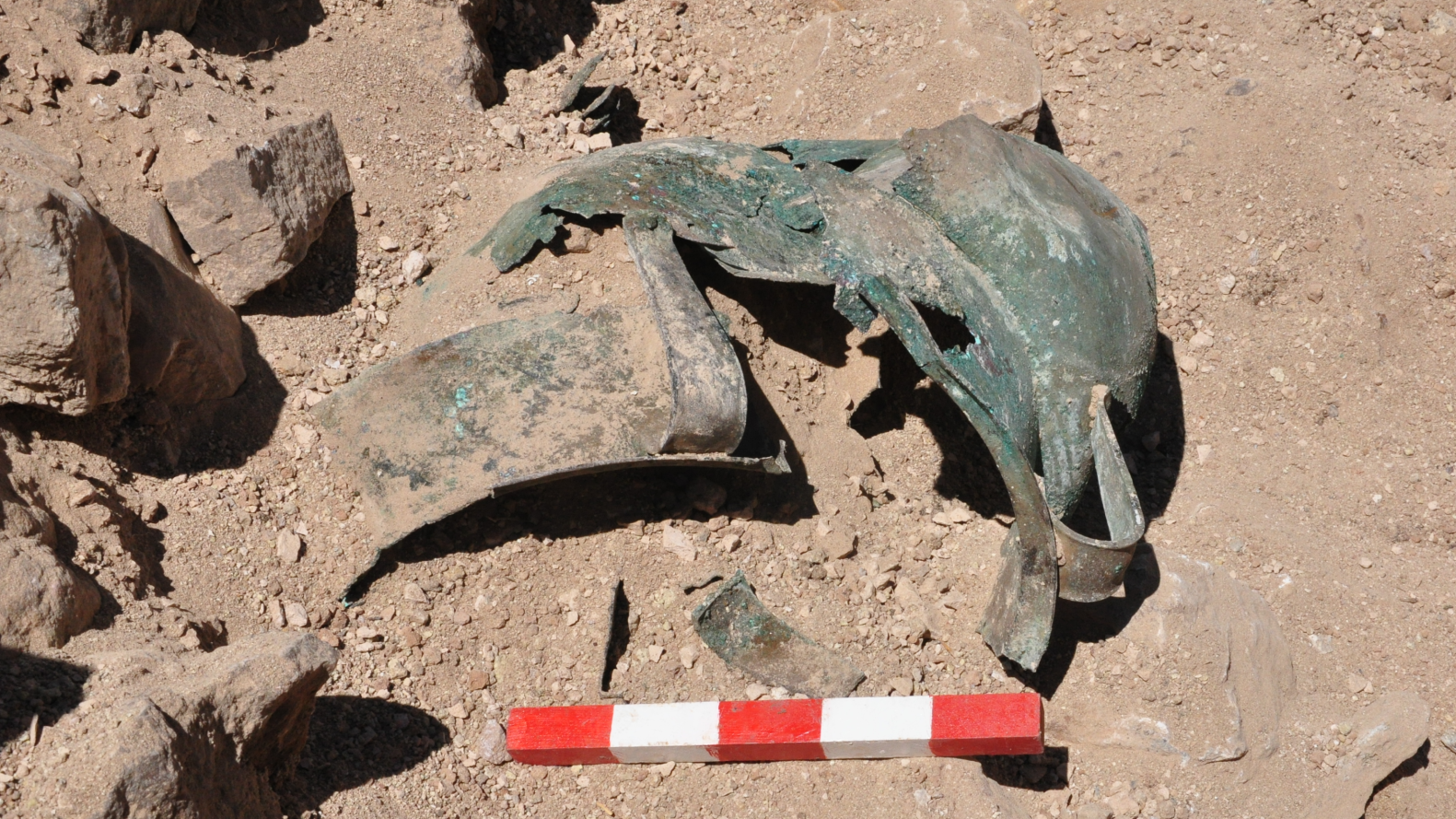
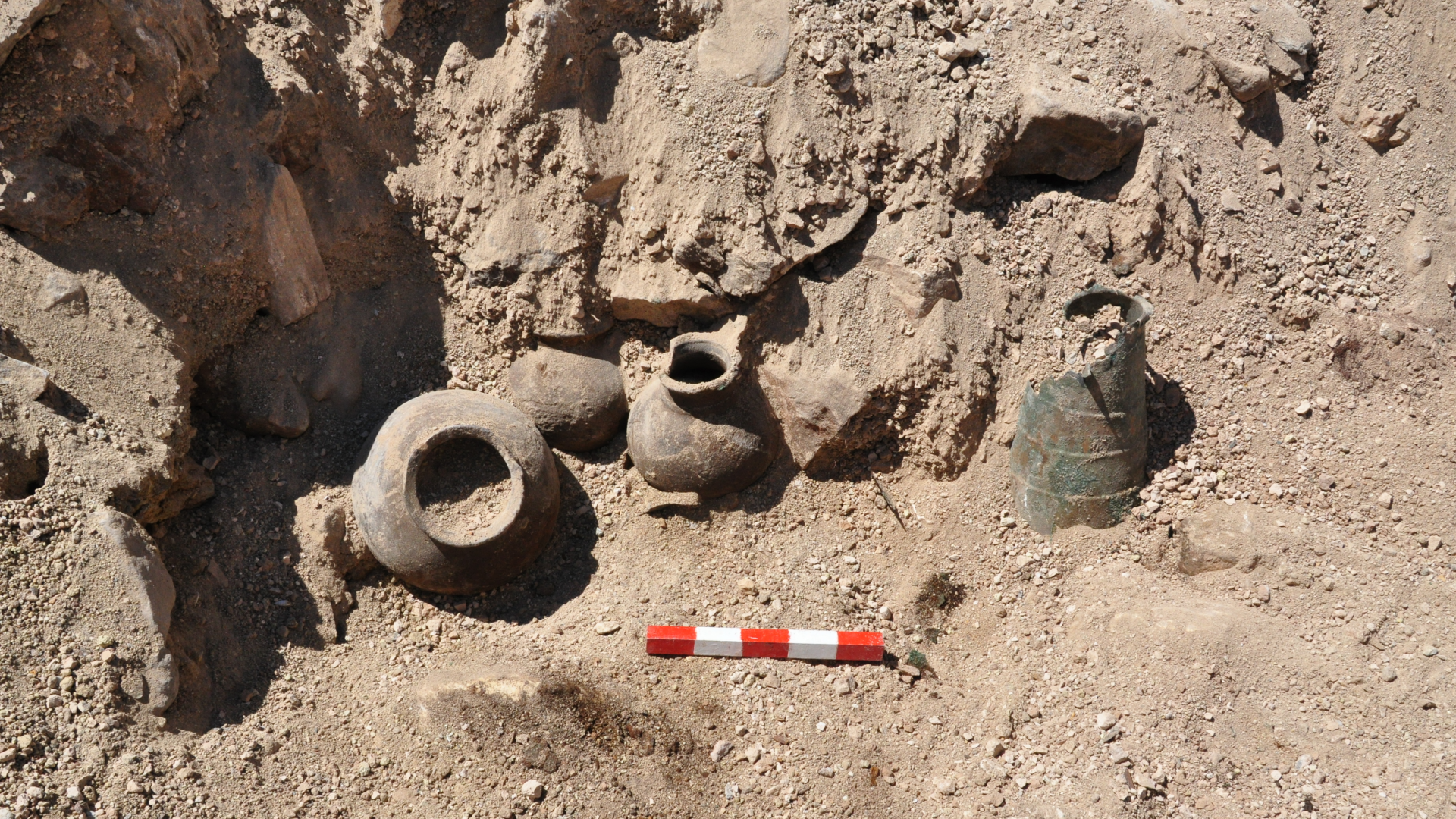
Erpehlivan said the monumental architecture of the wooden-chambered tomb inside the tumulus is comparable to elite burials near Gordion, while grave goods in the tomb are similar to those found in royal burials at the capital. These aspects of the burial in the Karaağaç Tumulus "exceed what would be expected for a purely local, non-elite individual, instead pointing to a figure embedded within Phrygian power structures," he said.