Move over AI, seaweed is the new wonder product
One type of seaweed cuts methane emissions and fattens cattle and another has natural polymers that behave like plastic.
One type of seaweed cuts methane emissions and fattens cattle and another has natural polymers that behave like plastic. Both are being harvested and turned into serious businesses.
Sea Forest debuted on the Australian stock exchange in late November with a unique methane-busting cattle feed supplement it extracts from a common 30-centimetre-long red seaweed that grows year-round in Tasmania.

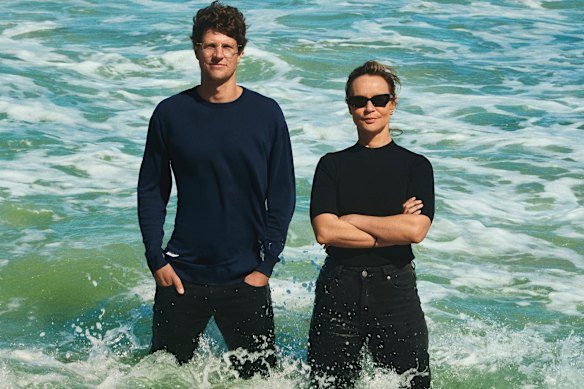
Sea Forest co-founder and CEO Sam Elsom at the company’s site in Triabunna, Tasmania.Credit: Matthew Newton
And at the Indian Ocean Marine Research Centre in Perth, Uluu, a start-up worth about $100 million, is fermenting seaweed in a demonstration plant and producing polymer pellets suitable for injection moulding, the most common form of plastic manufacturing.
Both companies have big growth plans and were started by founders with robust environmental ambitions.
At first glance Sea Forest’s Sam Elsom appears an unlikely chief executive. Sporting a full beard and recounting a work history with environment groups like the Climate Council, he details CSIRO studies on 30 varieties of seaweed that uncovered the remarkable effect one type, Asparagopsis, has on reducing methane emissions from cattle.
Bovines are a major source of methane entering the atmosphere. The potent greenhouse gas can, over two decades, warm the planet up to 80 times more than carbon dioxide. The International Energy Agency says methane has contributed to about a third of the rise in global temperatures since the Industrial Revolution. The other big methane source is fugitive emissions from the oil and gas industry.
Loading
Compounds in the kelp reduce the amount of methane belched during a cow’s digestion process by up to 80 per cent, Elsom says, citing 38 peer-reviewed, published papers demonstrating a link between significant abatement and the company’s seaweed product.
The CSIRO study that revealed the link became the catalyst for founding Sea Forest in 2018 and a seven-year journey to research growing methods at scale and develop seaweed feed supplements suitable for cattle. Now the company’s Tasmanian facilities include large-scale cultivation ponds on the east coast in Swansea with seawater extraction, and laboratories, production and processing in Triabunna, also on the east coast, next to a 1800-hectare marine lease.
“We’re able to get consistent growth rates in the ponds by utilising the flow of seawater. If we want more nutrients, we turn up the flow,” Elsom said.