MSI MPG 341CQR QD-OLED X36 review
The latest QD-OLED tech is something very special.
This MSI is a fantastic demonstration of Samsung's latest QD-OLED tech. The HDR experience is stupendous, the ambient light absorption issue is mostly entirely solved and the subpixel structure has been sorted. It's just needs a few more pixels to be absolutely perfect for both gaming and daily computing.
For
- Proper RGB subpixels
- Brighter and punchier
- Better ambient light absorption
Against
- Expensive
- Mediocre pixel density
- Not perfect for all-round computing
PC Gamer's got your back Our experienced team dedicates many hours to every review, to really get to the heart of what matters most to you. Find out more about how we evaluate games and hardware.
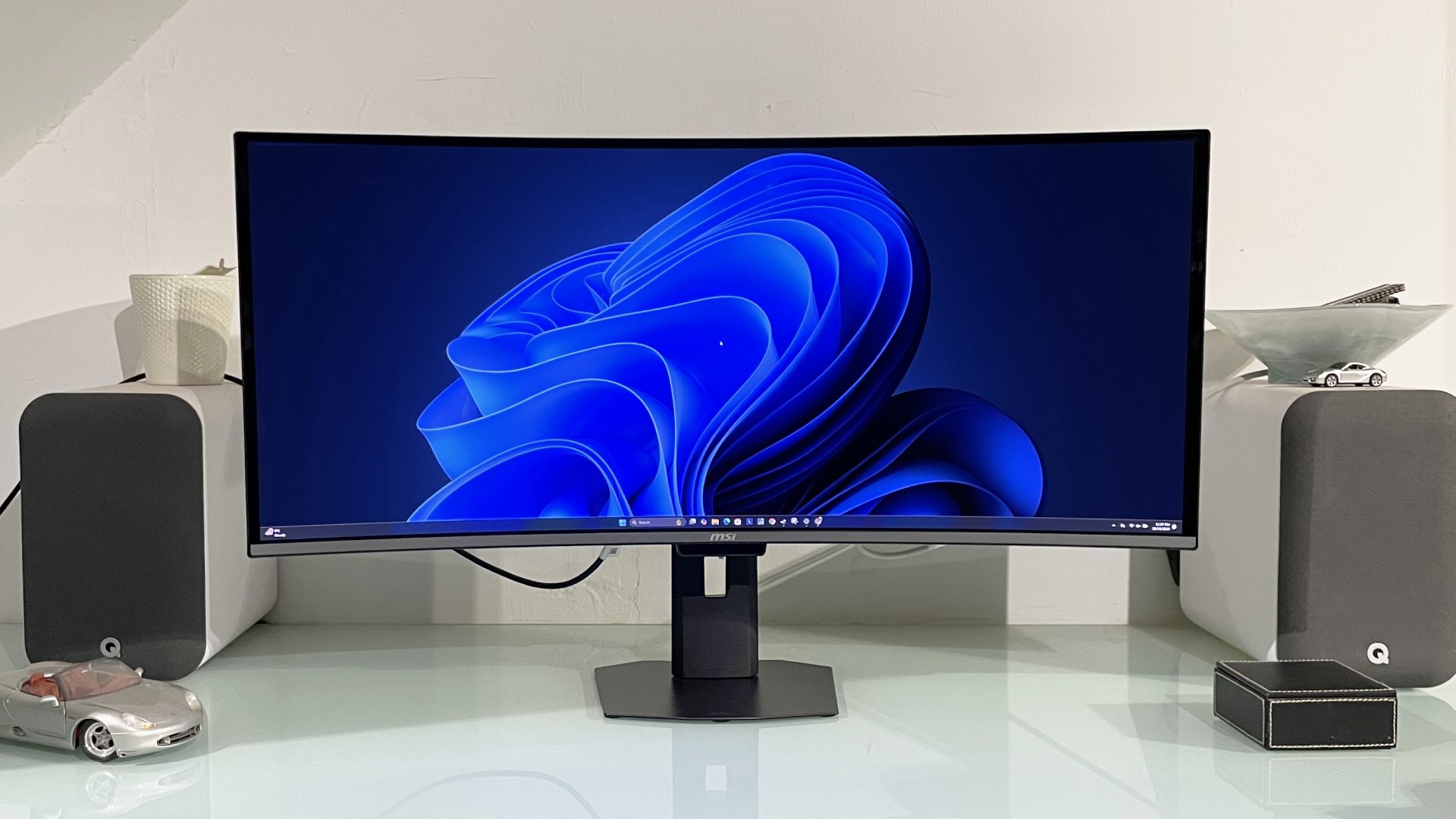
Once you've gone OLED, you won't ever want to go back. Wouldn't it be nice to be able to say that about the MSI MPG 341CQR QD-OLED X36? To discover that it ditches the usual shortcomings of Samsung's QD-OLED tech while capitalising on all that characteristic OLED goodness, including perfect per-pixel lighting and incredible speed?
Well, there's good reason to think that it might just be a goer. Because this new MSI monitor rocks Samsung's very latest QD-OLED panel technology. MSI is referring to it as "5th-Gen" Samsung QD-OLED, which is news to me. I thought the very latest panel tech from Samsung is Gen 4. Likewise, MSI refers to not only "5th Gen" but "5th Gen Tandem OLED" when describing this panel technology, which leaves me a bit baffled.
(Image credit: Future)
Swipe to scroll horizontally
Screen size
34-inch
Resolution
3,440 x 1,440
Brightness
300 nits full-screen, 1,300 nits HDR 3% APL
Response time
0.03 ms
Refresh rate
360 Hz
HDR
DisplayHDR TrueBlack 500
Features
QD-OLED panel, adaptive sync, HDMI 2.1, DisplayPort 2.1a, USB-C with 98 W PD, USB-A hub
Price
$1,099 | £1,000 (est)
Buy if...
✅ You want the ultimate OLED experience: This new-gen QD-OLED panel tech is almost perfect thanks to stunning HDR performance and revised RGB subpixels.
Don't buy if...
❌ You want the perfect great all-rounder: This panel's one obvious shortcoming is pixel density. That's fine for gaming, les so for other tasks.
Samsung hasn't quite delivered a totally standard RGB solution, where all three subpixels are exactly the same size and shape, as per pretty much all LCD monitors—the blue subpixel is noticeably smaller, for instance. But the subpixels are arranged in a vertical RGB stripe pattern and that should help with any image rendering that relies on subpixel structure, such as font smoothing and text clarity.
That's especially handy given this display offers a 3,440 by 1,440 native resolution on a large 34-inch panel. The consequent pixel density of 110 DPI is quite a bit lower than, say, either 27-inch or 32-inch 4K screens. On previous QD-OLED panels of the same size and resolution, text has looked pretty rough thanks to colour fringing. In theory, that should be solved.
(Image credit: Future)
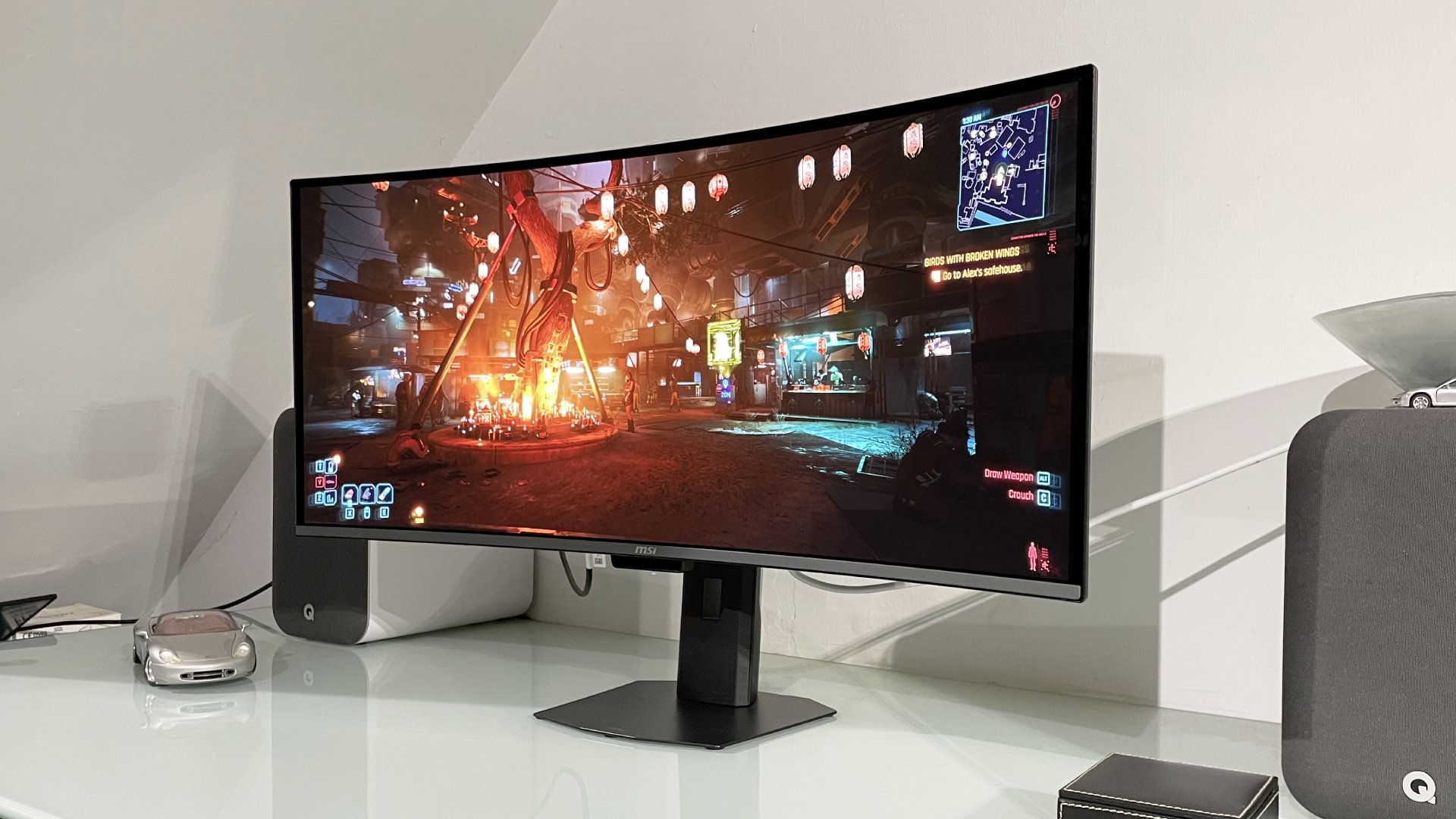
The headline specs include a boost in full-screen brightness to 300 nits. That's a welcome-rather-than-spectacular improvement on the 250 nits of most previous QD-OLEDs and a lot lower than the 400-plus nits that brightest QD-OLED TV sets can achieve. Personally I'd like to see a figure north of 400 nits before I deem full-screen brightness a totally sorted limitation in this type of display.
Keep up to date with the most important stories and the best deals, as picked by the PC Gamer team.
That said, this panel also steps up from VESA DisplayHDR 400 to DisplayHDR 500 certification. Peak HDR brightness is likewise up to, from 1,000 nits to 1,300 nits.
If light emission is only up, on paper, light absorption is also said to be much increased, which is a good thing. QD-OLED's characteristic problem with ambient light, where the panel takes on something of a purple-grey tinge in really bright conditions, has had the effect of reducing perceived contrast. It's a bit of a bummer given perfect per-pixel light control is the number one attraction with OLED tech.
(Image credit: Future)
For this new generation of Samsung QD-OLED panel, that issue is much improved, though it's not entirely solved. If you place this MSI next to a monitor with LG's competing WOLED tech and shine a really bright LED on both panels (as I have done), it's clear enough that this new Samsung QD-OLED technology still kicks back more light than an LG WOLED.
But the improvement is sufficient that I'd argue it should no longer be a factor in choosing between Samsung QD-OLED and LG WOLED panel types. Unless you play or work in incredibly bright ambient light conditions, the perceived contrast of this monitor is fantastic. Oh, and in case you weren't entirely sure, yes the panel coating is glossy, not matte.
Another upgrade, this time from MSI rather than Samsung, involves enhancements to the EOTF controls. EOTF or Electro-Optical Transfer Function is essentially the map that determines how electrical signals are translated into actual light output on a display and it's particularly important for getting HDR calibration right.
Unless you play or work in incredibly bright ambient light conditions, the perceived contrast of this monitor is fantastic.
The last MSI panel we looked at, the MSI MPG 271QR X50, had an EOTF "Boost Mode". That's designed to combine the best attributes of the certified DisplayHDR 500 mode, which gives the highest full-screen brightness, and the panel-native EOTF mode, which enables the brightest peaks for small details on the screen. This model also offers customisable versions of both the DisplayHDR 500 mode and the HDR 1,300 mode. So you can tweak them to suit your preferences, in theory, at least.
Wrapping up the main panel specs, you get the usual 0.03 ms pixel response—at least an order of magnitude faster than any LCD monitor—and 360 Hz refresh, which ought to be fast enough for all but the most demanding esports fans. As for connectivity, along with DisplayPort and HDMI, there's also a USB-C interface for single-cable connectivity to a laptop and 98 W of power delivery. Add in a two-port USB-A hub and this monitor has you pretty well covered.
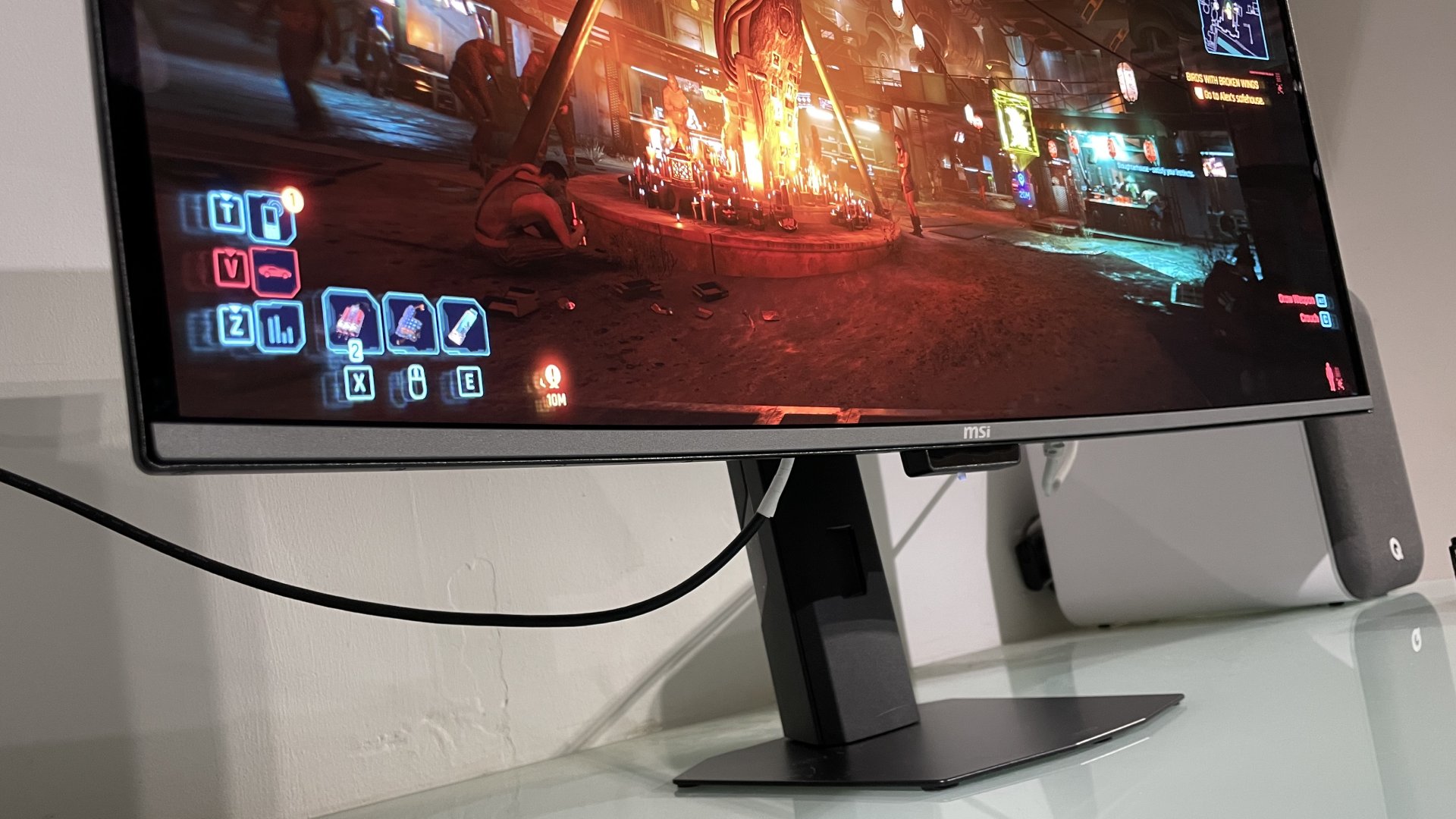
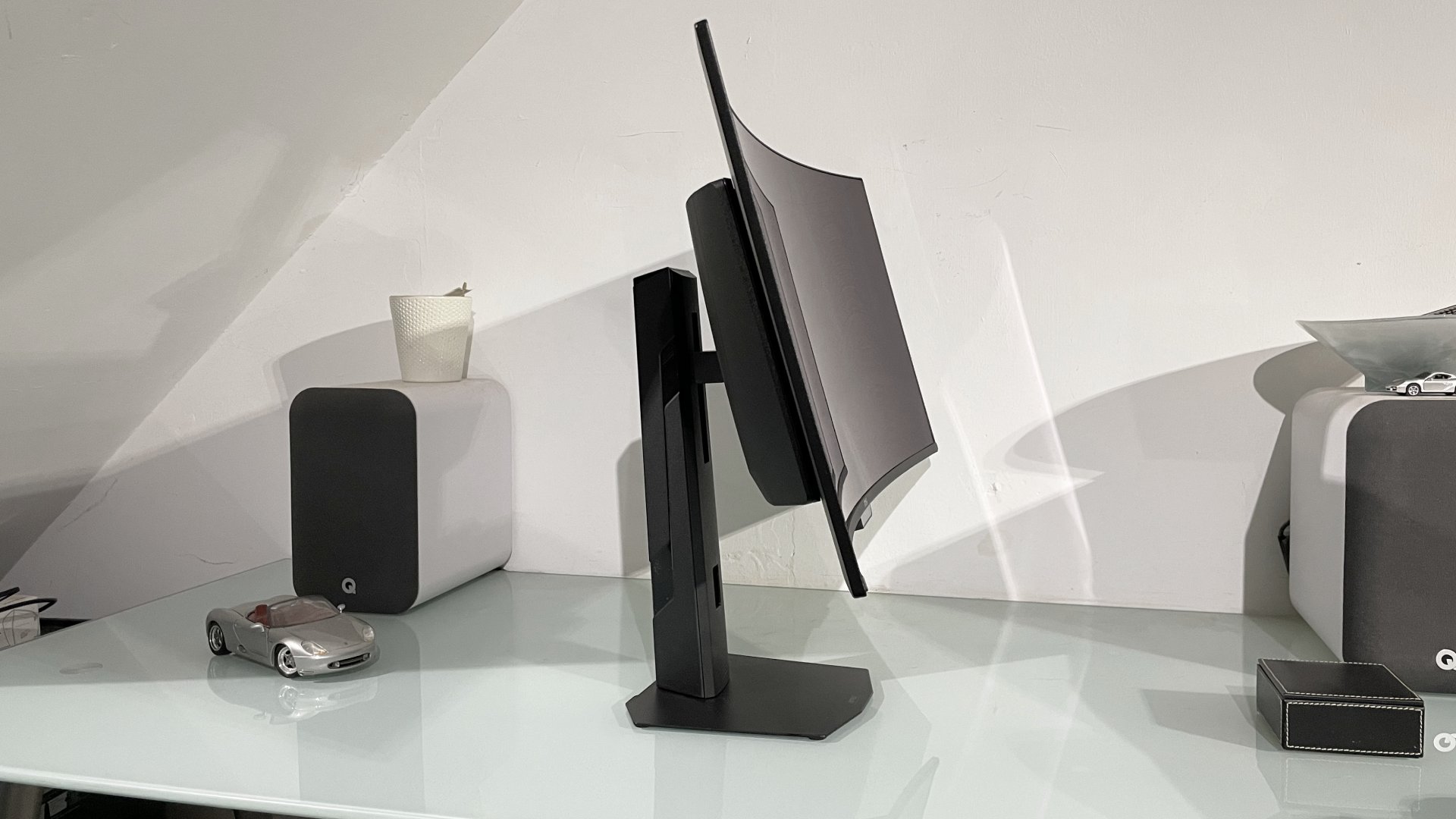
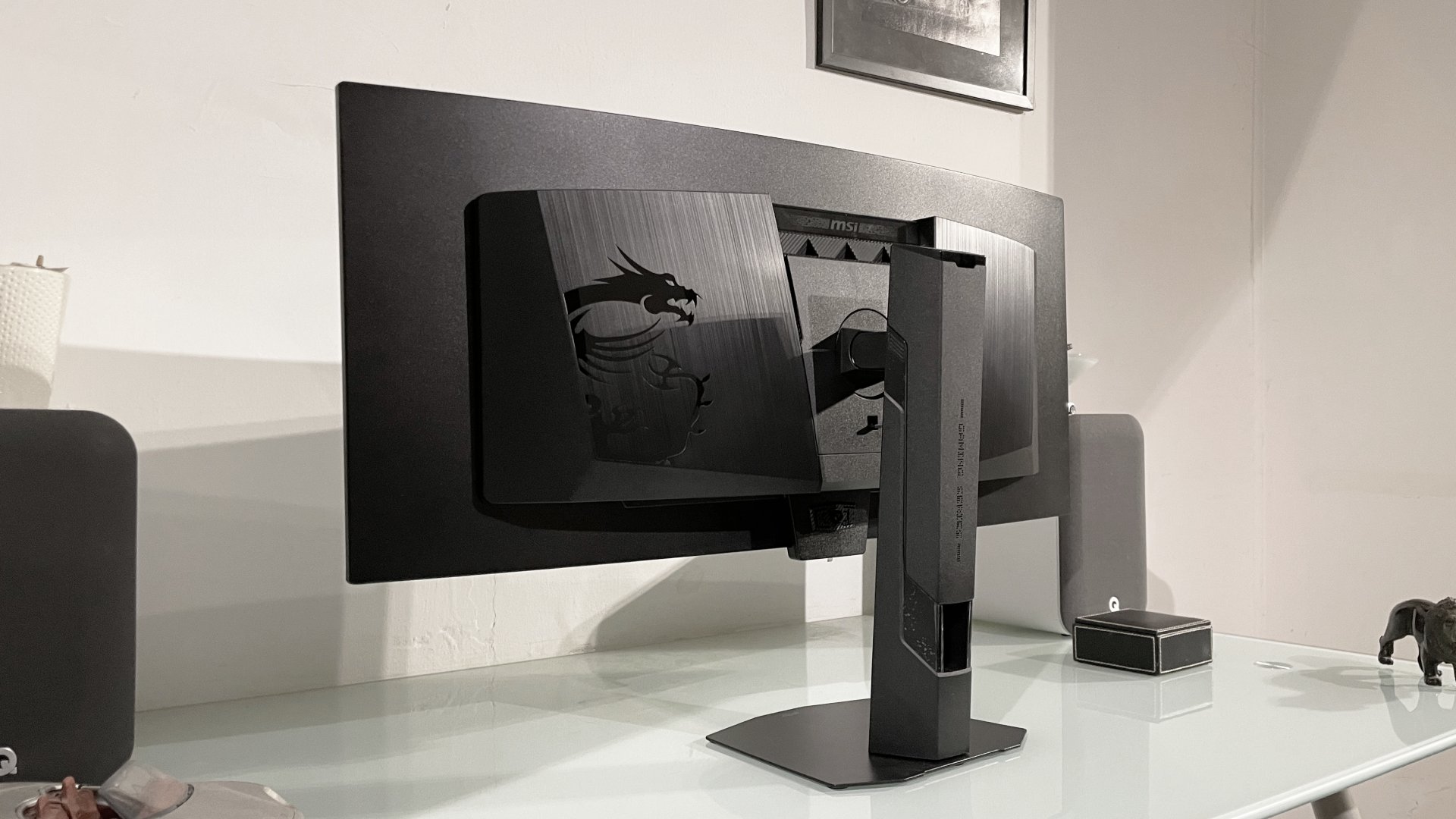
The same goes for the stand and chassis. It's well engineered, albeit pretty anonymous to look at, and offers a full range of height, tilt and rotate adjustment. There's also pivot, but only about 20 degrees in each direction to help level out the display, as opposed to the full 90 degrees you'd need to swing the panel right round into portrait mode, the latter being a niche concern for an ultrawide 34-inch panel like this.
Image
1
of
4
(Image credit: Future)
Just to fully square away the technical housekeeping, it's worth noting that MSI offers another MPG 341CQR monitor model, minus the "QD-OLED X36" bit on the end. It's an older model with a VA panel and it's moderately mind boggling that MSI would use largely the same name for this new and radically different OLED. But that's how it goes in the PC monitor market. There's pretty much a competition among the big brands to come up with literally the worst and most confusing product names possible.
If that's all of the technical details covered off, how does this monitor actually look? The immediate impression is not dramatically different to previous QD-OLEDs. But on closer inspection, there are numerous improvements.
The general punchiness in SDR mode on the Windows desktop is pretty good but doesn't feel like a huge upgrade. In all honesty, I would prefer there was just a touch more full-screen punch. Then it would be possible to put to bed, once and for all, that particular OLED shortcoming.
Image
1
of
1
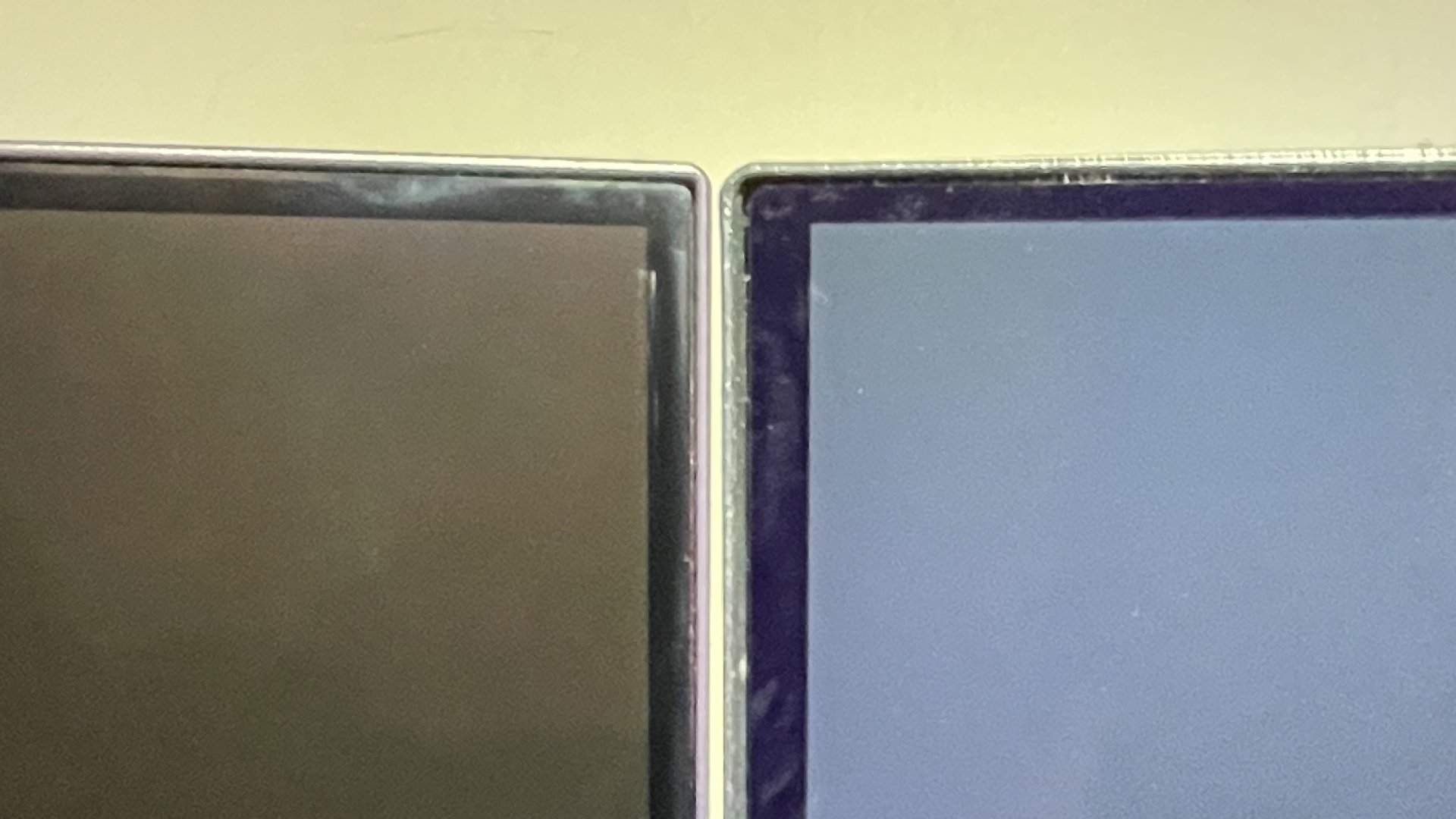
LG WOLED left, this new QD-OLED on the right. A very bright LED light exaggerates the problem, but the light absorption issue hasn't been totally solved.(Image credit: Future)
Average brightness of 300 nits is decent, don't get me wrong. And Samsung's QD-OLED punches above its specs when it comes to perceived brightness. That's because LG's WOLED tech uses an additional white subpixel to boost peak white brightness. For colour brightness, QD-OLED is generally superior, even when its peak nit rating says otherwise.
This monitor is brighter than many—maybe even most—gamers will need.
Ultimately, this monitor is brighter than many—maybe even most—gamers will need in normal viewing conditions. It's just that at this fairly lofty price point, it would be nice to be able to bury any concerns absolutely for good.
Anywho, along with a bit more punch, and probably related to the improved light absorption, is slightly more accurate colour balance. QD-OLEDs tend to be overly warm in terms of colour temperature and that flaw is definitely improved with this new-gen panel.
(Image credit: Future)
As for the text rendering, fonts definitely look a little crisper thanks to those RGB subpixels. But you have to be realistic about a display like this with modest 110 DPI pixel density. It's never going to be super sharp.
This thing is painfully quick and offers spectacular motion clarity.
What is pretty super, on the other hand, is the speed. If you haven't experienced a 0.03 ms OLED running at high refresh—in this case 360 Hz—well, let's just say you're missing out. This thing is painfully quick and offers spectacular motion clarity. Along with the per-pixel lighting and mega contrast, it's the speed really stands out. Once you've experienced the response and clarity of an OLED like that, pretty much any LCD looks a little washed out and smeary by comparison.
Of course, the 34-inch ultrawide form factor of this MSI panel isn't actually ideal for esports, despite all that speed. You'll still want a 16:9 aspect monitor if online shooters are your main gaming distraction. But you have the option with at least some shooters of playing at 2,560 by 1,440 with black bars on either side. And thanks to the OLED tech, those black bars really are just that—absolutely black—and thus less distracting than they otherwise would be.
Image
1
of
1

Say hello to proper RGB-stripe subpixels.(Image credit: Future)
The final and in some ways most impressive piece of the puzzle, then, is HDR. The on-paper highlights include loftier peaks, now hitting 1,300 nits and matching the best monitors with LG WOLED panels, DisplayHDR 500 certification and the aforementioned enhanced EOTF modes. If anything, the subjective experience is even better.
The default DisplayHDR 500 mode is really nice. It renders SDR content pretty much perfectly and allows for a punchier experience with SDR content, such as the Windows desktop, day to day, albeit with a tiny bit of visible dimming if you are lighting up large sections of the panel. It works especially well if you run all your apps in dark mode.
Personally, I do just that and it looks fantastic on this monitor. You get a subjective experience that looks closer to a 500 nit SDR monitor, just with epic lighting control and contrast.
In games, though, that's where this monitor really shows its HDR chops. This is the first OLED monitor I've ever seen that looks almost as impressive in Cyberpunk 2077's sunny desert scenes as it does rendering a moody underground nightclub punctuated with sizzling neon lights.
In this context, EOTF Boost mode works really well. You get very impressive full-screen punch for outdoor game scenes while maintaining those eye-popping HDR peaks for small details in darker gaming environments. All told, this monitor delivers the best HDR I've yet seen on a PC monitor. It really is that good.
Really, my main reservations concern the basic format and resolution. For all-round use, 3,440 by 1,440 pixels on a 34-inch ultrawide doesn't make for terribly sharp pixel density, especially if you're used to a 27-inch or 32-inch 4K monitor. So, spending this much money is a big ask.
Of course, purely for gaming, this size and resolution strikes a great balance between detail, immersion and frame rates. It's a fair bit less demanding than 4K, and the ultrawide aspect is incredibly immersive. So, if 34-inch ultrawide and 1440p is your preference, this is undoubtedly the best example of this class of gaming display yet. It really is fantastic.
As a final aside and an anecdotal measure of just how impressive this monitor is, well, it's been on my desk for a few weeks as my daily driver and I'm reluctant to put it back in the box. I see a lot of monitors and this is an awfully rare occurrence. Monitors usually get booted straight after the review. But not this one. When you also consider that I very much prefer panels with quite high pixel density, there can be no doubting that the MSI MPG 341CQR QD-OLED X36 is something quite special.
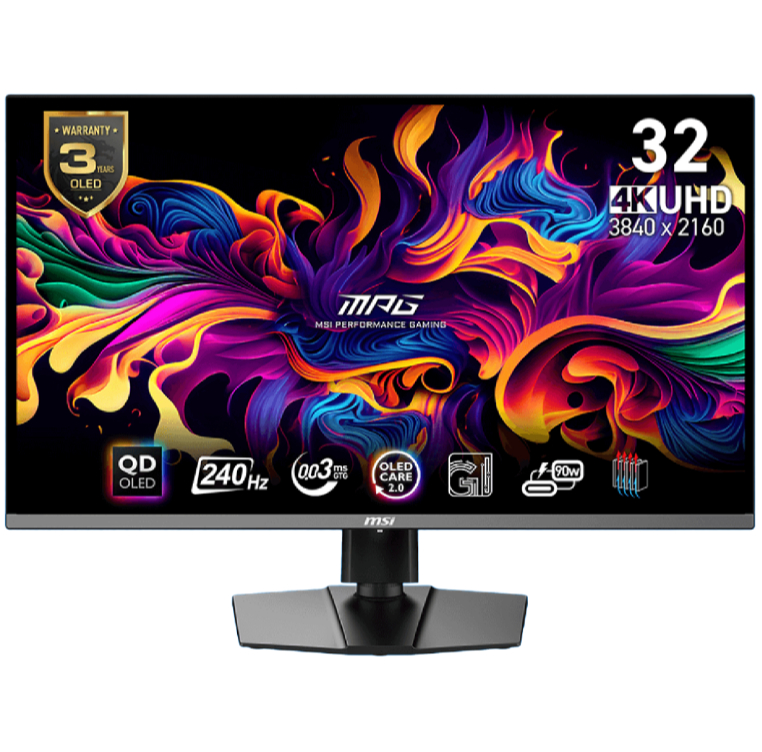
MSI MPG 341CQR QD-OLED X36
This MSI is a fantastic demonstration of Samsung's latest QD-OLED tech. The HDR experience is stupendous, the ambient light absorption issue is mostly entirely solved and the subpixel structure has been sorted. It's just needs a few more pixels to be absolutely perfect for both gaming and daily computing.
Jeremy has been writing about technology and PCs since the 90nm Netburst era (Google it!) and enjoys nothing more than a serious dissertation on the finer points of monitor input lag and overshoot followed by a forensic examination of advanced lithography. Or maybe he just likes machines that go “ping!” He also has a thing for tennis and cars.
You must confirm your public display name before commenting
Please logout and then login again, you will then be prompted to enter your display name.