'Mystery doctor' of Dandakaranya: A shadowy figure with scalpel who’s been aiding Maoists
A former MBBS doctor, known as Dr. Rafiq, built a clandestine medical system for Maoists and Adivasis in Chhattisgarh's Bastar. He performed surgeries with limited resources, trained medics, and documented treatments for battlefield injuries and common ailments. Revered by locals, his network continues to function even after his departure, blending traditional knowledge with modern medicine.
Representative image
HYDERABAD: By torchlight in deep forest camps, a shadow surgeon once cut close to a beating Maoist heart, fingers steady as a bullet lay lodged centimetres away. For years, the man they called Dr Rafiq worked unseen.
Little about him surfaced beyond intelligence files.Now, through surrendered Maoists and security officials, a detailed portrait is emerging of Rafiq alias Mandip — an MBBS from Punjab who joined CPI (Maoist) and spent years building a medical system across Dandakaranya in Chhattisgarh’s Bastar.Surrendered Maoist M Venkatraju alias CNN Chandu described Rafiq as the only formally trained doctor to have joined the movement.
He treated cadres and Adivasis, performed emergency surgeries with scarce resources, trained paramedics and documented medicine. He wrote manuals standardising treatment for bullet wounds, malaria, snakebites, gastroenteritis, and battlefield trauma under forest conditions.
Chandu told TOI, “He trained locals and cadres in first aid, stitching sutures when a bullet hits, and how to remove the bullet.”Intelligence officers said he moved from Dandakaranya to Jharkhand in 2016, where he remains at large.
Rafiq first surfaced in 2013 through confessions of arrested cadres, described then as a “mystery doctor” capable of surgeries and leading Dandakaranya’s medical wing. Police inputs in 2018 referred to “Rinki, wife of MBBS Dr Rafiq”, who allegedly treated senior Maoist commander Prashant Bose.
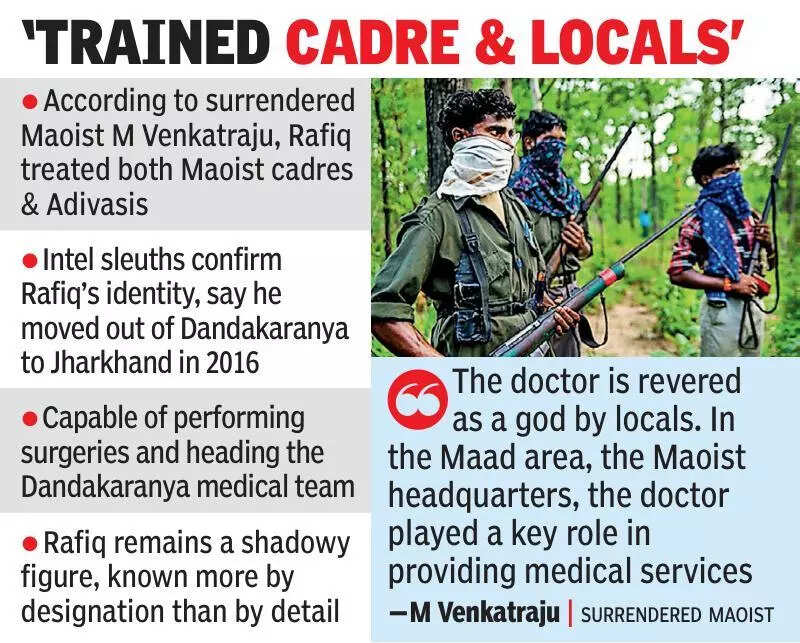
According to Chandu, Rafiq worked from Maad, the Maoist headquarters zone in Abujhmarh. “The doctor is revered as a god by locals,” he said.
“People came from far away just to see him.”Forest villages with little or no access to formal healthcare relied on Rafiq for everything from fever treatment to trauma care. Several underground medics, known as “doctors” despite lacking degrees, were trained through Rafiq’s system. Each dalam had at least one trained medical aide, Chandu said. Medical continuity survived even after Rafiq left Dandakaranya.Rafiq also documented herbal medicine knowledge passed down by Adivasi vaddes or pujaris and incorporated it into Maoist man-uals. “Malaria is most common,” Chandu said. “People believed illness meant God was angry. We told them even if they do puja, they should also take medicine.” Prayer and pills coexisted in those manuals, which still circulate in interior areas.While security forces tracked weapons and movement, Rafiq quietly built medical capacity — a parallel health network shaped by war, forests and necessity. As surrenders rise, his trail remains elusive.