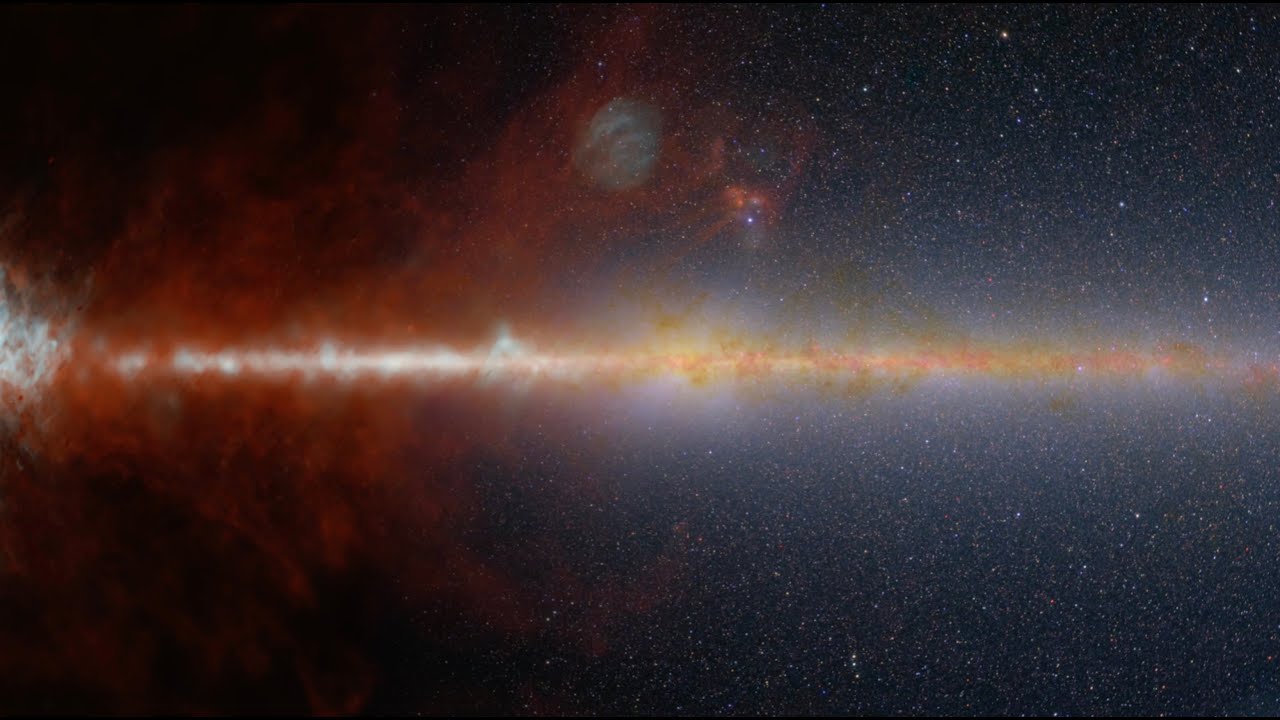
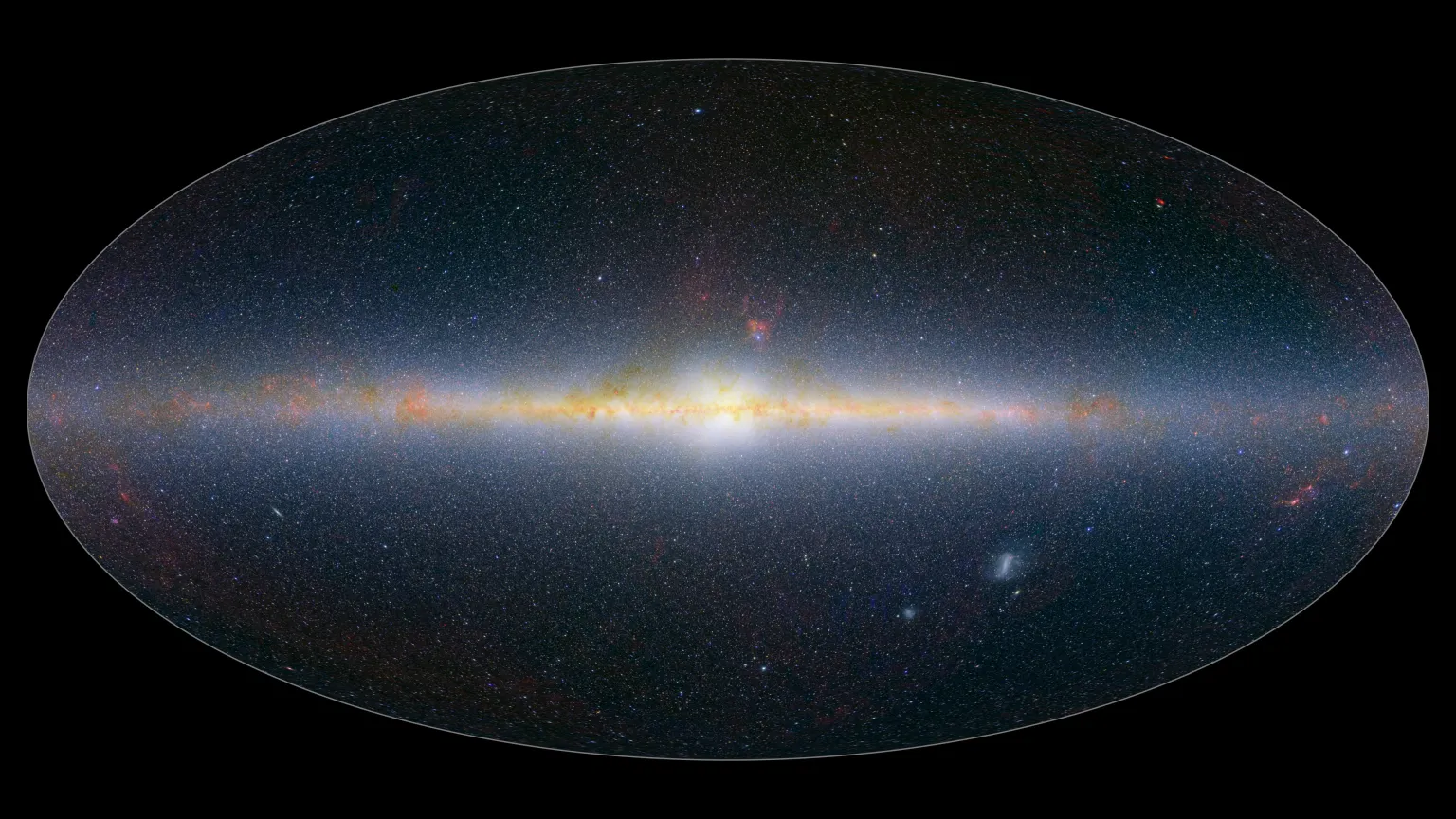
NASA telescope combines 100 maps of the universe into one: 'every astronomer is going to find something of value here'
NASA's SPHEREx telescope unveiled its first full-sky map of the universe, combining more than 100 infrared observations into one dazzling mosaic.
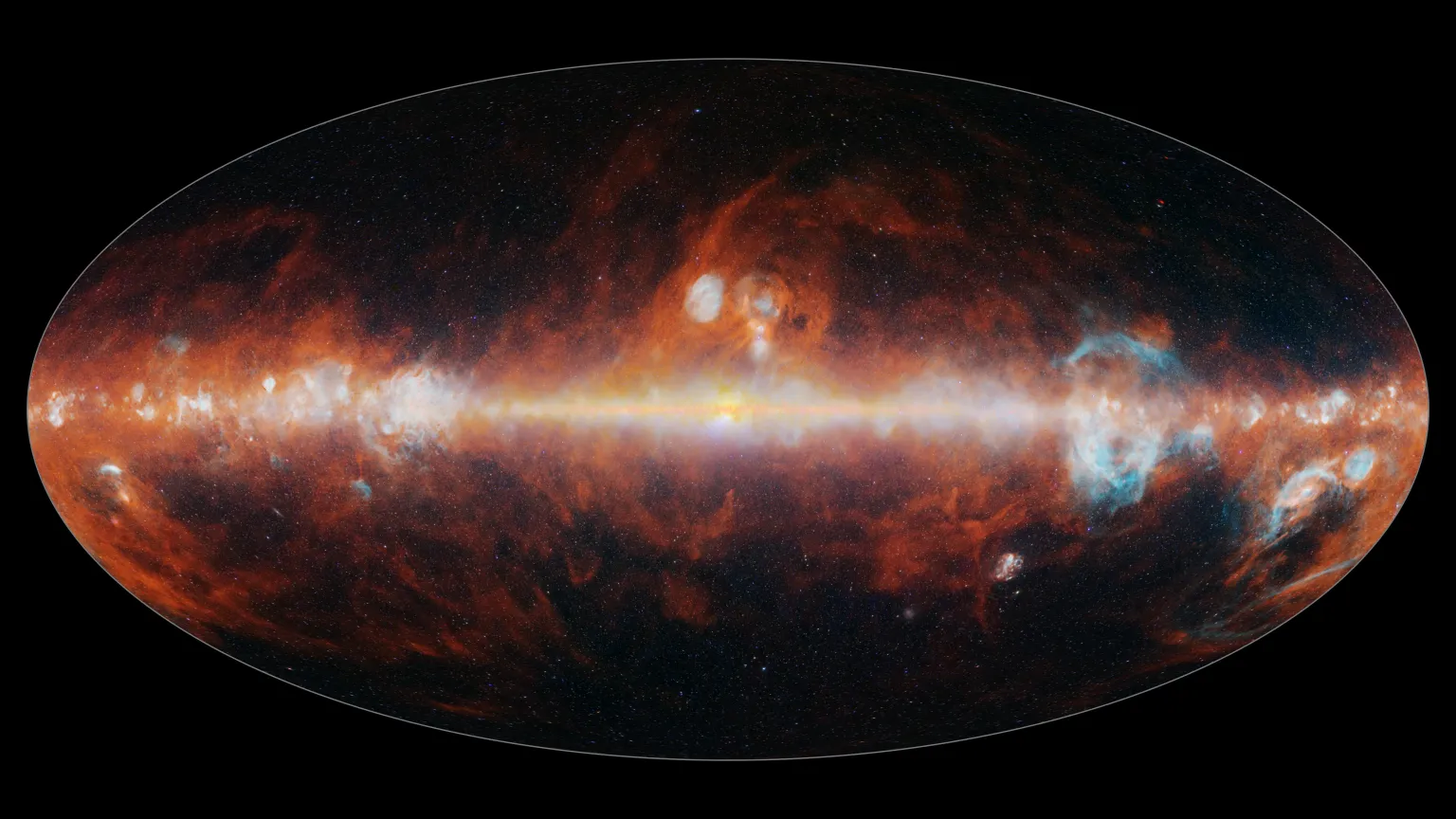
SPHEREx's first all-sky map combines 102 infrared colors normally invisible to the human eye. (Image credit: NASA/JPL-Caltech)
Half a year after first opening its eyes to the cosmos, NASA's SPHEREx spacecraft has unveiled its first complete, all-sky mosaic of the universe.
The first of at least four such maps anticipated from SPHEREx, the new composite of more than 100 individual exposures promises to reveal unprecedented details of the night sky.
"It's incredible how much information SPHEREx has collected in just six months — information that will be especially valuable when used alongside our other missions' data to better understand our universe," Shawn Domagal-Goldman, the acting director of the Astrophysics Division at NASA Headquarters in Washington, said in a statement.
"I think every astronomer is going to find something of value here," he added, "as NASA's missions enable the world to answer fundamental questions about how the universe got its start, and how it changed to eventually create a home for us in it."
'102 new maps of the entire sky'
Though modest in size and cost, SPHEREx (short for Spectro-Photometer for the History of the Universe, Epoch of Reionization, and Ices Explorer) is built to tackle some of astronomy's biggest mysteries, from probing the universe's explosive beginnings to tracing the icy ingredients delivered to planets that may have helped life to emerge.
SPHEREx's defining strength is its panoramic vision. The spacecraft surveys the entire sky every six months, splitting incoming light into 102 distinct infrared "colors" that are invisible to the human eye. The first of these observations, its new map released in December 2025, will allow scientists to chart the positions of hundreds of millions of galaxies in three dimensions and to study stars, dust and other cosmic objects in remarkable detail.
"We essentially have 102 new maps of the entire sky, each one in a different wavelength and containing unique information about the objects it sees," Domagal-Goldman said in the statement.
Get the world’s most fascinating discoveries delivered straight to your inbox.
SPHEREx First All-Sky Map — Panorama - YouTube