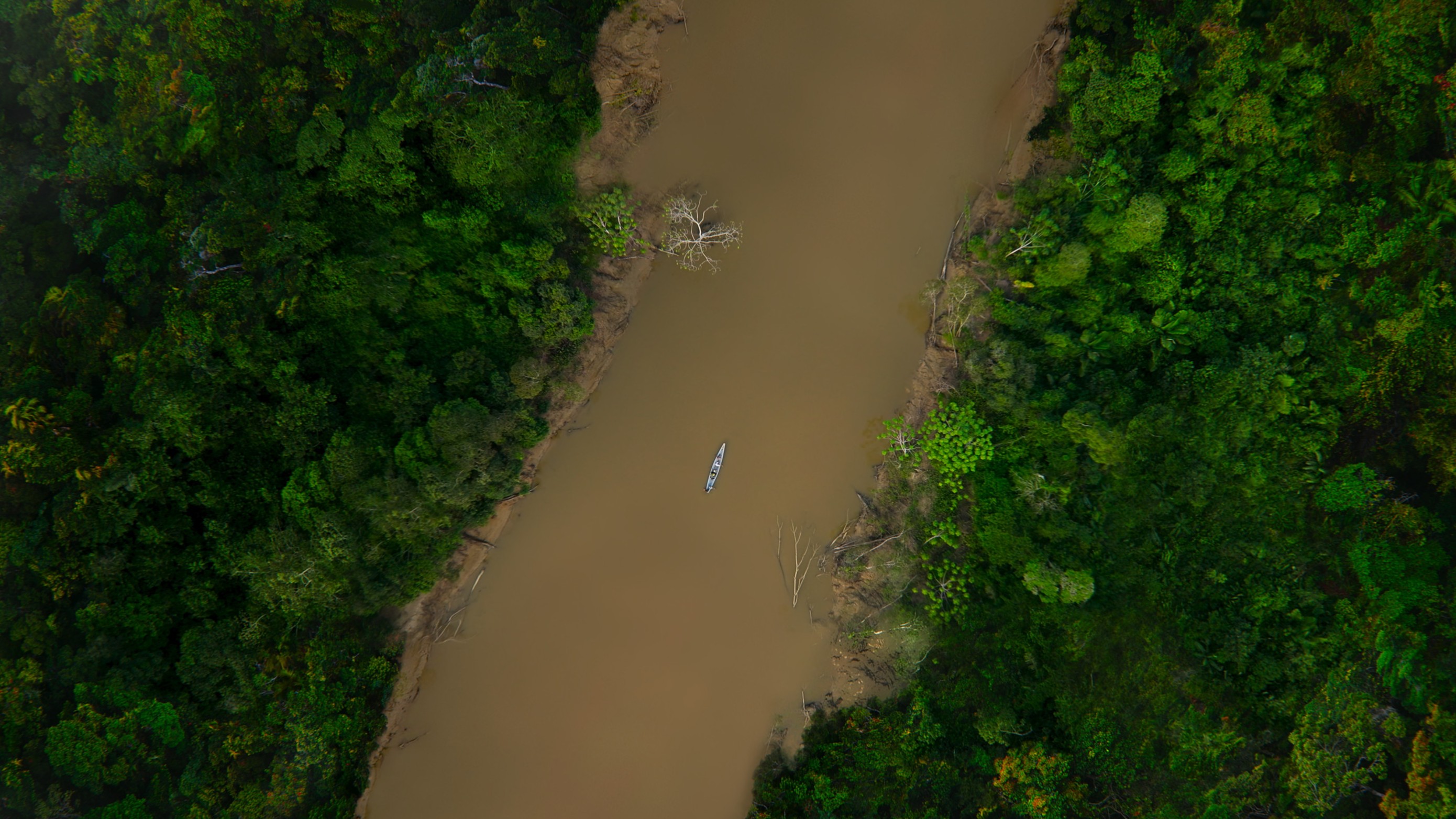
Never-before-seen footage captures moment scientists find new, giant anaconda species in Amazon
The Waorani capture an Anaconda in Bameno, Ecuador.
In 2024, scientists announced the discovery of a newfound anaconda species in the Ecuadorian Amazon. Now, in a new nature series, filmmakers have released nail-biting, never-before-seen footage of the moment they encountered the snake in the wild.
The anaconda in the footage — which features in an episode of National Geographic's upcoming "Pole to Pole with Will Smith" docuseries — is a female measuring 16 to 17 feet (4.9 to 5.2 meters) long, Fry estimates in the show. There is a danger she might bite, says one of the Waorani guides who helps pin down the snake, even if green anacondas aren't venomous. Anacondas are constrictors, meaning they kill prey by wrapping their bodies tightly around it, suffocating the animal before swallowing it whole.
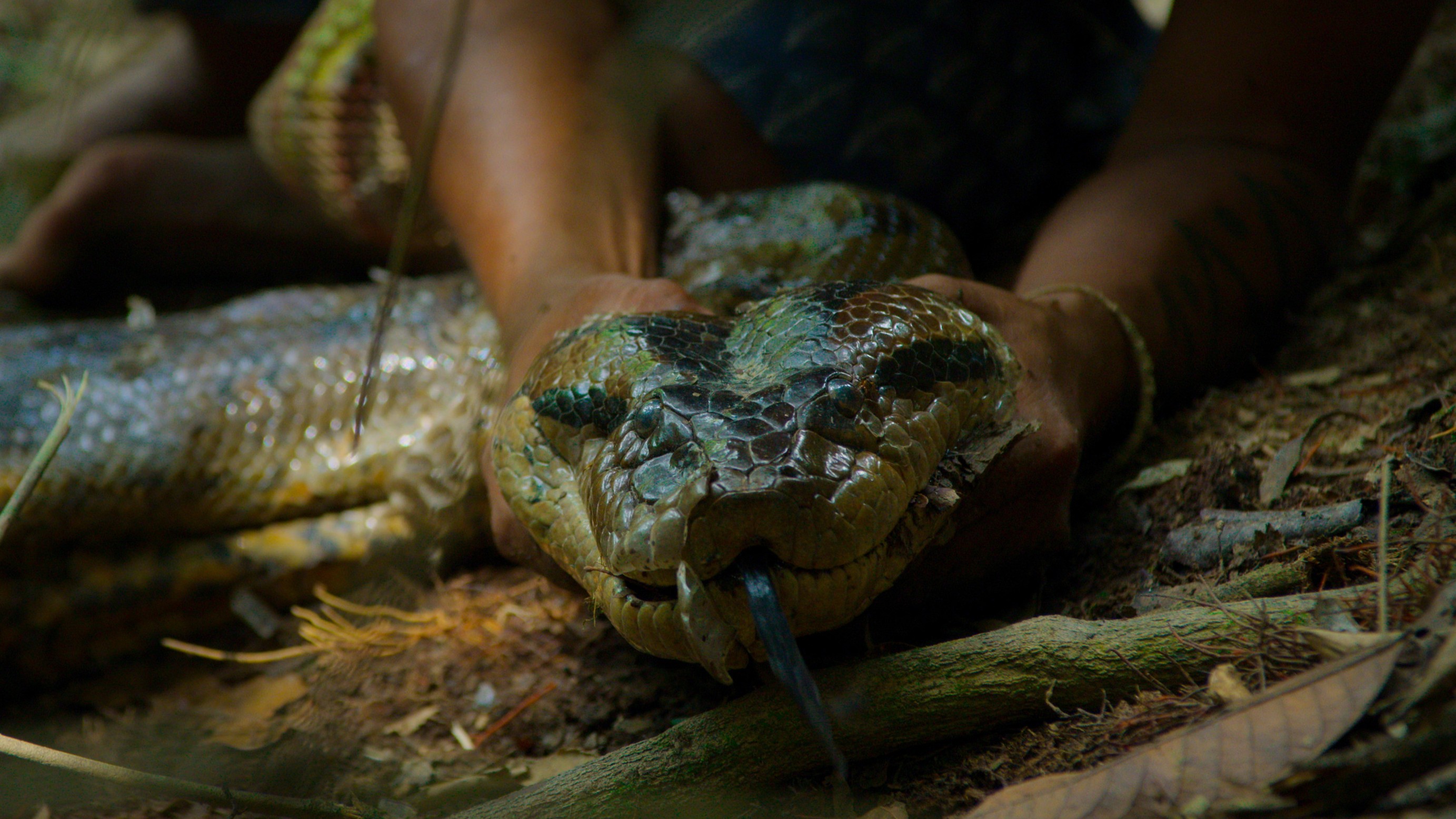
The Waorani capture an anaconda in Bameno, Ecuador. (Image credit: National Geographic)
The scale sample and others taken in 2022 revealed that green anacondas, which were previously thought to all belong to one species, actually form two separate species: Eunectes murinus, the already-identified southern green anaconda, and Eunectes akayima, the newfound northern green anaconda.
"Finding a new species is so often not a case of actively searching but rather having rigorous scientific process in place so that serendipity can strike," Fry, who is a professor of toxicology at The University of Queensland in Australia, told Live Science in an email. "The research into the genetics of the iconic green anaconda is textbook in this regard."
Genetic analyses indicate that E. murinus and E. akayima diverged 10 million years ago. Since then, northern and southern green anacondas have accumulated thousands of genetic differences adding up to a whopping 5.5% of their total DNA. By comparison, the level of mismatch between human and ape DNA is about 2%.
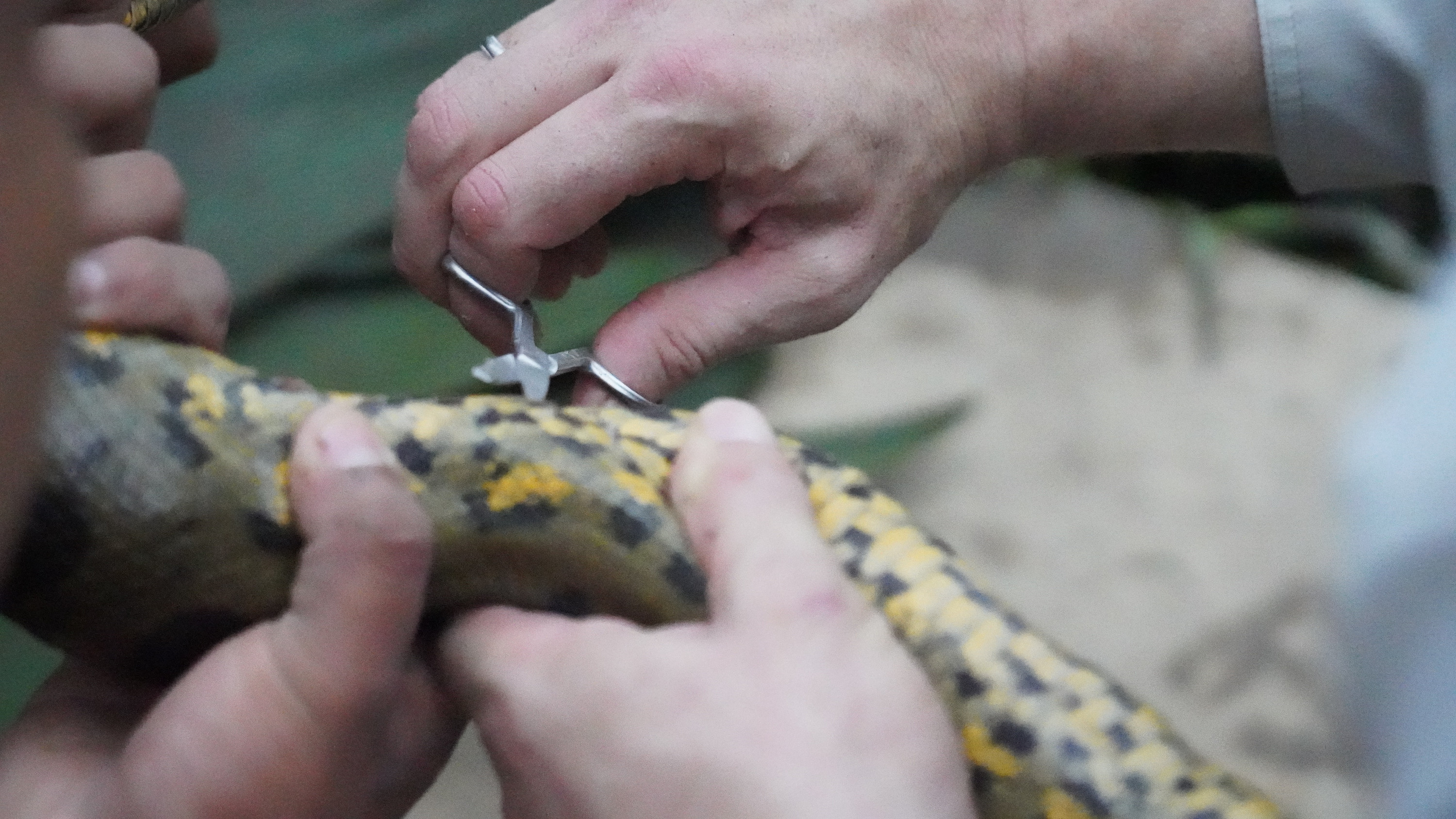
Professor Bryan Fry and Marcelo Tepeña Baihua take a sample from a male green anaconda, later revealed to be a new species Eunectes akayima. (Image credit: National Geographic/Tom Barbor-Might)
As its name suggests, the northern green anaconda inhabits the Amazon's northern basin, which includes parts of Ecuador, Colombia, Venezuela, Trinidad, Guyana, Suriname and French Guiana. The southern green anaconda, on the other hand, is found in the Amazon's southern basin, which stretches across Brazil from Peru and Bolivia to French Guiana. Both species live in wetlands and rivers, spending most of their time submerged in water. Their olive-green coloring blends into their surroundings, which helps green anacondas ambush large prey such as capybaras (), caimans and deer.