New laws aim to make Australian campuses safer
Universities have been forced to take action against gender-based sexual violence.
Editorial
December 31, 2025 — 5.00am
Australian universities are being forced to confront and deal with the shocking fact that their campuses are often not the safe and welcoming spaces they present to prospective students in glossy marketing brochures.
New legislation coming into effect on January 1 will compel universities to “prevent and respond to” gender-based violence and enforce compliance with national standards and requirements. The reforms will require all job applicants to disclose whether they had been investigated for any allegations – proven or not – of gender-based violence, and force institutions to consider proven allegations when hiring.
The mandatory National Higher Education Code to Prevent and Respond to Gender-based Violence will also prohibit NDAs (unless requested by a complainant), require universities to provide both the victim and the accused with support plans, and mandate multiple channels through which to make a complaint.
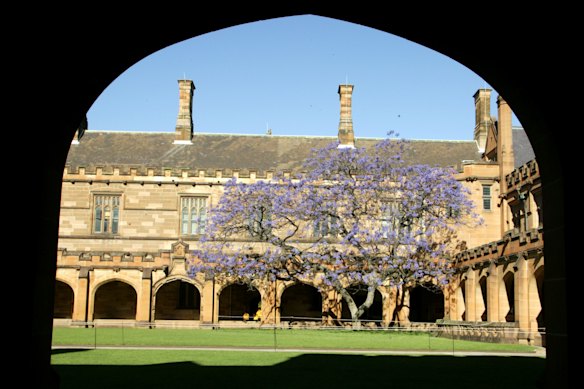
Australia’s oldest tertiary institution, the University of Sydney, is one of several institutions where students have reported sexual harassment or assault.Credit: SMH
The 2021 National Student Safety Survey commissioned by peak body Universities Australia and published the following year found one in six Australian students had experienced sexual harassment and one in 20 students had been sexually assaulted in a university context since starting their studies.
The survey also found the responses of universities were lacking in the majority of cases and about one in every two students knew nothing or very little about the formal reporting process for assault or where to seek support and assistance.
Loading
Significantly, these rates showed little shift from the Australian Human Rights Commission’s 2017 report on university sexual assaults, despite universities committing to a range of measures that would make campuses safer.
Individual universities promised to release data on sexual assaults, but even now, eight years after the commission pinpointed the problems, not all universities disclose incidences of sexual misconduct. In 2024, the University of Sydney received 231 reports of sexual assault and harassment, with 119 of those being university related. The University of NSW had 332 total reports, with 175 being connected to the university.
However, universities have ambled at their own pace towards reform.
There are considerable jurisdictional differences in the acts governing universities, and state and territory ministers have limited directive powers over university governing bodies.
The Herald has been reporting over time on the demeaning, sexist, brutalising behaviour at university residential colleges, particularly at Australia’s oldest tertiary institution, the University of Sydney. For years, little to nothing was done, always with the excuse that the colleges were a law unto themselves, governed by their own councils, usually heavily dominated by alumni. The new laws will now cover student accommodation.
For the tertiary sector, the new laws mean the great challenge lies in changing the culture across campuses and in colleges where unacceptable sexual behaviour has been tolerated as part of university life. As such, universities have a particular responsibility to ensure a safe and equitable learning environment for diverse students.
Universities should be safe and inclusive spaces for all, not only providing opportunities to learn but also to develop lifelong professional networks and friendships while shaping an equal society and building a future free of violence and abuse.
Get a weekly wrap of views that will challenge, champion and inform your own. Sign up for our Opinion newsletter.