Northern lights may be visible in 18 states tonight
Auroras may be visible from Alaska to Illinois as an incoming coronal mass ejection could disrupt Earth's magnetic field and trigger geomagnetic storm conditions.
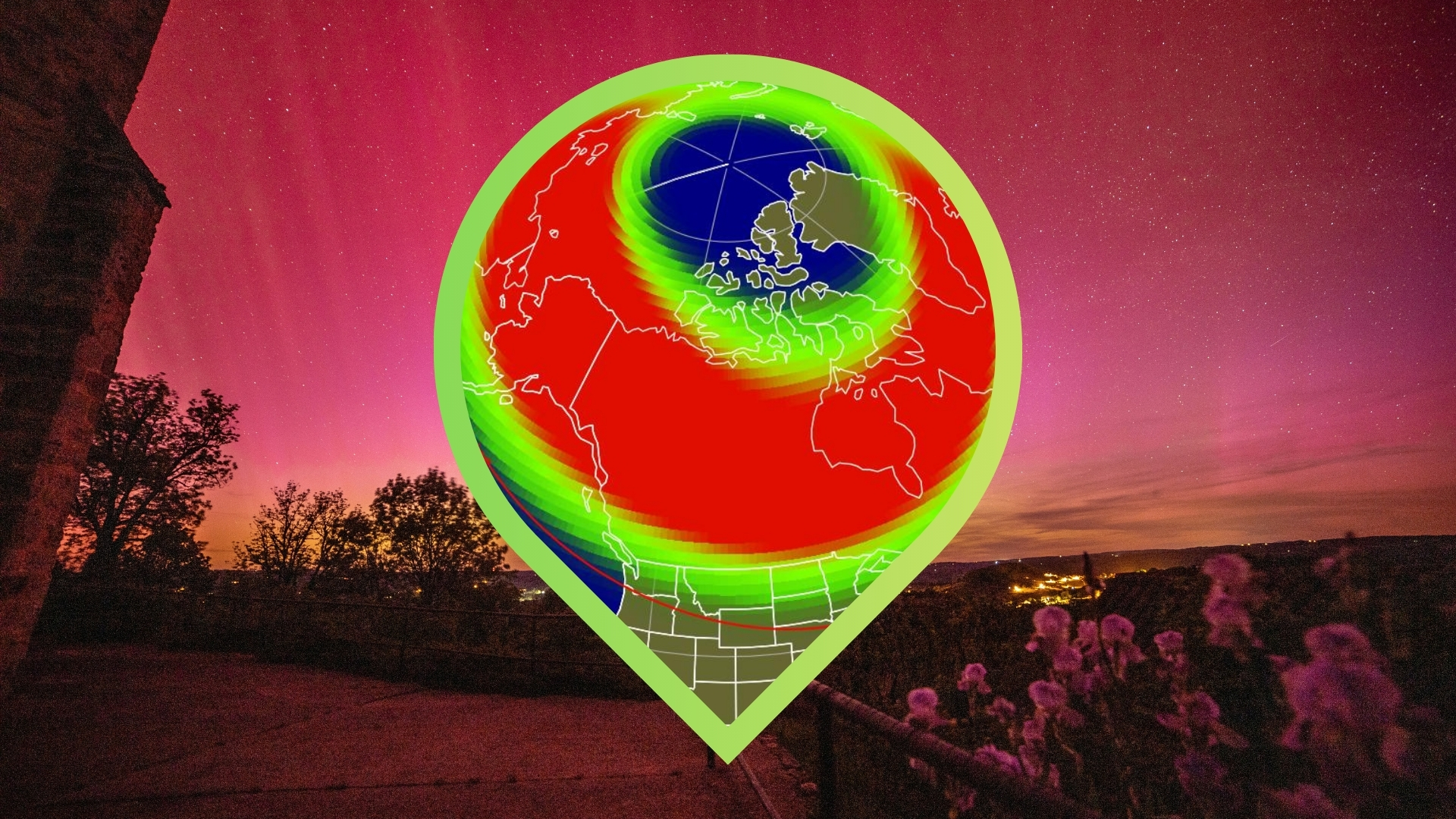
Auroras may be visible from Alaska to Illinois tonight. (Image credit: Map: NOAA Space Weather Prediction Center. Graphic created in Canva Pro.)
Heads up aurora chasers! The northern lights may light up skies across the northern U.S. tonight (Jan. 2-3) according to the National Oceanic and Atmospheric Administration's (NOAA) Space Weather Prediction Center (SWPC).
An incoming coronal mass ejection (CME) — a vast plume of plasma and magnetic field from the sun — is forecast to deliver Earth a blow sometime on late Jan. 2 but more likely in the early hours of Jan. 3, according to the U.K. Met Office. If it arrives as expected, the CME could trigger minor (G1) to moderate (G2) geomagnetic storm conditions.
Where can I see the northern lights tonight?
States that could see auroras tonight
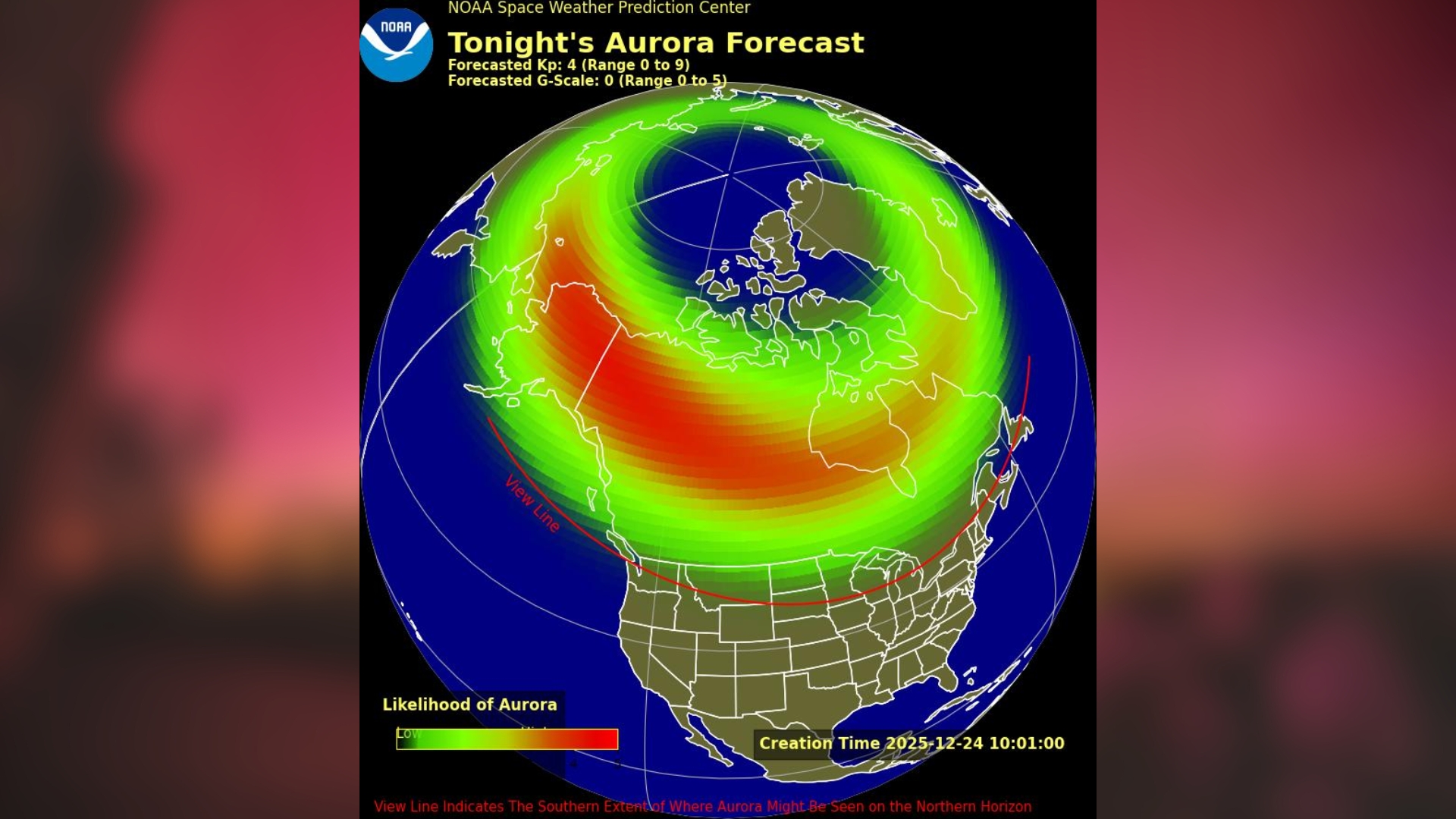
Aurora forecast courtesy of NOAA's Space Weather Prediction Center. (Image credit: Map: NOAA Space Weather Prediction Center. Graphic created in Canva Pro.)
Based on the latest NOAA aurora forecast map, the following 18 U.S. states appear fully or partially above the aurora view line:
- Alaska
- North Dakota
- Minnesota
- Montana
- Wisconsin
- South Dakota
- Michigan
- Idaho
- Maine
- Vermont
- New Hampshire
- Washington
- Iowa
- Oregon
- New York
- Wyoming
- Nebraska
- Illinois
But remember, auroras can be very fickle. The list is based on current forecast data at the time of publication, but if conditions strengthen, northern lights could reach much farther south than expected. Equally, if conditions don't align, we could end up twiddling our thumbs, with no auroras at all.
Northern Hemisphere aurora forecast courtesy of the U.K. Met Office
What time should I look for the northern lights tonight?
The northern lights could be visible across 18 U.S. states tonight (Jan. 2-3) as soon as it gets dark, so it's worth keeping an eye on the sky (and your aurora alerts) throughout the evening, especially in areas with clear, dark skies.