One of the last Siberian shamans was an 18th-century woman whose parents were related, DNA study reveals
A new DNA analysis of the mummies of historical Indigenous Yakuts reveals resistance to 17th-century Russian conquest.
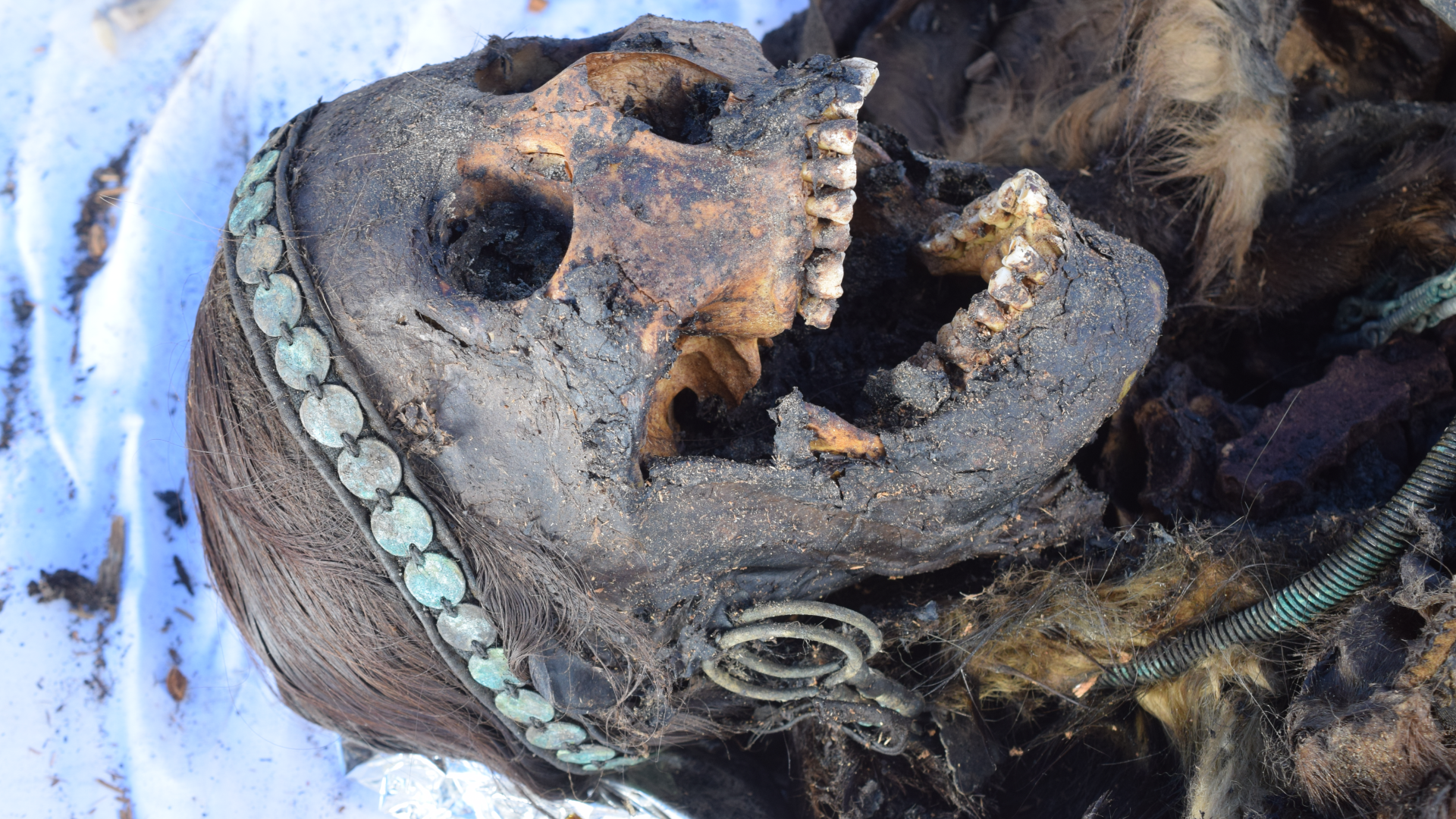
The mummified remains of UsSergue1, an 18th-century female shaman discovered in Yakutia. (Image credit: © Patrice Gérard-CNRS)
The centuries-old mummified remains of Indigenous Siberians are revealing secrets about their genetics over a vast period — before, during and after Russia's conquest of their land — including that a female shaman buried in a red woolen dress had closely related parents, a new study finds.
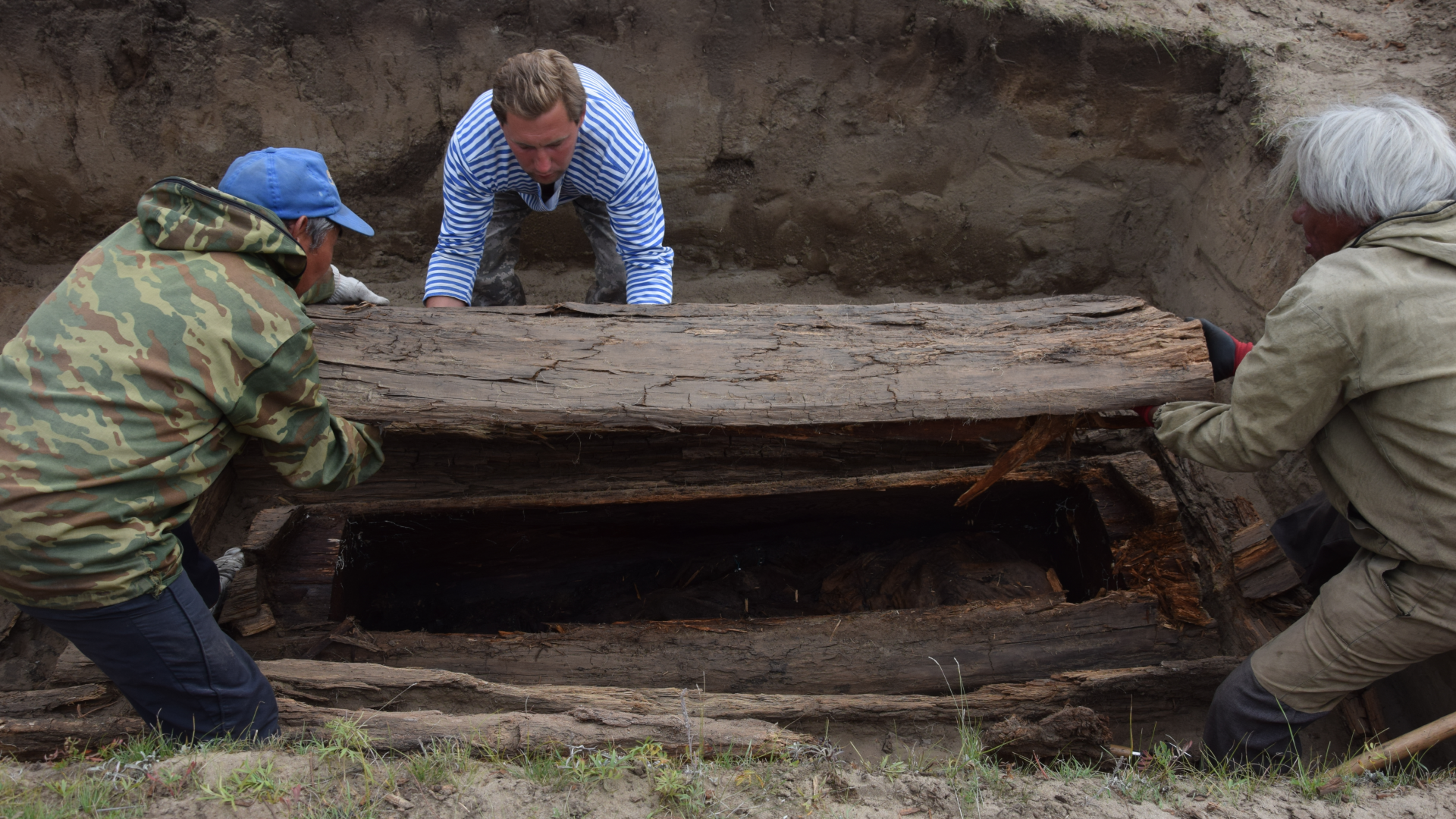
Archaeologists recovered the naturally mummified remains of more than 100 Indigenous Yakuts who were buried in Siberia between the 14th and 19th centuries. Their DNA analysis of the bodies shows that the Yakuts resisted Russian attempts at conquest and Christianization in a way that typically isn't seen in Indigenous populations.
They found that the genetic origins of the modern Yakuts dated back to the 12th to 13th centuries, which confirms the Yakuts' oral histories. But unlike what happened in other colonial conquests — such as the Hispanic conquest of the Americas — the researchers did not find strong evidence of population decline or intermixing between Russians and Yakuts.
"The analyses show that Yakut genetic heritage has remained stable from the 16th century to today," study co-author Perle Guarino-Vignon, a postdoctoral researcher at the Saint-Antoine Research Center in Paris, said in a statement. "There was therefore no conquest through demographic replacement, possibly due to the logistical difficulties of settling in such an extreme environment."
The researchers also investigated the Yakuts' oral microbiome — the community of microorganisms that lives in a person's mouth — by analyzing the mummies' teeth and dental plaque. Although the scientists hypothesized that the microbiome would change over time due to Russian settlers' introduction of foods like barley, rye and tobacco, the analysis revealed that the Yakuts' microbiome was strikingly stable in spite of the Russian conquest.
Shamanism in Siberia
The Yakut graves also revealed that traditional shamanism was practiced well into the late 18th century, long after Russia had attempted to Christianize the Yakuts. The last Yakut shaman, a woman who was in her 30s when she died over 250 years ago, also held a DNA surprise: Her parents were second-degree relatives, which could mean they were half-siblings, uncle and niece or aunt and nephew, or grandparent and grandchild, study co-author Ludovic Orlando, a molecular geneticist at the French National Center for Scientific Research (CNRS), told Live Science in an email.