Overwatch 2 had its best year yet in 2025
With Overwatch 2's perks and new mode, Blizzard is leaning heavily into player choice and creativity for the future. And it's working

Published 5 hours ago
Blizzard is leaning heavily into player choice and creativity for the future, and it’s working
Overwatch 2 finally justified itself as a sequel in 2025
 Image: Blizzard Entertainment
When Blizzard released Overwatch 2 in 2022, the game launched with a new playstyle, three new heroes, and what seemed like few noteworthy changes to how the original game played. Its story from there was a rough one. Its PvE mode, the reason Overwatch 2 existed to begin with, was scrapped, and the few story missions that survived went over poorly with players. The boundaries between hero roles started blurring until they all were different flavors of damage dealers. It was fine, but it wasn't much more than that — and definitely not what you'd expect from a sequel. All that has changed in a big way in 2025, and I'm not just talking about having more and different stuff to do, though that's certainly nice. I mean how all the new perks and other significant additions change the game. It feels like Blizzard's finally thinking outside the box with Overwatch 2, focusing less on how to tweak what's been here for almost a decade and instead thinking more about doing something completely different.
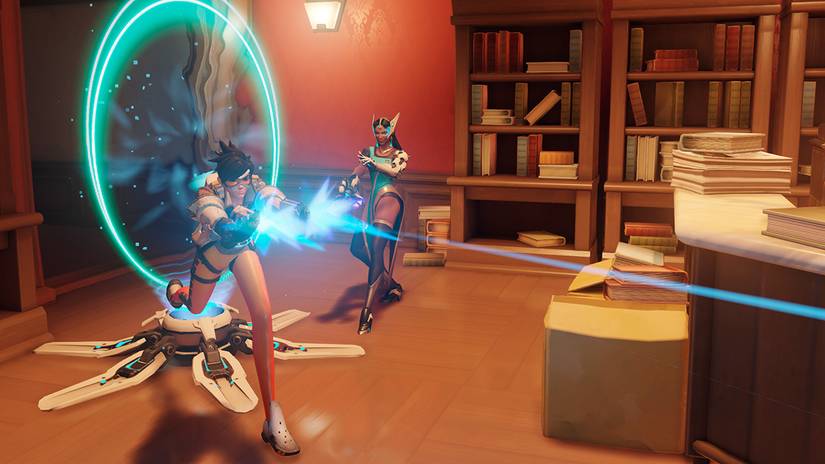
In an effort to address weak spots or maintain balance, Blizzard had relied on changing elements of a character's kit and a never-ending seesaw of tweaks. Perks, which are minor and major modifiers to a hero's skill set that were added this year, feel like Blizzard responding proactively to weaknesses instead. They give players the tools to find creative workarounds rather than changing Cassidy's flashbang for the 57th time or tweaking Tracer's damage by an amount that only three people at the high end of competitive ranks will ever notice. Balance changes are still inevitable, but how you strategize is more important than how well you adapt to the changes Blizzard made.
Blizzard Entertainment
Perks also give you so many more opportunities to strategize in small ways on the fly, adapting to how your opponents and allies are performing and keeping matches from feeling like retreads. Mei gets an escape option with a surprise extra ice pillar, or you can ignore that to make her ultimate more useful. Support-minded Moira players can pick an option that gives them additional emergency healing from her Biotic Orbs for those "oh dip" moments when her special resource runs out. Freja can track pesky characters like Tracer or Sombra, or get a mobility perk to quickly flee from aggressive melee characters like Reinhardt.
There's an unlikely source for help in learning how to dig into these various aspects of a character's kit and use them with situational wisdom: Stadium. I doubt Blizzard even considered Stadium as an unorthodox tutorial when the design team conceived the mode, but it does more to teach you how to play Overwatch 2's 40+ characters better than anything Blizzard's done so far. Say you pick a multiball build for Moira, where she launches more and stronger Biotic Orbs than usual. If you want to do well, you have to plan everything around using Biotic Orb: the best time to use it, advantageous positioning, whether to heal or hurt, if you want to deal damage or just use it to control an area. Or you prioritize attack speed for Reaper and realize how effective he is at surprising and overwhelming enemies, which completely reshapes how you think about flanking strategies.
You can take that knowledge outside of Stadium, and the strategies work just as well, even without all the fancy skill upgrades from that mode. I've learned more about how to creatively use angles of approach on a map by playing Stadium than I ever did in Overwatch 2's standard matches. And while it might just be a coincidence, I've noticed more players varying their strategies since Stadium's launch, taking different risks, setting up combos more effectively, and using parts of maps like Esperanza and Hanaoka that previously went ignored for the most part. A multiplayer game can't grow or improve if only a handful of people know how to play it well. Overwatch 2 still has a long way to go before it could be called newcomer- or even intermediate-friendly, but giving players robust tools and encouragement to experiment is a strong start.

In-game screenshots of hero 45, Vendetta, in Overwatch 2
Image: Blizzard Entertainment
You can see that desire to help players think differently in this year's new heroes, too, with a roster that represents another big and important first for Overwatch 2. Previous additions all have different kits and are enjoyable to play in their own ways, but most of Overwatch 2's new heroes since launch felt like slight variations of the familiar. Look at 2024's lot. Hazard, I love you, but you're really just another dive tank. Venture's a flanker ("what if Tracer went underground instead of moving really fast"), and you can make a decent case for Juno as a replacement for Baptiste. Sure, that last one relies on the two of them just sharing similar healing styles, but the fact that you can make such a comparison at all is the issue with Overwatch 2 in microcosm — a refinement, not an evolution.
2025's new heroes have no such easy comparisons. Freja is a sharpshooter, a suppressor, or a mid-range monster depending on the skill and style of who's playing her. Wuyang feels more like managing a character in an MMO, and the skill ceiling is as flexible as it is high. Some players outdo the team's damage dealers with Wuyang's controllable water orbs. Others regularly have healing numbers over 10,000, and a few mix both and end up being the most formidable part of a team. Vendetta is a first as well. She's the game's first melee damage hero, of course, but also the first one who actually forces you to think about mobility, an essential skill for playing well — and one you could previously get by without doing much to improve.
In short, Overwatch 2 finally earned the numeral in its name this year. And with Blizzard leaning heavily into player choice and creativity for the game's future, it sounds like this new direction isn't a happy convergence of features. It's here to stay.