Panther Lake's gaming chops look solid but the battery life is truly what interests me as a PC gamer on the go
Could Panther Lake be set to make a splash?
(Image credit: Intel)
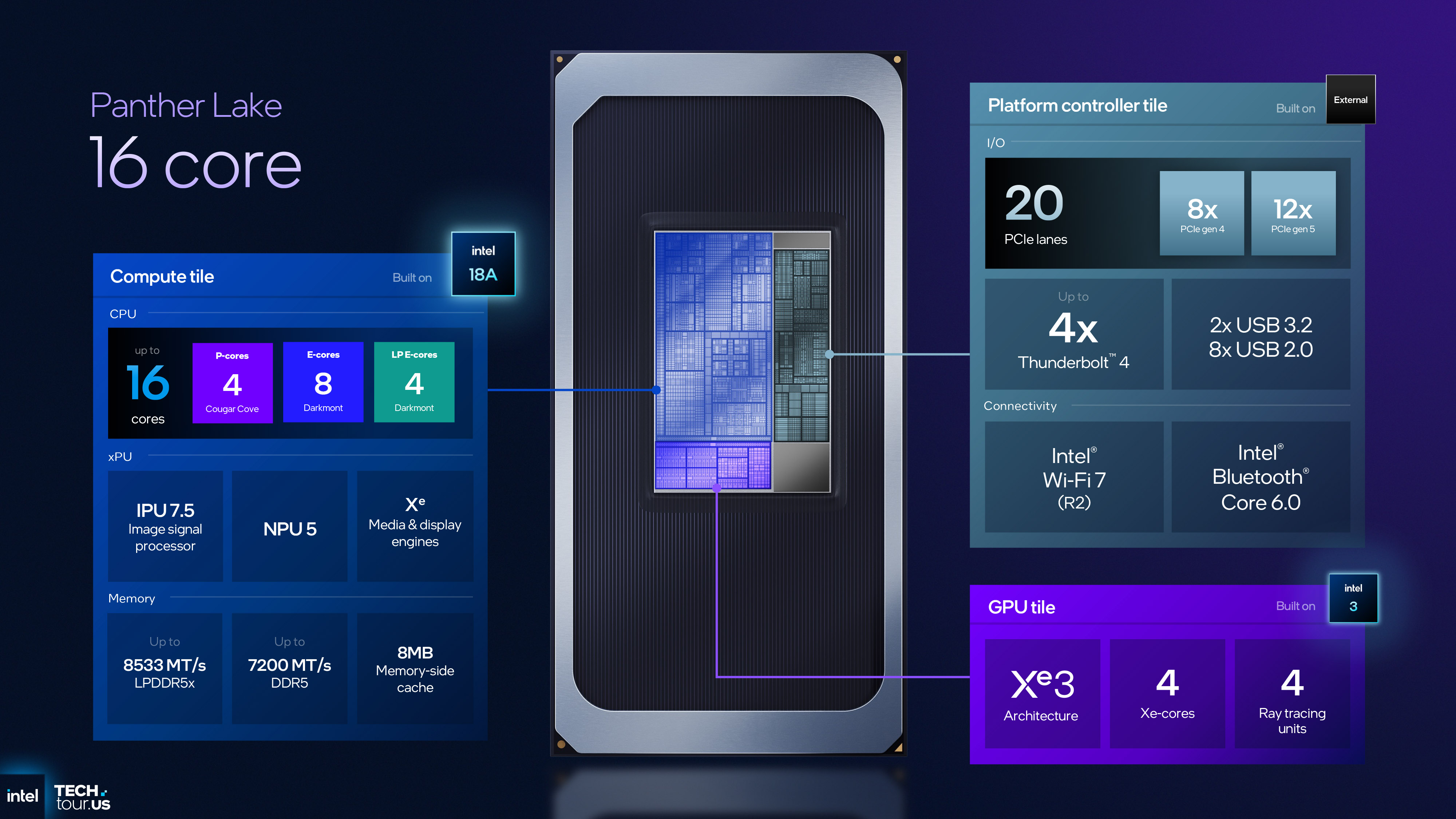
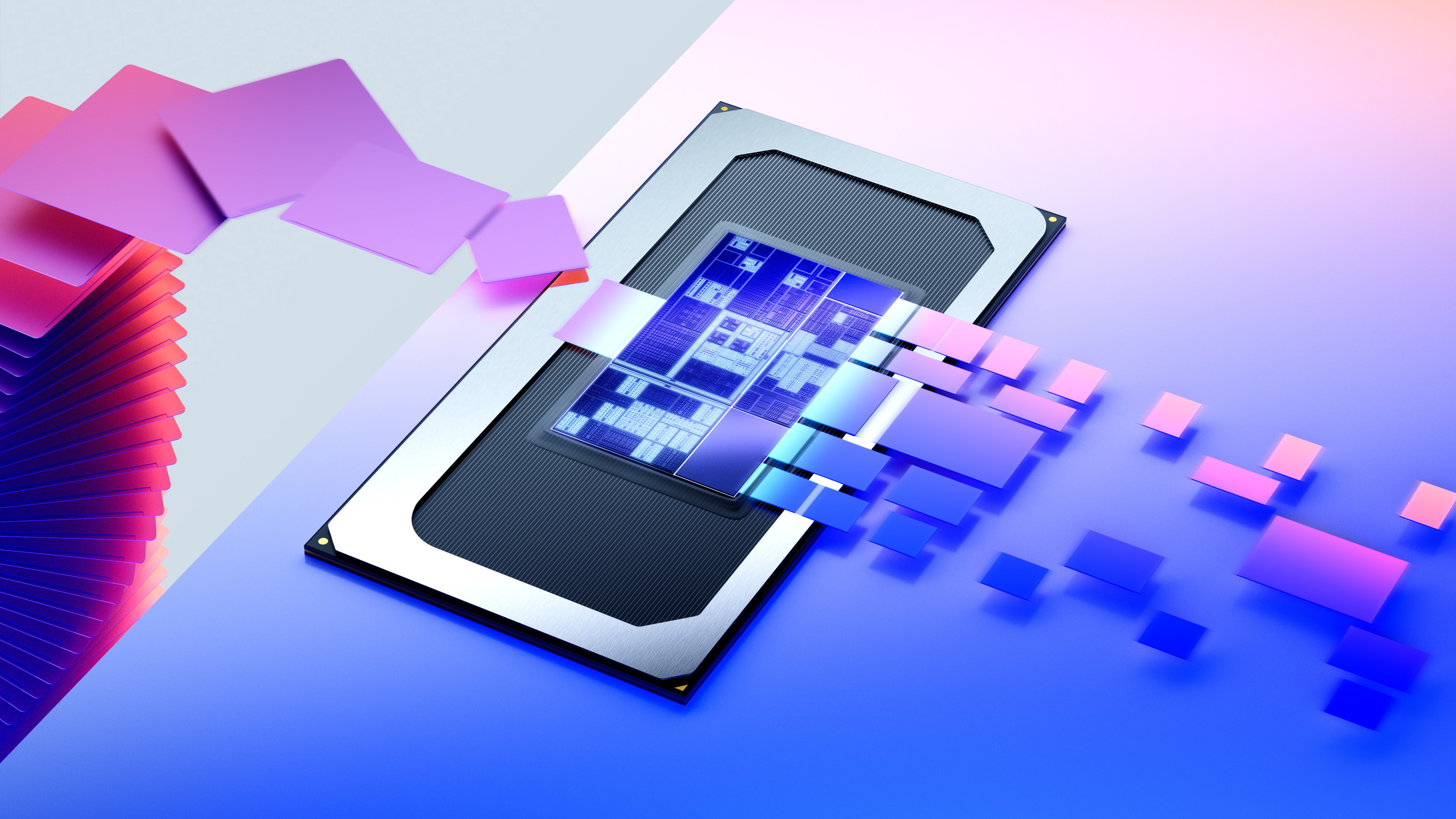
We've had the chance to do some quick game testing of Panther Lake, Intel's latest generation of mobile chips, and we are impressed. That's good news for a company that has looked like it's been a bad place for far too long. I'm happy to hear that future Intel laptops could have good gaming chops without a dedicated GPU, but it's not just the gaming performance that has wowed me thus far. It's something much more mundane: multi-day laptop battery life.
AMD's SVP and GM of Client Product Group, Rahul Tikoo, recently took a swing at Panther Lake, and part of the argumentation is that consumers buy chips based on needs, rather than going for a little bit of everything. In this, Tikoo argues that AMD offers the top of the line for gaming, and therefore, gamers will pick AMD. However, as someone who games a lot, I don't actually look for the absolute best gaming performance out of my laptop. I look for 'good enough' gaming, plus solid ergonomics, a decent weight, and most importantly, strong battery life.
(Image credit: Future)
This is because, as much as I love to crank a game up to its highest resolution and best fps, I've never expected that from a device on the go. If it can fit into my bag, and I can use it for a day of work and a spot of gaming from a cafe, I'd be much happier.
I have a chunky Lenovo Legion I bought five years ago with an RTX 30-something in it, and it's still not awful at playing many games. However, when I went to my home country of Ireland over Christmas, it was my M4 MacBook Air that came with me. Even with the growing pains that are Apple's compatibility, I found the joy of such a light, sturdy device to be too alluring. And, in a sense, that's not too far off the experience I want out of a gaming laptop.
Keep up to date with the most important stories and the best deals, as picked by the PC Gamer team.
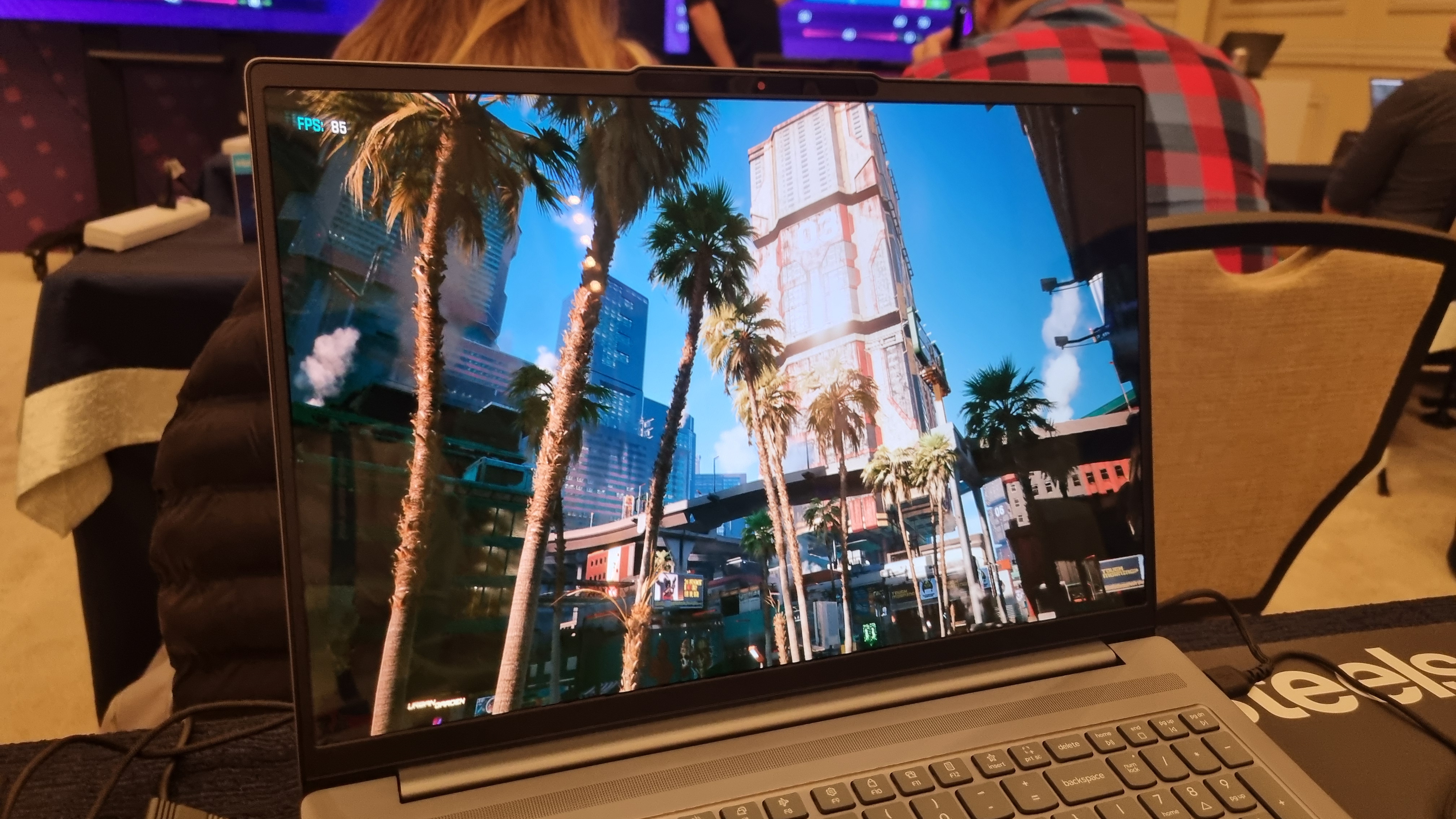
Of course, there's always a middle ground between gaming performance and battery efficiency, but early gaming figures are hitting all the right notes. With Intel reckoning its Arc B390 iGPU is around 10% faster on average compared with an RTX 4050, our figures saw CyberPunk 2077 on High settings at 1200p, without upscaling and ray tracing, to come in at an average fps of 53.
With upscaling on Quality via XeSS, that figure jumped up to 74 fps average. With ray tracing at Ultra and frame generation on, we only saw a small decrease to 70 fps. I'd argue this is pretty great for a device without a dedicated GPU, when we consider the heat, portability, and cash upsides that come with it.