PC Gamer Hardware Awards: The best gaming motherboard of 2025
Motherboards are the only way that Intel stands any chance of winning an award this year.
(Image credit: Future)
Every year, vendors fill the market with a veritable mass of new motherboards, all vying for your attention and wallet. There are so many that it would be almost impossible for anyone to review and test them all (unless they gave up eating and sleeping for 12 months), but we managed to get through nearly 20 of them.
Common features that we all loved to see were: Wi-Fi 7, lots of fast M.2 slots for SSDs, user-friendly BIOS/UEFI interfaces, and quick-release mechanisms on the main PCIe slot for graphics cards and M.2 heatsinks. We also saw big improvements in the rear IO panels, with a proliferation of motherboards sporting lots of 10 Gbps or faster USB/Thunderbolt ports.
Compared to only a few years ago, motherboards have vastly improved in terms of build quality, although there have been a few too many cases of boards ruining CPUs for our liking. The good news is that you don't have to spend a small fortune to bag yourself a motherboard that will serve you well for many years, with excellent storage and expansion options.
We tested a lot of very good motherboards this year, as well as a lot of very average ones, but three really stood out for us. They're not the best because they're the cheapest or fastest, or because they have the most ports or sport the best VRMs. They're just the best motherboards of 2025 that we'd happily use in our own gaming rigs.
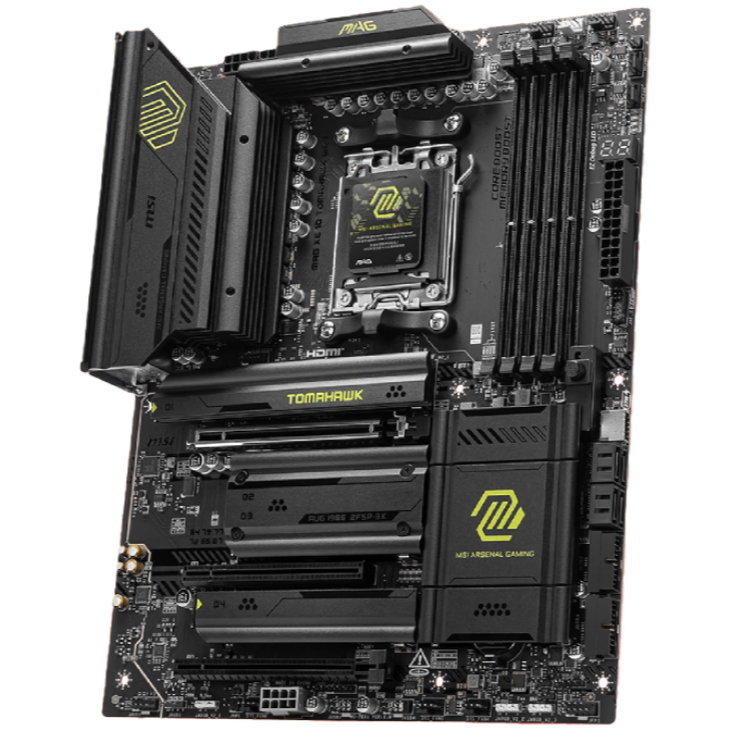
Best gaming motherboard 2025: the nominees
These three motherboards, our favourite ones out of all the boards we've tested and reviewed this year, are equal nominees for winning the award. As to which one gets the crown of 2025, we're announcing all the winners on New Year's Eve, so be sure to check back then.
Keep up to date with the most important stories and the best deals, as picked by the PC Gamer team.
Nick, gaming, and computers all first met in the early 1980s. After leaving university, he became a physics and IT teacher and started writing about tech in the late 1990s. That resulted in him working with MadOnion to write the help files for 3DMark and PCMark. After a short stint working at Beyond3D.com, Nick joined Futuremark (MadOnion rebranded) full-time, as editor-in-chief for its PC gaming section, YouGamers. After the site shutdown, he became an engineering and computing lecturer for many years, but missed the writing bug. Cue four years at TechSpot.com covering everything and anything to do with tech and PCs. He freely admits to being far too obsessed with GPUs and open-world grindy RPGs, but who isn't these days?
You must confirm your public display name before commenting
Please logout and then login again, you will then be prompted to enter your display name.