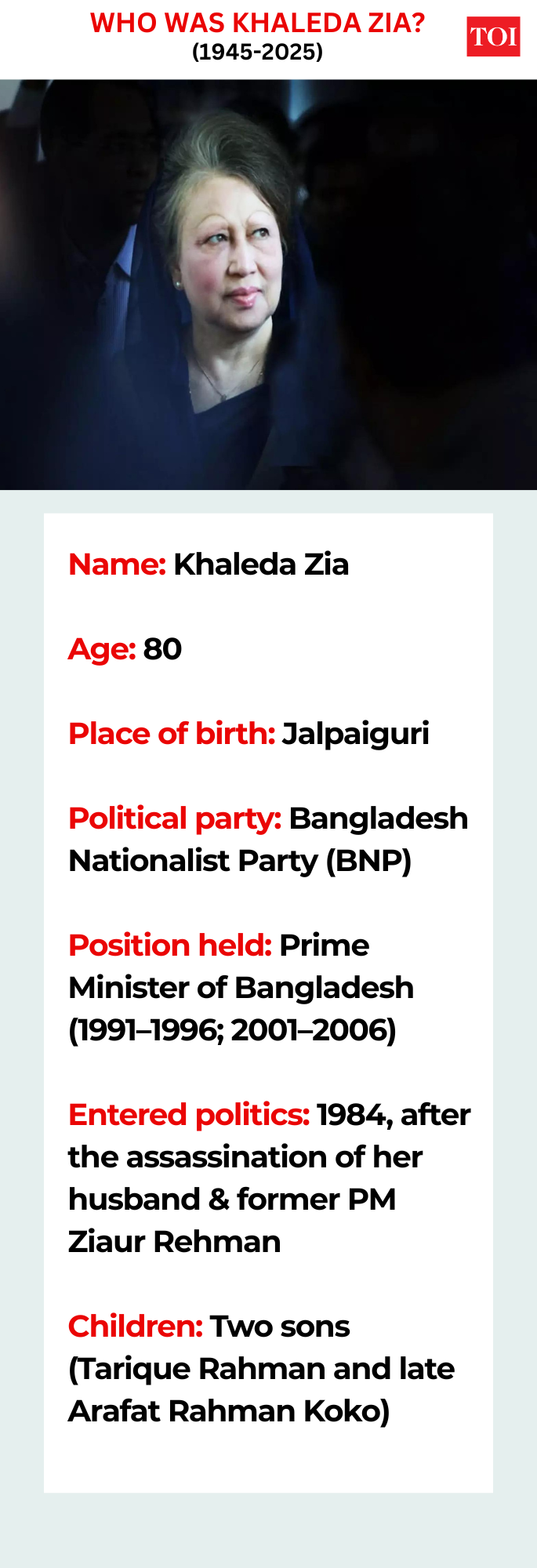
Power vacuum? Hasina’s archrival Khaleda Zia passes away - What it means for Bangladesh polls
The passing of Khaleda Zia closes a significant chapter in Bangladesh's political history. Her death, alongside the absence of rival Sheikh Hasina, creates an unprecedented electoral landscape. The upcoming polls will determine the nation's political future. Her son, Tarique Rahman, emerges as a key figure for the BNP. This election marks a new era for Bangladesh.
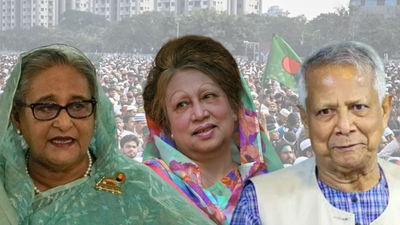
The death of Khaleda Zia closes one of the most dominant and polarising chapters in Bangladesh’s political history, and throws the country’s approaching national elections into uncharted territory.
For more than three decades, Zia was not merely a leader of the opposition or a former prime minister; she was an electoral force without precedent. From her first victory in 1991 until her final contest in 2008, she never lost a parliamentary election, winning every constituency she stood in across five general polls.Also read: How Bangladesh is back where it startedHer passing comes at a moment when Bangladesh is already in political flux. Sheikh Hasina, her lifelong rival, is in exile following her ouster in 2024.
For the first time since the end of military rule in the early 1990s, the two figures who defined, dominated and polarised Bangladeshi elections are both absent from the ballot.
From First Woman PM To Fierce Rivalry: Khaleda Zia’s Three Terms That Redefined Bangladesh Politics
How she became the ‘Mother of Democracy’
Khaleda Zia’s rise was inseparable from Bangladesh’s struggle to return to democracy. After the 1982 coup by army chief Hussain Muhammad Ershad ushered in nearly a decade of military dictatorship, Zia emerged as a central figure in the resistance.
She repeatedly boycotted what she described as stage-managed elections, endured house arrest, and gained a reputation as an uncompromising opponent of military rule.Also read: Who was Khaleda Zia - Bangladesh’s first woman PM and BNP chiefThat stance paid dividends after Ershad’s fall in 1990. In the landmark election of February 1991, held under a caretaker government, Zia led the Bangladesh Nationalist Party (BNP) to power and was sworn in as prime minister. She restored the parliamentary system and became Bangladesh’s first elected woman prime minister, and only the second woman to lead a Muslim-majority country.What followed was an electoral record unmatched in the country’s history. Whether contesting seats in Bogura, Feni, Dhaka, Chattogram, Lakshmipur or Khulna, Zia won every time. Across five elections, she contested 23 constituencies and emerged victorious in all of them. Even when the BNP failed to form the government, she herself remained undefeated.