Quote of the day by Geoffrey Chaucer: 'Women naturally desire the same six things...'
Geoffrey Chaucer, often called the Father of English Literature, rose from a merchant's son to a respected figure through diverse careers. His works, like "The Canterbury Tales," used "everyday English" to explore societal hypocrisies and human desires, influencing literature for centuries. Chaucer's genius lay in observing and portraying life without judgment.
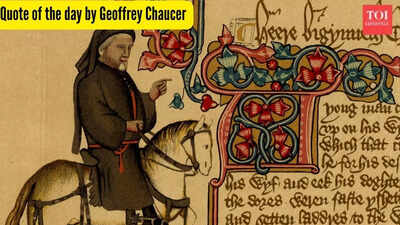
There are some names in English Literature who need to come back to the forefront. They have contributed in ways one cannot imagine. The name of Geoffery Chaucer often appears in this list.
If you thought Shakespeare was the Father of English Literature, you have been living in a lie all your life. It was Geoffrey Chaucer, who lived from around 1343 to 1400 in London, is said to be the father of the English Literature that we know today. He is one of the most iconoic classic writers. He lived in an England that witnessed wars, plagues, and massive social shifts. Chaucer was born in a prosperous family of wine merchants.
He didn't start out as some ivory-tower poet but very slowly climbed the ranks through grit and connections. When he was a teenager, he served in the royal court. He got captured in the Hundred Years' War in France and had King Edward III pay his ransom, that's how deep he was in the nobility's world. Chaucer did diplomacy trips to Italy and France, had a customs jobs in London, and even a stint as a Member of Parliament. These work experiences exposed him to French and Italian writers like Dante and Boccaccio, who shaped his style.
But he developed his own 'everyday English life' style, ditching the fancy Latin and French that dominated back then. By his death, he was the first person buried in Westminster Abbey's Poets' Corner, a spot that honors literary giants.Geoffrey Chaucer's big break into writing came early with dream-vision poems. They were typical medieval tales where the narrator falls asleep and wanders into fantastical realms pondering love, fame, or death.
His Book of the Duchess is an elegy for John of Gaunt's wife, Blanche, blending courtly grief with subtle humor, his The House of Fame is about a wild ride through a giant eagle carrying the poet to the goddess Fame's wobbly palace, poking fun at how reputation crumbles.
Parliament of Fowls imagines birds debating Valentine's Day mates, full of witty bird banter on love's chaos. But Chaucer hit his stride in the 1380s with Troilus and Criseyde, a heartbreaking epic romance set in the Trojan War.
Drawing from Boccaccio, he turned it into deep character drama.

However, nothing can ever match The Canterbury Tales, his unfinished masterpiece from the late 1380s to 1400. It's about thirty pilgrims swapping stories on a trek from London to Canterbury's shrine for Saint Thomas Becket. Each tale mirrors the teller's class-a knight's chivalric romance, a miller's bawdy fart joke, a prioress's saintly miracle, a wife's no-holds-barred marriage manifesto.