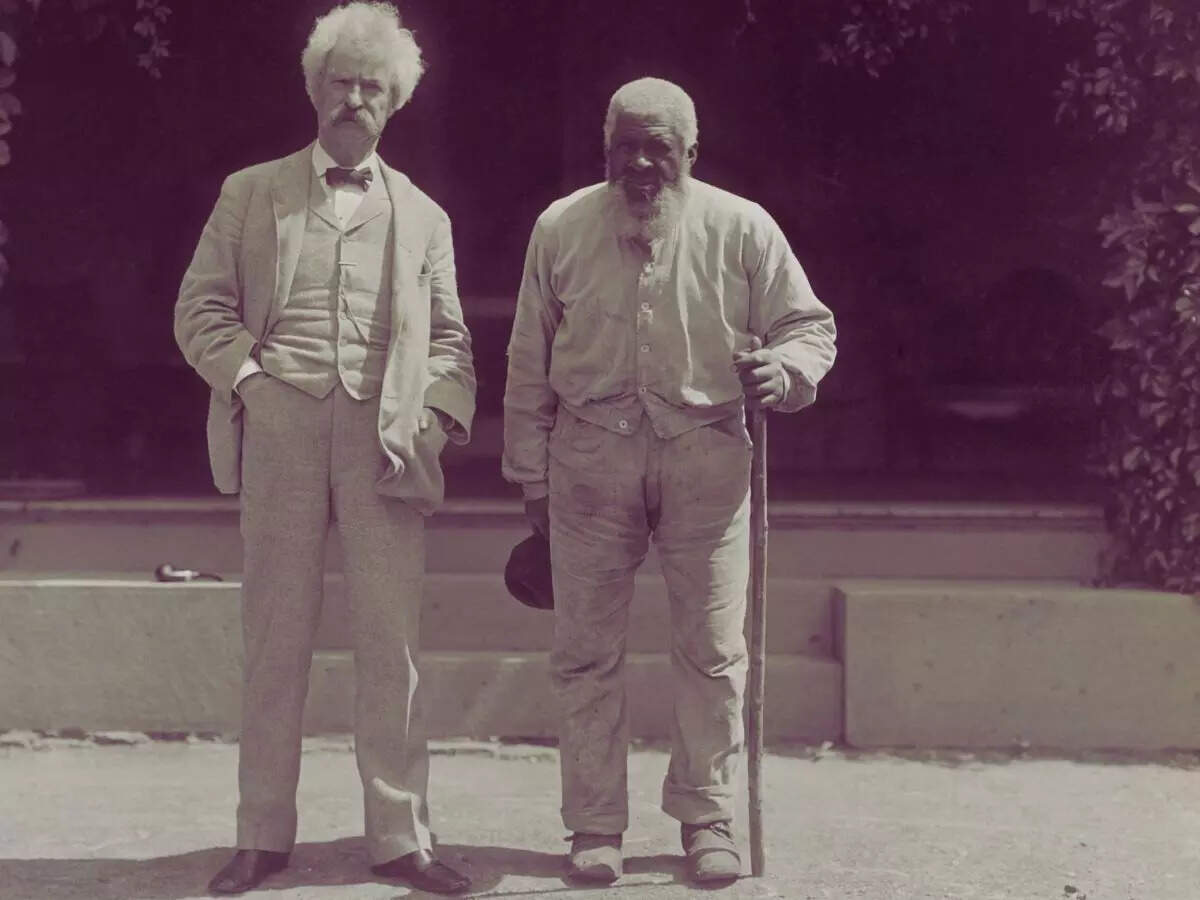
Quote of the day by Mark Twain: 'A man can never be comfortable in life without...'
Mark Twain is one of the greatest American writers that lived on Earth. He is known across the world not just for his books, but for his sharp humour and witty one liners. He sw the world through the lense of humour and expressed the most serious sermons on life in the most lively way. In this article we talk his most profound quotes, which holds a deep meaning.

Remember The Adventures of Tom Sawyer that most of us read in school? Tom makes all his friends whitewash his fence, which he was asked to do as a punishment, simply by making the task appear easy and fun.
One by one, all his friends paint the fence on his behalf while Tom lounges in the sunshine, trading his task for gifts and trinkets from his friends. Mark Twain taught us many lessons through his child protagonists, Tom Sawyer and Huckleberry Finn. His tone, language, and expressions were childlike yet filled with deep meaning. He skillfully used colloquial American speech, familiarity, and casualness to bring seriousness and humor together in his storytelling.
His humour was dry, sharp, and often wickedly honest. And the best thing was it never felt heavy-handed or preachy; instead. His wit and lessons slipped in gently through jokes and everyday situations. Mark Twain was not his real name. He was born Samuel Langhorne Clemens in 1835 in Florida, Missouri. He grew up in Hannibal, a sleepy Mississippi River town that felt like the edge of the world. His dad was a strict lawyer who died young, leaving the family barely managing to make ends meet.
As a young boy, Sam learned early that life didn’t play fair. He quit school at 12, set type for newspapers, then chased adventure as a riverboat pilot—earning his pen name “Mark Twain” from the leadsman’s call meaning “two fathoms deep, safe water ahead.
” That Mississippi life shaped him: all that fog, freedom, and folks spinning tall tales.
Twain’s path zigzagged like the river itself. Civil War killed the steamboat gig, so he headed west with his brother, tried silver mining (total flop), and stumbled into journalism.
By his late 20s, he was lecturing, traveling Europe and the Holy Land, marrying Olivia “Livy” Langdon, a proper lady from a wealthy family who softened his rough edges and edited his wilder impulses. They settled in Hartford, Connecticut, in a fancy house called Stormfield, raising three daughters amid parties with the likes of Helen Keller.
But perks came with punches: bad investments bankrupted him in the 1890s, forcing a grueling world lecture tour to pay debts.
He lost his wife and two daughters to illness, sinking into bitter grief that colored his later writing.His “perks,” though? Man, they were golden. Fame hit with The Innocents Abroad (1869), a hilarious takedown of snooty tourists that sold like hotcakes. Then came the masterpieces: The Adventures of Tom Sawyer (1876), capturing boyhood mischief straight from Hannibal; Adventures of Huckleberry Finn (1885), the great American novel that skewers slavery and hypocrisy through a runaway kid’s eyes.