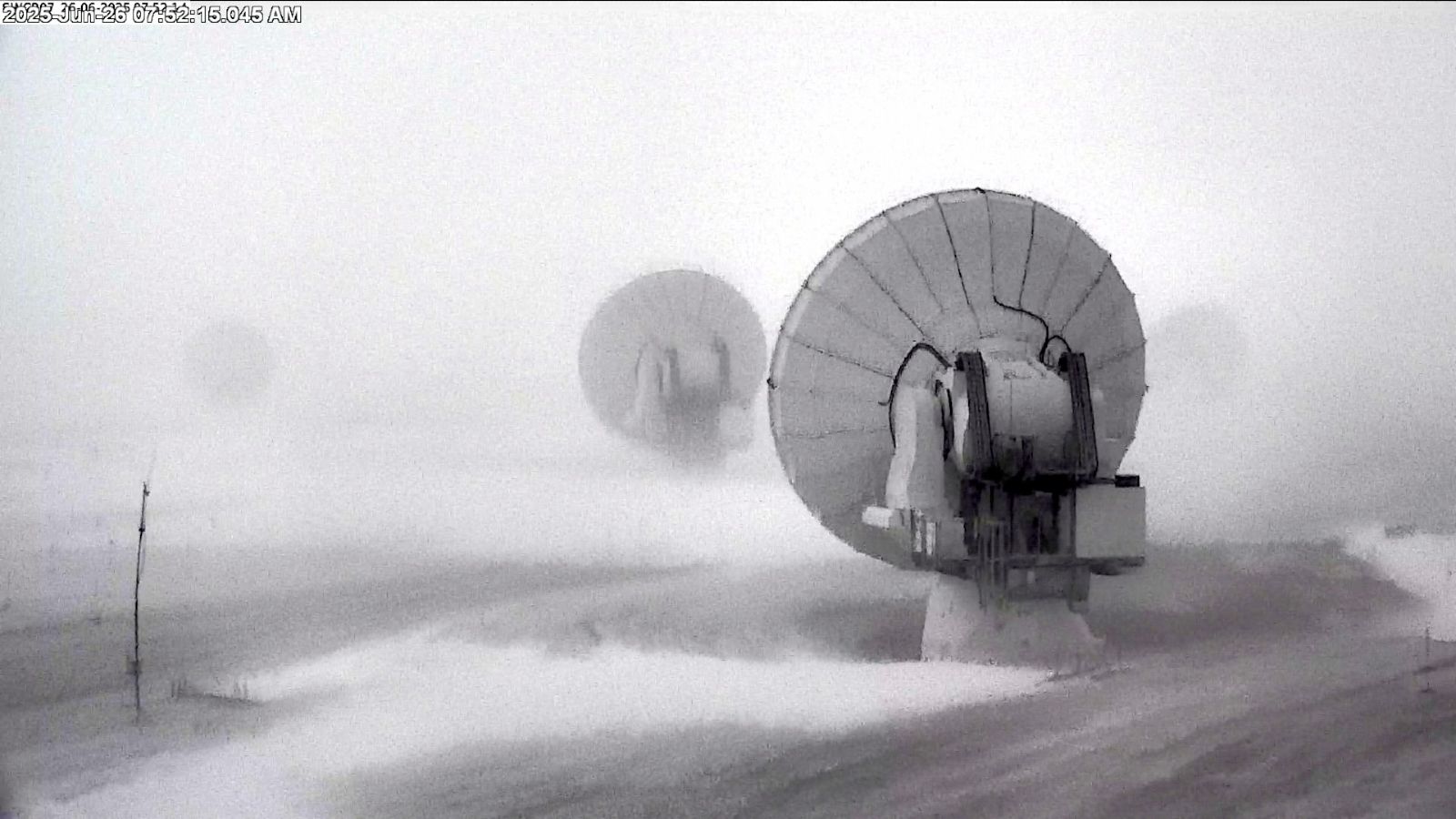
Rare dusting of snow covers one of the driest places on Earth and shuts down massive radio telescope — Earth from space
A satellite photo from July shows intricate snowy stripes painted across the Atacama Desert in Chile. The icy weather temporarily put the Atacama Large Millimeter/submillimeter Array (ALMA) observatory into "survival mode."
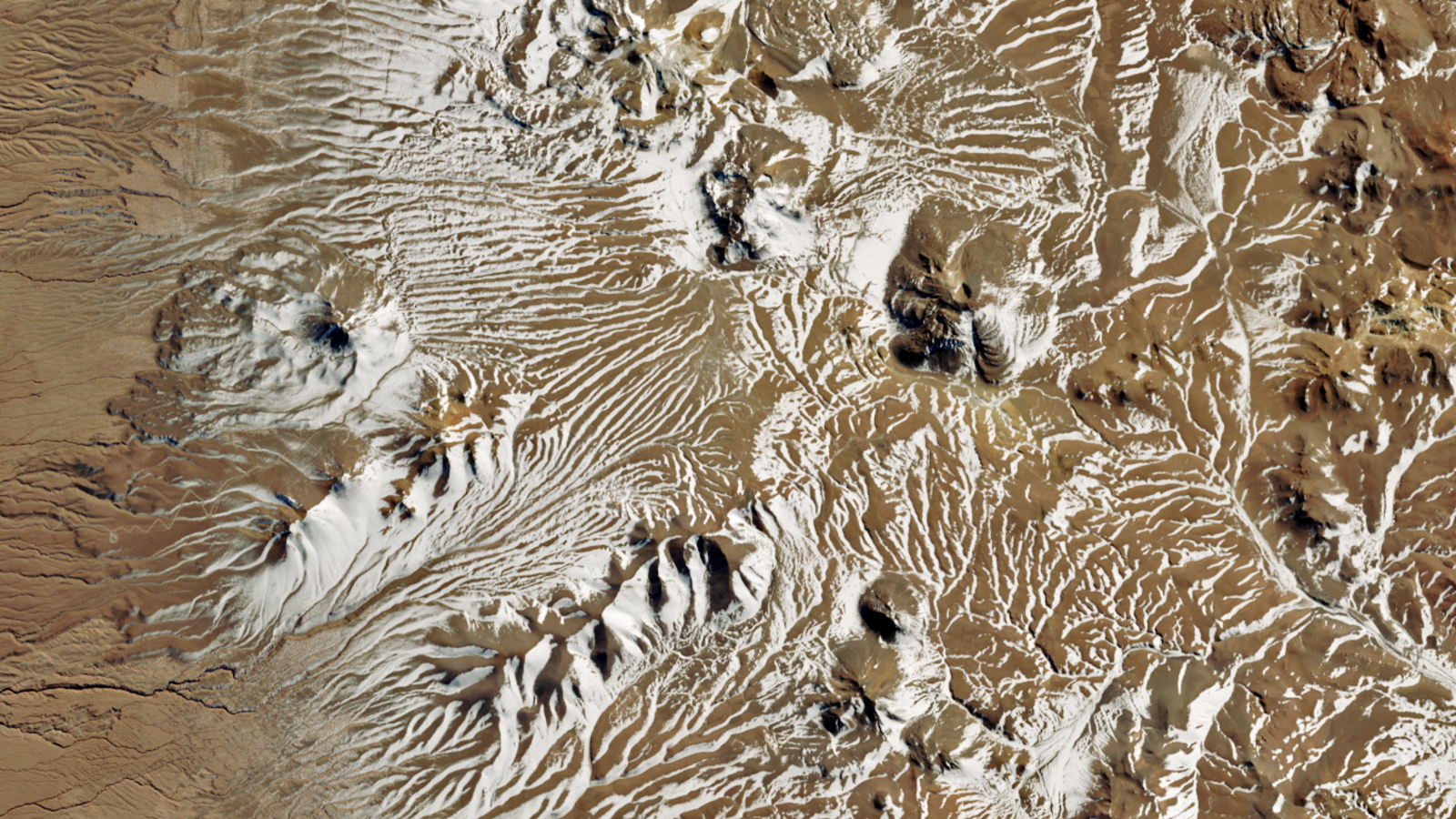
The Atacama desert is widely considered to be one of the driest places on Earth. But in July, large parts of the region experienced a thick dusting of snow. (Image credit: NASA/Landsat 9)
QUICK FACTS
Where is it? Atacama Desert, Chile
What's in the photo? A rare dusting of snow covers parts of one of the driest places on Earth
Which satellite took the photo? Landsat 9
When was it taken? July 10, 2025
This striking satellite photo captured a rare spectacle earlier this year, when "one of the driest places on Earth" experienced a rare snowstorm. This freak event temporarily turned the barren, rocky landscape white — and briefly shut down one of the world's most powerful radio telescopes.
The desert is also widely considered to be one of the driest places on Earth, alongside other hyperarid spots, such as Antarctica and the Sahara. Some areas currently experience as little as 0.002 inches (0.5 millimeters) of rain annually, according to Guinness World Records. Previous research has hinted that parts of the Atacama went nearly 400 years without any recorded rain, between 1570 and 1971.
On June 25, a rare snowstorm hit Atacama after a "cold-core cyclone" unexpectedly drifted down from the north, covering over half the desert with white powder, according to NASA's Earth Observatory.
The satellite photo above shows a section of the desert in the Chajnantor Plateau, which rises to around 16,000 feet (5,000 meters) above sea level. This area is home to the Atacama Large Millimeter/submillimeter Array (ALMA) observatory — an array of more than 50 radio dishes that scour the "Dark Universe." (ALMA itself is not visible in the aerial photo.)

Snowfall in the Atacama is very rare. This photo shows the area surrounding ALMA after a similar event in 2013. (Image credit: Ronald Patrick/Getty Images)