Record foodgrain production! Indian agri sector remains strong despite US tariffs
India's agriculture sector is poised for record foodgrain production in 2025-26, driven by strong monsoons and GST cuts on key inputs. Despite global trade headwinds and excessive rainfall in some areas, sowing has progressed well. Stakeholders anticipate major bills on seeds and pesticides in 2026 to address input quality.
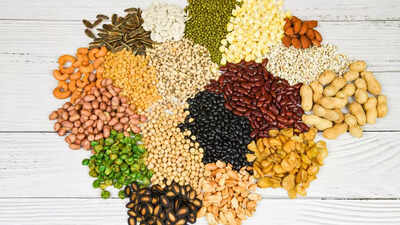
The agriculture sector is expected to end 2025 with record high foodgrain production, despite global trade headwinds. The strong figures come on the back of strong monsoon-driven sowing and major cost savings thanks to GST cuts on key inputs.
For the upcoming year, 2026, stakeholders are waiting for major bills on seeds and pesticides to tackle fake inputs.The agriculture ministry expects total foodgrain production in 2025-26 to exceed last year’s record 357.73 million tonnes, thanks to above-normal southwest monsoon rains, which supported kharif crops across major growing regions, as US President Donald Trump’s tariffs compelled market diversification.“We are hopeful of achieving record foodgrain production this year 2025-26 (July-June). Kharif output remained positive and rabi sowing is progressing well,” Agriculture Secretary Devesh Chaturvedi told PTI.
Trump Warns India On Rice Dumping As US Farmers Demand Action Against Cheap Imports
Foodgrain production in 2025
According to the ministry’s first advance estimates, kharif foodgrain output is projected at 173.33 million tonnes, compared with 169.4 million tonnes in the previous year. Rice production is expected to cross 124.5 million tonnes while maize output is estimated at 28.3 million tonnes.
However, excessive rainfall in September caused crop damage in parts of western and eastern India.Rabi sowing also gained ground. By December 19, the total rabi area had reached 659.39 lakh hectares, an increase of about 8 lakh hectares over the previous year. Wheat sowing rose marginally to 301.63 lakh hectares, while pulses acreage expanded more sharply to 126.74 lakh hectares.Despite higher output, growth in the agriculture and allied sectors is expected to slow.
NITI Aayog member Ramesh Chand pegged sectoral growth at 4% for 2025-26, lower than the earlier estimate of 4.6%, citing base effects.
GST cuts and other policy relief for farmers
On the policy front, the most major intervention came from the 56th GST Council meeting, which reduced GST on several agricultural inputs from 18% to 5%, effective September 22. The move covered tractors below 1,800 cc, harvesters, irrigation equipment, tractor parts and tyres, along with 12 categories of bio-pesticides, micronutrients and fertiliser raw materials.
UHT milk, paneer, chhena and Indian breads were brought under the zero-tax bracket.These measures lowered farming costs by an estimated 7–13% and enabled savings of Rs 50,000 to Rs 1 lakh on tractor purchases. Chemical pesticides and fungicides, however, continued to attract 18% GST.“2025 has been a positive year for the farm equipment industry... The GST relief has supported demand by improving farmers' purchasing power and making mechanised solutions more affordable,” CNH India President and Managing Director Narinder Mittal said.Government spending and welfare schemes continued through the year, backed by an agriculture ministry allocation of Rs 1.37 lakh crore for 2025–26. The PM Fasal Bima Yojana and the Weather-Based Crop Insurance Scheme was extended till 2025–26, with a total outlay of Rs 69,516 crore. At the same time, subsidy on the DAP fertiliser was also hiked by Rs 3,500 per tonne.Other measures included the launch of the Pradhan Mantri Dhan-Dhaanya Krishi Yojana, which reserved over Rs 35,000 crore for 100 low-productivity districts, benefiting about 1.7 crore farmers.