Retirement that stunned Indian cricket - How Dhoni's Test career ended
Without any ceremony, 44 minutes after MS Dhoni finished his post-match press conference following the Boxing Day Test at the Melbourne Cricket Ground, the BCCI sent out a press release. The news came an hour after India had managed to draw an away Test — the first time in the previous 14 Australia-India Tests that the visiting team had not lost.
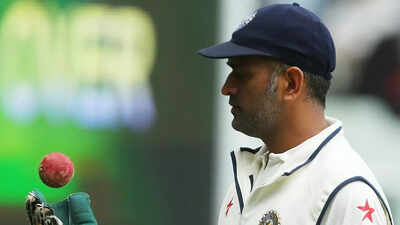
MS Dhoni. (Photo/social media)
The news did not arrive with drama. It did not wait for a farewell match, a final lap around the ground on the shoulders of fellow teammates, or a long speech explaining the moment. It arrived as a press release.
No association was allowed to turn the moment into an event. There were no speeches. There was not even a farewell press conference.Without any ceremony, 44 minutes after MS Dhoni finished his post-match press conference following the Boxing Day Test at the Melbourne Cricket Ground, the BCCI sent out a press release. The news came an hour after India had managed to draw an away Test — the first time in the previous 14 Australia-India Tests that the visiting team had not lost.
It came in the middle of a series. Nothing about the moment suggested an ending.
But it was.
India can survive without Virat and Rohit, not without Bumrah
Dhoni was batting on 24 when the match was called off early at the MCG. Four overs were left and India still had four wickets in hand. During the customary captain’s press conference at the end of the match, he made no mention of retirement. The announcement followed shortly through a BCCI press release, which cited “the strain of playing all formats” as the reason for his decision.
Virat Kohli was named India’s captain for the final Test of the series in Sydney, a series India had already lost.In the months leading up to his retirement, Dhoni had dealt with fitness issues. He missed five One-Day Internationals against Sri Lanka in November due to a hand injury. The same injury ruled him out of the first Test against Australia in Adelaide. Since the start of 2008, counting international matches across formats as well as IPL and Champions League T20 games, Dhoni had played 398 matches.
That was the most by any cricketer in that period.
Suresh Raina was next with 369 games.Dhoni’s place in the Test side was not under question, but his batting returns dipped in 2014. He averaged 33 from 17 innings that year. India’s overseas results had also suffered under his leadership. From 2011 onwards, India won only two of their 22 away Tests and lost 13.But Dhoni’s Test career was never only about numbers.
From ticket collector to Test captain
Dhoni’s journey to the top of Indian Test cricket had not followed a familiar path.
He broke what many saw as a metropolitan hold on the game and carved out a distinct place in India’s Test history. His rise took him from working as a ticket collector with Indian Railways to leading the Indian Test team.His first Test as captain came against South Africa in Kanpur in April 2008, after regular captain Anil Kumble was ruled out due to injury. Dhoni took over the role full-time later that year when Kumble retired after the Delhi Test against Australia in October.