Revealed: The one big threat to the NSW economy in 2026
Treasurer Daniel Mookhey says the NSW economy is gaining strength, but there are challenges. These five charts show what’s expected in 2026.
Growth is then expected to accelerate gently, averaging a solid but not spectacular 2.1 per cent over the four years to 2028-29. That’s slightly better than what was forecast in the state budget last June.
Stronger conditions in the construction sector, underpinned by buoyant house prices, should help boost the state’s growth. New investment in data centres and renewable energy projects will also contribute. However, a recent uptick in inflation has cast a shadow over the economic outlook.
Inflation and interest rates
At the beginning of 2025 it appeared inflation was under control after a damaging spike during 2023 and 2024 which triggered a sharp rise in interest rates. To the relief of millions of home borrowers, the Reserve Bank cut rates in February, May and August.
But since then, price pressures have re-emerged. In October, the inflation rate hit 3.8 per cent – the highest in over a year and well above the Reserve Bank’s target band of 2-3 per cent.
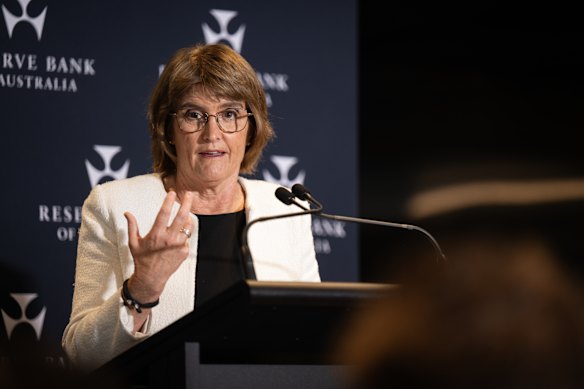
RBA governor Michele Bullock warned in December that inflation risks have tilted “to the upside”.Credit: Louie Douvis
In December, Reserve Bank governor Michele Bullock warned that inflation risks had tilted “to the upside”; she even canvassed the “possibility of a rate rise” to keep inflation in check.
A swag of private sector forecasters now expect higher interest rates in 2026. National Australia Bank has forecast the Reserve Bank to hike rates by 0.25 of a percentage point in both February and May.
That would be a financial blow to the state’s many highly indebted borrowers, especially in Sydney. It would also take a toll on consumer and business confidence.
Household income growth in NSW has been subdued for some time, and the state budget review warned that higher interest rates would “weigh on” consumer spending. Some key sectors of the NSW economy, such as housing construction, would be hampered if borrowing costs start to increase again.
Mookhey says the state government’s focus is on “making life in NSW more affordable”.
But achieving that will be far more difficult if inflationary pressures linger and interest rates rise.
Jobs and unemployment
The NSW unemployment rate has hovered about 4 per cent for most of 2025 – a little higher than the previous two years but still low by historical standards.