Russia, minerals or whim? Why Trump is after Greenland – and what are his options
President Trump's ambition to acquire Greenland has ignited a diplomatic crisis with Denmark. While the US cites national security and Arctic interests, allies fear a return to expansionism. Despite Denmark's offers of increased cooperation, Trump's focus on territorial acquisition, driven by symbolism and a desire to expand US landmass, perplexes many.
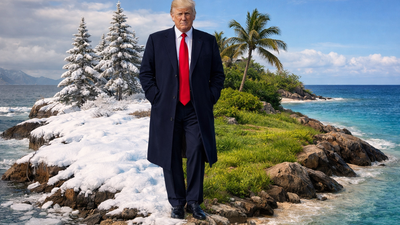
(AI image generated using ChatGPT)
Just days after Venezuela’s president Nicolás Maduro was captured, US president Donald Trump revived his controversial territorial ambition: bringing Greenland under American control.
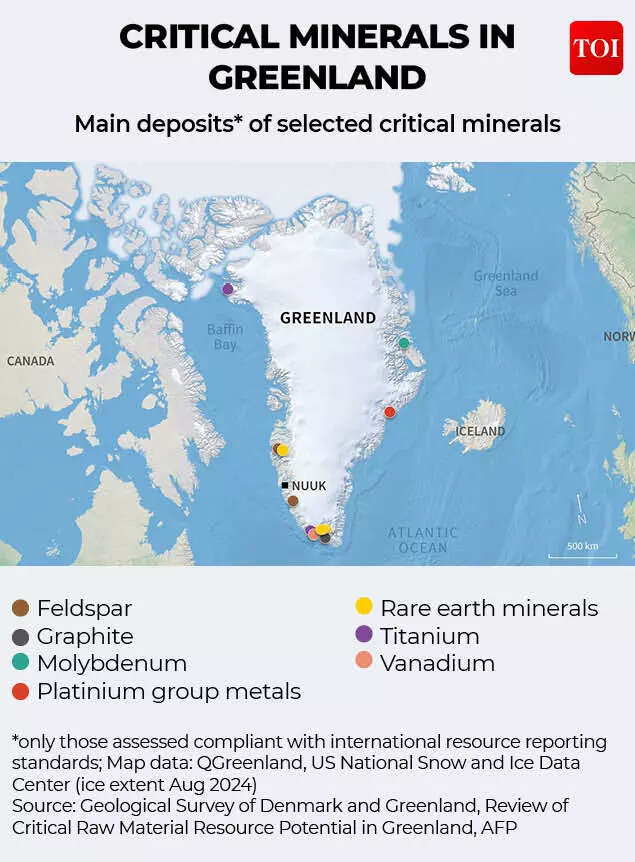
Trump insists the United States “needs” Greenland for national security, pointing to rising Russian and Chinese activity in the Arctic and the strategic shifts triggered by melting ice. He has refused to rule out the use of military force, a stance that has infuriated Denmark, which governs the vast, mineral-rich island as a self-governing territory.
Greenland Capture To Begin? Karoline Leavitt DISCLOSES Trump’s ‘Final’ Plan: ‘US Troops Rushed...'
European leaders have responded with alarm. Denmark’s prime minister Mette Frederiksen has warned that any US attempt to seize Greenland would spell the end of Nato itself, while leaders from Britain, France, Germany and Italy have lined up behind Copenhagen, stressing that “Greenland belongs to its people”.
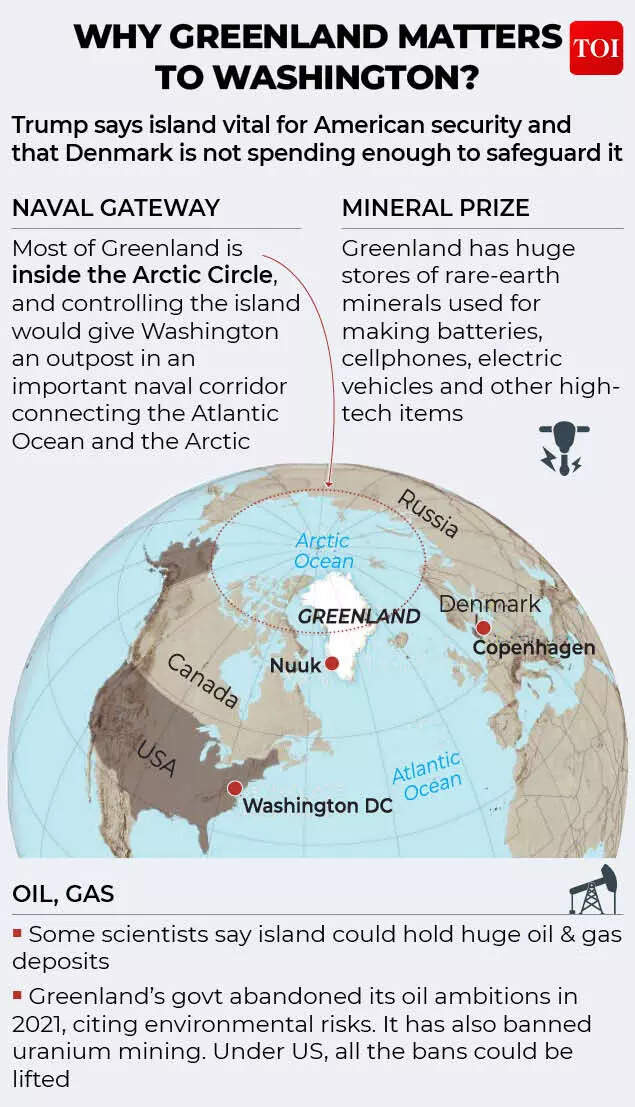
Yet beneath the rhetoric lies a more complex question: what does Trump actually want from Greenland? Is this about missile defence and Arctic security, access to critical minerals, or something more symbolic – a revival of 19th-century expansionism dressed up as modern geopolitics?
A strategic island the US already dominates
Greenland’s importance to US security is not in doubt. Sitting between North America and Europe, it straddles the GIUK gap – the maritime corridor linking the Arctic to the Atlantic.
During the Cold War, Washington feared Soviet missiles would pass over the island on their way to the US, prompting a heavy American military presence.
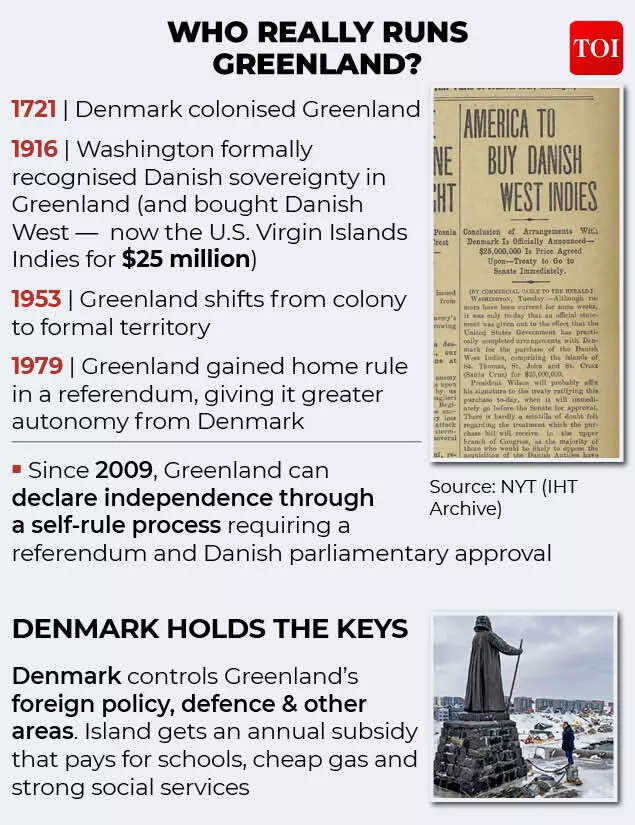
That presence never fully disappeared. Under a 1951 defence agreement with Denmark, the US operates the Pituffik Space Base in north-west Greenland, a critical hub for missile warning, missile defence and space surveillance. At its Cold War peak, the US stationed up to 6,000 troops across the island; today fewer than 200 remain.
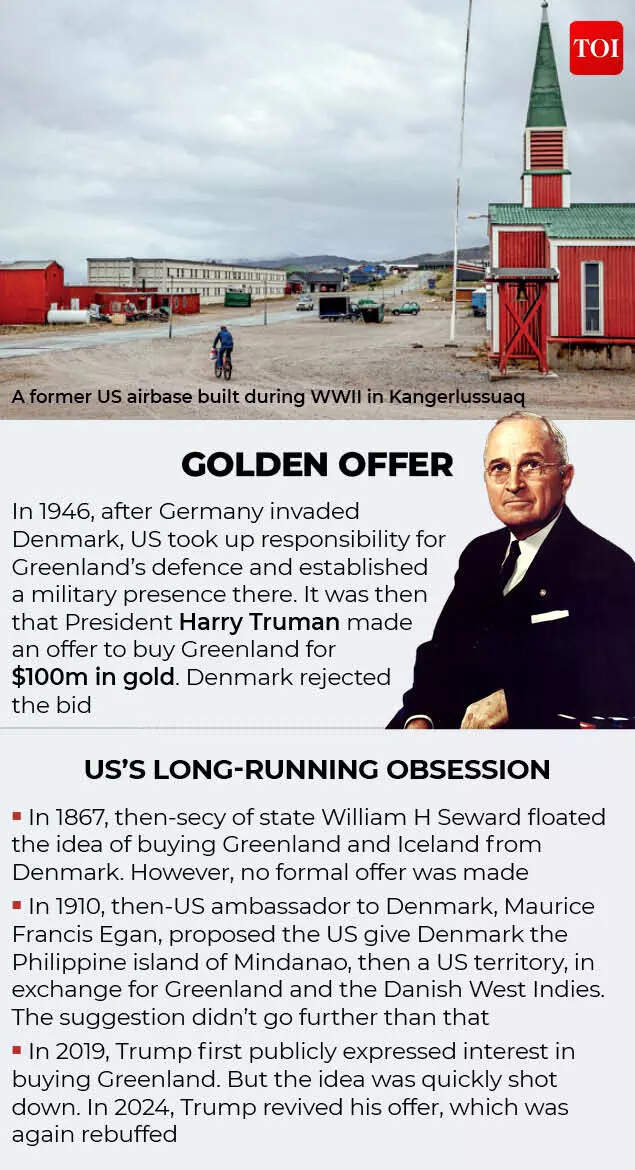
Crucially, the treaty allows Washington to expand its military footprint with little more than formal notification to Copenhagen. As Kristine Berzina of the German Marshall Fund has noted, the US could significantly increase its presence “without anything really needing to be done”.This is why Trump’s fixation has puzzled many allies. Denmark has repeatedly offered the US more bases, deeper defence cooperation and greater freedom of operation.