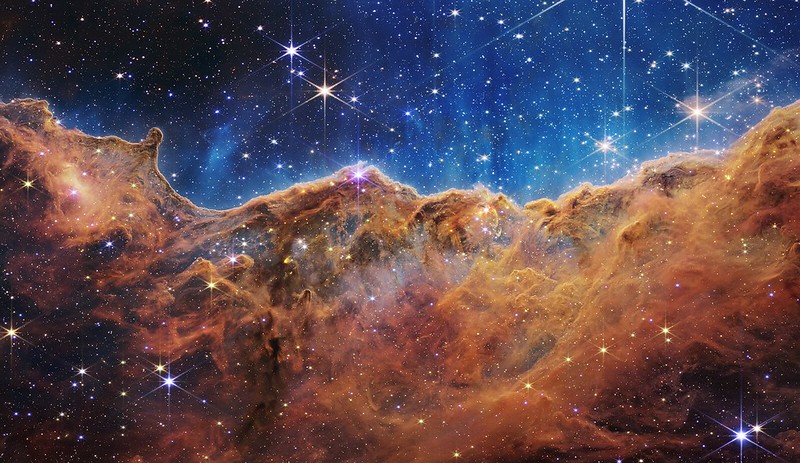
Science history: James Webb Space Telescope launches — and promptly cracks our view of the universe — Dec. 25, 2021
The James Webb Space Telescope blasted off from a launchpad in French Guiana in 2021, before reaching a spot in orbit a million miles away. It soon began breaking cosmology.
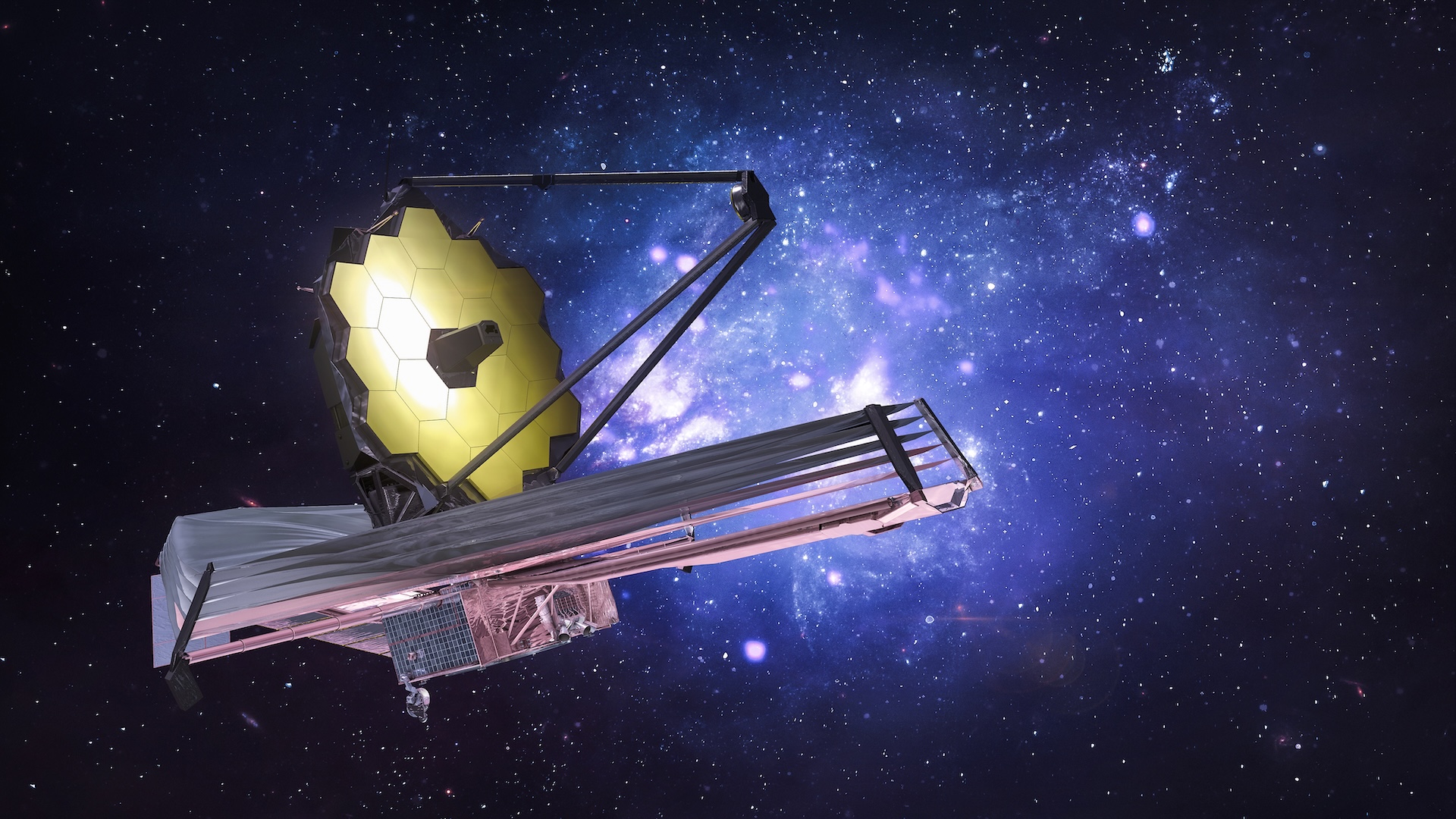
The James Webb Space Telescope launched on Christmas Day, 2021. It has reshaped our view of the cosmos. (Image credit: Getty Images)
Milestone: James Webb Space Telescope launches
Date: Dec. 25, 2021
Where: Guiana Space Centre, Kourou, French Guiana
Who: NASA, European Space Agency and Canadian Space Agency scientists
On a cloudy winter's day, in the Amazon jungle, a shuttle blasted off into space — and changed our view of the universe forever.
About a month later, it reached its orbiting parking place in space, a gravitationally-stable Lagrange point 930,000 miles (1.5 million kilometers) away, in perfect equilibrium between Earth and the sun's gravity. The telescope would beam back its first, spectacular pictures in July 2022. And the firehose of data it has sent back since has transformed our understanding of the cosmos.
JWST has been so pivotal in part because it can peer back to the "cosmic dawn," a period a few hundred million years after the Big Bang, when the first stars were winking on.
"The James Webb Space Telescope has proven itself capable of seeing 98% of the way back to the Big Bang," Peter Jakobsen, an affiliate professor of astrophysics at the University of Copenhagen in Denmark, previously told Live Science in an email.
Yet Webb, which was first conceived at Lockheed Martin in the late 1990s, almost didn't launch at all. The now-iconic, $10 billion project was catastrophically over budget, plagued by years' worth of delays and snarled by "stupid mistakes."
That was in part because, when it launched, it was by far the most complex telescope ever built.
Get the world’s most fascinating discoveries delivered straight to your inbox.
It took more than 20,000 engineers and hundreds of scientists to design, build and launch the eye in the sky. That 21.3 feet (6.5 meter) mirror had to be folded into a honeycomb shape to be lofted on a rocket, then unfolded once in space. Yet despite being foldable, it also had to be so smooth that if it were as big as a continent, "it would feature no hill or valley greater than ankle height," .