Scientists are getting our robotic explorers ready to help send humans to Mars
"It's really not a question of robotic exploration or human exploration," Ehlmann said. "It is an 'and' — it's robotic and human exploration and how we do these best together."
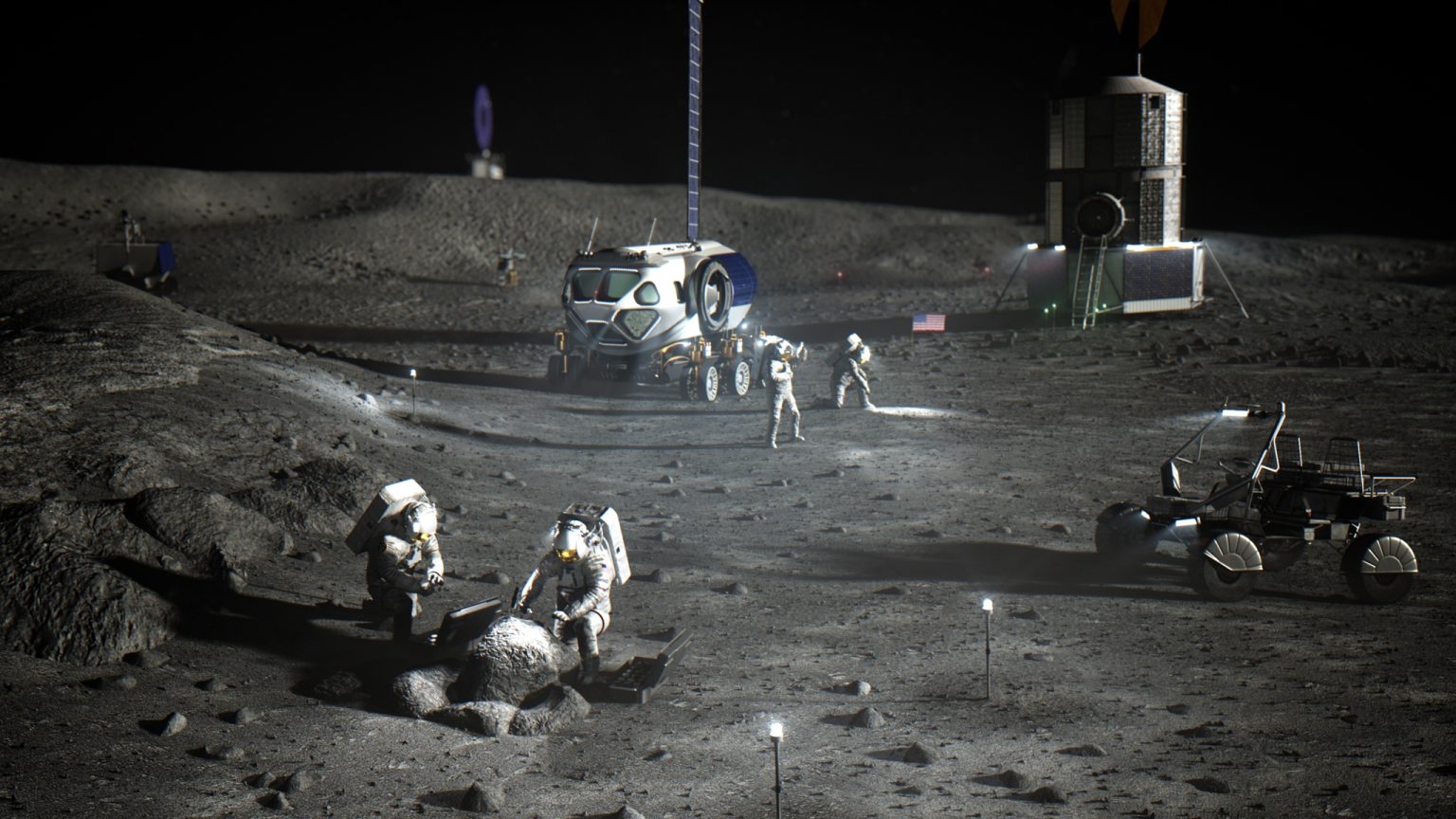
We may already have some of the tools we need for the next generation of space exploration. (Image credit: NASA)
As the moon and Mars take center stage in human spaceflight, scientists are leveraging existing space missions to lay the groundwork for a sustained human presence off-planet.
From pinpointing water resources on the moon to shielding crews from harmful radiation and managing abrasive dust, researchers described how new results from in-service missions are addressing practical challenges of exploration at a press briefing Dec. 17 at the American Geophysical Union (AGU) meeting in Louisiana.
At the AGU briefing, scientists said they are helping support those ambitions by adapting tools and datasets originally developed for Earth to support future moon and Mars missions.
For instance, Gina DiBraccio, a heliophysicist and acting director of the Solar System Exploration Division at NASA's Goddard Space Flight Center in Maryland, discussed a decision-support tool initially designed to track space weather near Earth that has been extended to incorporate data from Mars missions, helping astronauts assess radiation risks in near real time from the Martian surface.
The dashboard integrates data from multiple Mars missions, including NASA's MAVEN orbiter, Curiosity and Perseverance rovers, with additional data sources planned, DiBraccio said. The project is envisioned as an all-in-one display astronauts could access on a tablet, allowing crews to monitor space weather events such as solar flares and determine whether protective measures are needed.
"It's really one of the first steps of tools that astronauts will be able to use to understand and assess space weather from the surface of Mars," DiBraccio said.
Breaking space news, the latest updates on rocket launches, skywatching events and more!
Other long-running missions at Mars are also producing critical datasets for understanding radiation hazards, scientists said.
Shannon Curry, MAVEN's principal investigator at UC Boulder, highlighted a newly completed catalog of Martian space weather events compiled from the now-silent orbiter data spanning a full solar cycle from 2014 through 2025. The catalog allows scientists to quantify radiation levels in orbit — some of which can penetrate Mars' thin atmosphere and reach the surface — during periods of both low and high solar activity.
"This really informs, over a full solar cycle, what we can expect to see, and when we can expect to see it," Curry said.
Scientists also stressed the importance of pinpointing water resources on the moon, particularly near the lunar south pole, where NASA plans to land astronauts under its Artemis program.