Scientists Identify ‘Astronomy’s Platypus’ with NASA’s Webb Telescope
After combing through NASA’s James Webb Space Telescope’s archive of sweeping extragalactic cosmic fields, a small team of astronomers at the University of Missouri says they have identified a sample of galaxies that have a previously unseen combination of features. Principal investigator Haojing Yan compares the discovery to an infamous oddball in another branch of […]
After combing through NASA’s James Webb Space Telescope’s archive of sweeping extragalactic cosmic fields, a small team of astronomers at the University of Missouri says they have identified a sample of galaxies that have a previously unseen combination of features. Principal investigator Haojing Yan compares the discovery to an infamous oddball in another branch of science: biology’s taxonomy-defying platypus.
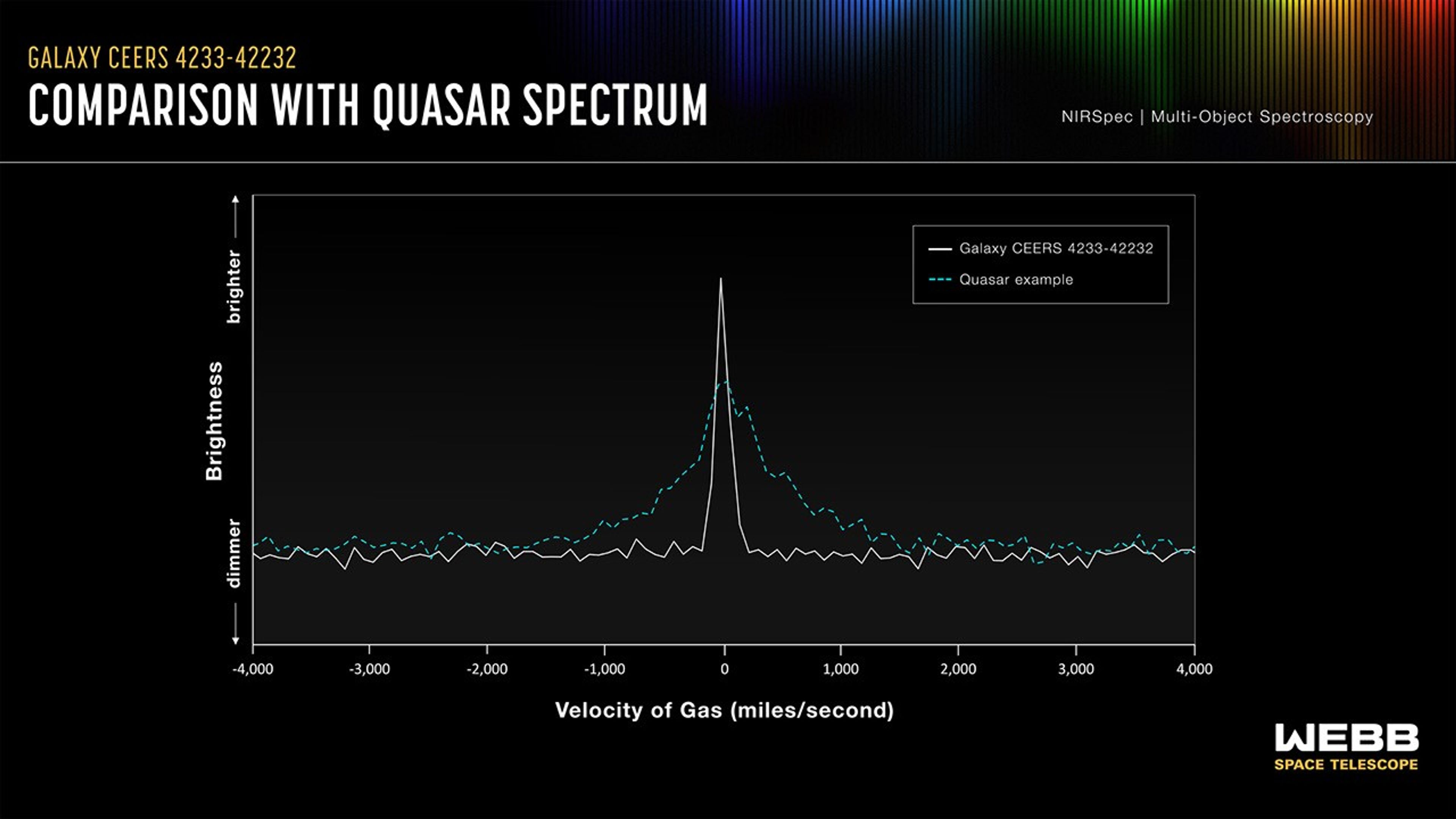
“It seems that we’ve identified a population of galaxies that we can’t categorize, they are so odd. On the one hand they are extremely tiny and compact, like a point source, yet we do not see the characteristics of a quasar, an active supermassive black hole, which is what most distant point sources are,” said Yan.
The research was presented in a press conference at the 247th meeting of the American Astronomical Society in Phoenix.
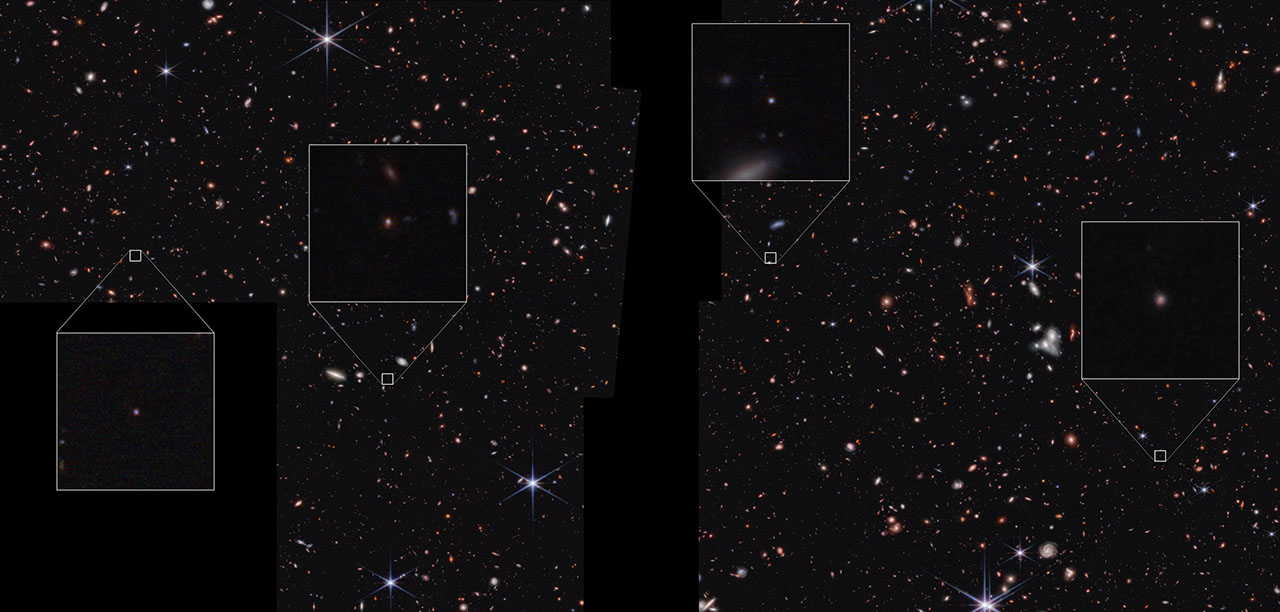
Four of the nine galaxies in the newly identified “platypus” sample were discovered in NASA’s James Webb Space Telescope’s Cosmic Evolution Early Release Science Survey (CEERS). One key feature that makes them distinct is their point-like appearance, even to a telescope that can capture as much detail as Webb.
Image: NASA, ESA, CSA, Steve Finkelstein (UT Austin); Image Processing: Alyssa Pagan (STScI)
“I looked at these characteristics and thought, this is like looking at a platypus. You think that these things should not exist together, but there it is right in front of you, and it’s undeniable,” Yan said.
The team whittled down a sample of 2,000 sources across several Webb surveys to identify nine point-like sources that existed 12 to 12.6 billion years ago (compared to the universe’s age of 13.8 billion years). Spectral data gives astronomers more information than they can get from an image alone, and for these nine sources it doesn’t fit existing definitions. They are too far away to be stars in our own galaxy, and too faint to be quasars, which are so brilliant that they outshine their host galaxies. Though the spectra resemble the less distant “green pea” galaxies discovered in 2009, the galaxies in this sample are much more compact.