SpaceX just got approval to launch another 7,500 next-gen Starlink satellites into orbit
Starlink will have 15,000 Gen2 satellites in space within the next five years, after a regulatory decision.
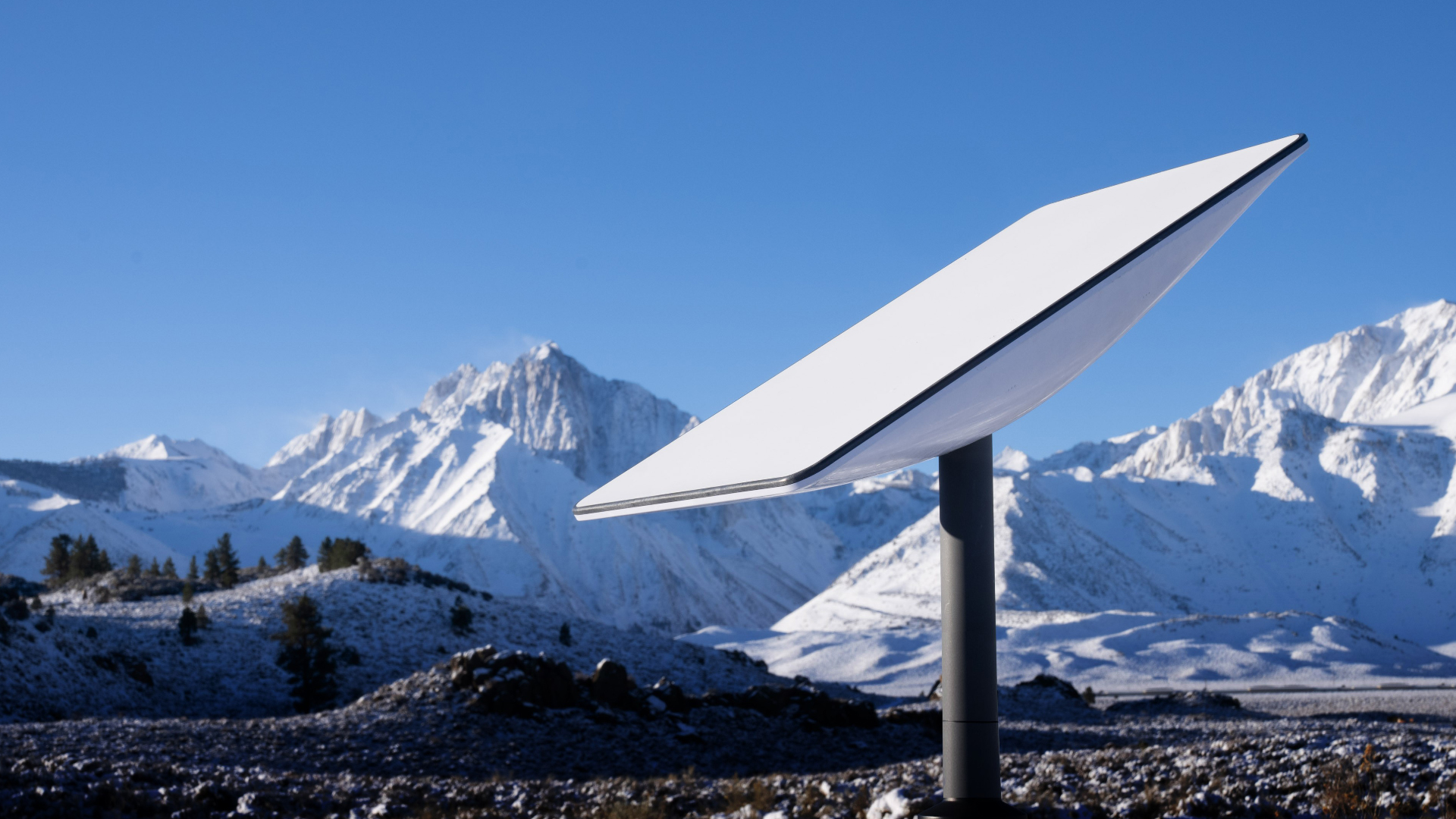
A SpaceX Starlink dish looking to the skies (Image credit: Starlink)
- SpaceX can launch another 7,500 Starlink satellites
- It means 15,000 Gen2 models will be in orbit
- The satellites must all be in the sky by December 2031
SpaceX already has 7,500 of its Starlink Gen2 satellites in orbit, and just got the green light from the Federal Communications Commission (FCC) in the US to launch 7,500 more – taking the total up to 15,000.
The news was announced by FCC chairman Brendan Carr (via Wccftech), and in Carr's own words on social media this decision is going to enable "even better, faster, and more advanced internet services in the country".
Connect to a Gen2 satellite via a Starlink dish, and you're promising higher capacities and lower latencies compared to the first-generation models. The updated satellites have a 20x increase in throughput, and are easier to connect to.
At the same time, the FCC has also given SpaceX permission to operate its Starlink satellites across a wider range of frequencies and in a greater number of orbital configurations, which should ensure more reliable and speedier service.
Safety measures
President Trump is restoring America’s technology leadership.NEW today, the FCC authorized SpaceX to deploy & operate up to 15,000 next-gen satellites — enabling even better, faster, and more advanced Internet services in the country.🚀🇺🇸🚀🇺🇸🚀🇺🇸🚀 pic.twitter.com/zz2sXJ8bXGJanuary 9, 2026
Questions have been raised about how crowded the edges of Earth's atmosphere are getting, and SpaceX did originally want to put almost 30,000 Gen2 satellites in space back in 2020. Now, the FCC thinks it's safe to go from 7,500 to 15,000.
It's also worth noting that SpaceX has recently lowered the altitude of 4,400 of its satellites to reduce the risk of collisions with other satellites and objects in space (including the International Space Station of course).
That move will no doubt have been taken into account as the FCC weighed up its latest decision. Extra satellites also mean that Starlink will now be able to provide direct-to-cell connectivity outside the US, where it has a partnership with T-Mobile.