Spat on, punched, rammed with a car: The shocking list of paramedic assaults
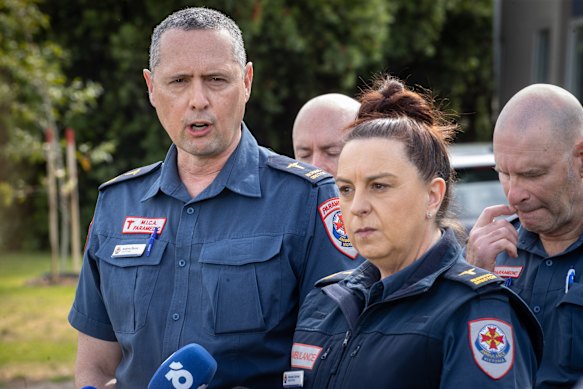
A spike in the frequency and severity of attacks on paramedics has triggered a plea for people to have greater respect for first responders.
A spate of attacks on paramedics that ambulance bosses say are increasing in severity has led to a plea for greater respect towards first responders.
Ambulance Victoria regional operations director Vanessa Gorman said on Tuesday that the situation was the worst she had seen in 30 years.
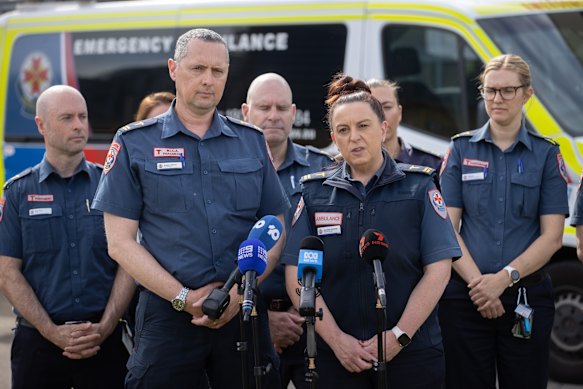
Ambulance Victoria regional directors Andrew Burns and Vanessa Gorman speak to media on Tuesday.Credit: Simon Schluter
One crew was recently rammed by a car. Another was confronted by a person trying to hit them with a cricket bat. Others have been repeatedly punched in the face.
Ambulance Victoria regional director Andrew Burns said the festive season typically led to poorer behaviour as alcohol and drug consumption increased, alongside risk-taking, but violence towards paramedics had particularly spiked since November.
A high number of incidents over the weekend – including physical, verbal and sexual assault – led to Ambulance Victoria calling a press conference on Tuesday.
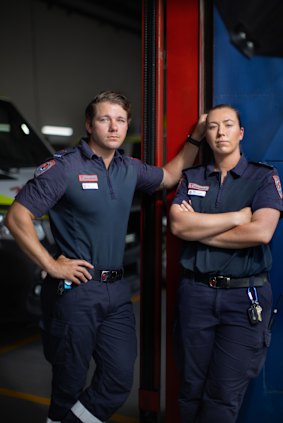
Paramedic Luke Harrington told reporters he had now been spat on twice while working.
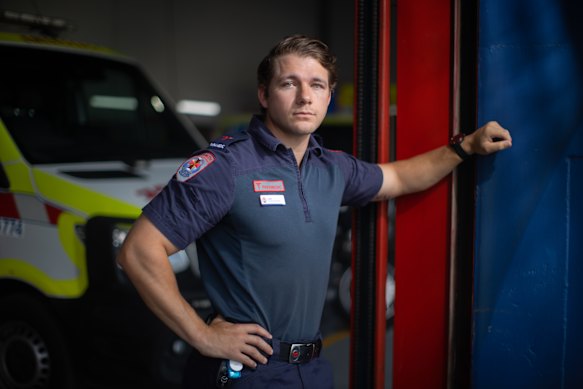
Paramedic Luke Harrington was recently assaulted on the job.Credit: Simon Schluter
The second instance was just a few days before Christmas, when a stranger approached his ambulance late at night in a Rowville carpark, demanding equipment that Harrington told him they didn’t have.
“That’s when he escalated, and he got right up to my face and spat on my neck,” Harrington recalls.
The paramedic managed to climb back into his vehicle, but the aggressive man smashed on his window, swearing as he tried to jump on the ambulance before police arrived.
“I think we were just lucky in that situation to get away,” Harrington says.
Gorman said the frequency of attacks had increased since November, but she was particularly concerned that the severity of assaults had worsened too.
“It’s the worst I’ve ever seen it in 30 years of emergency work,” she says.