Spotted Lake: Canada's soda lake with colorful brine pools that are smelly and slimy 'like the white of an egg'
Spotted Lake is a soda lake that evaporates every summer, leaving a white crust with circular brine pools that can appear blue, green or yellow.
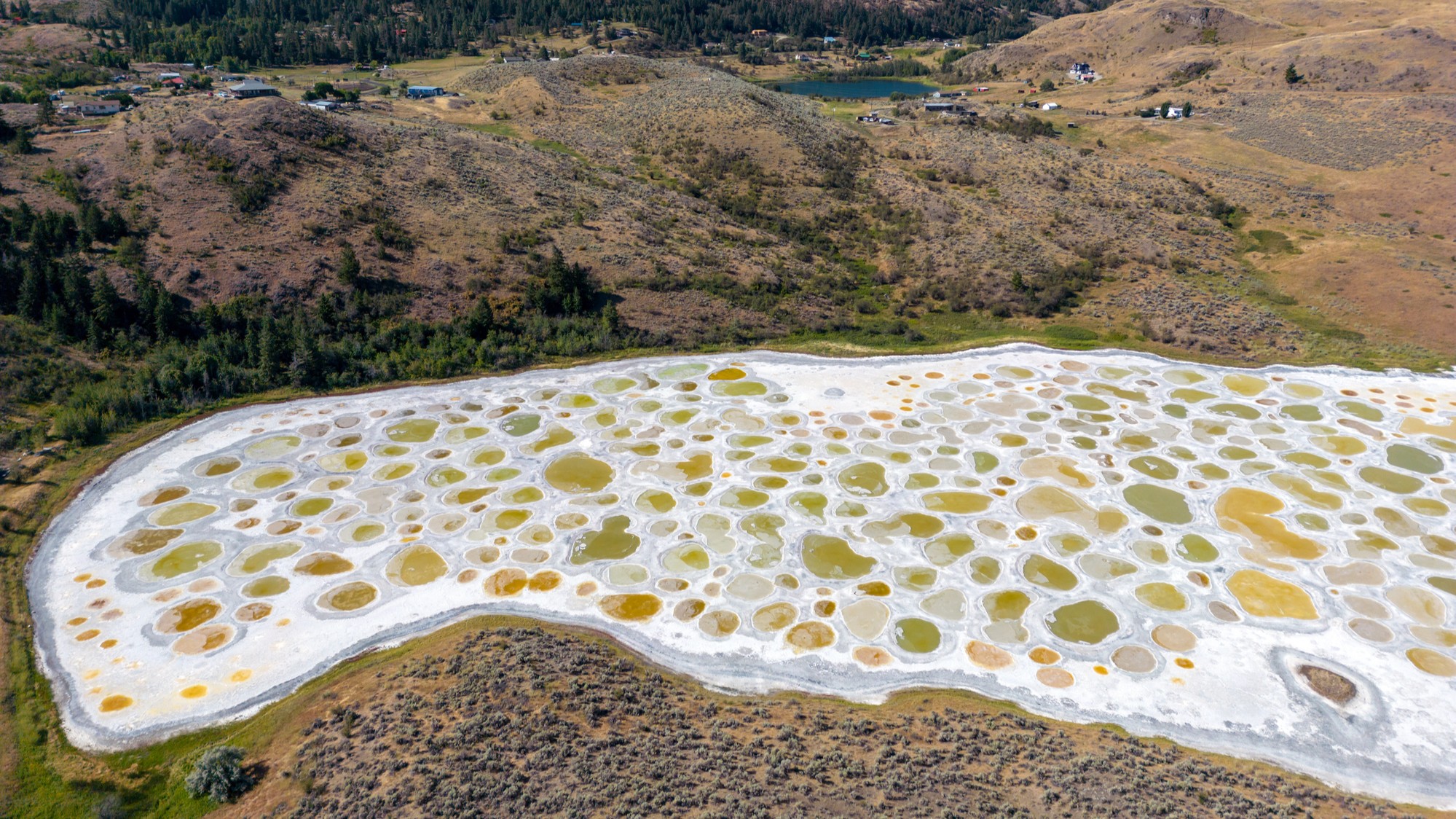
Spotted Lake has a mineral-rich crust that becomes visible in summer, when the lake's water evaporates. (Image credit: Nalidsa Sukprasert/Getty Images)
QUICK FACTS
Name: Spotted Lake
Location: Southern British Columbia, Canada
Coordinates: 49.0779, -119.5668
Why it's incredible: In summer, the lake looks like a giant doily in the landscape.
Spotted Lake — also known as Khiluk Lake in the local Indigenous Nsyilxcən language — is a soda lake named after strange circles that appear on its surface in the summer.
The lake is incredibly rich in minerals, including sodium sulfates, calcium, magnesium sulfate — which is also known as Epsom salt — and trace amounts of silver and titanium. As temperatures rise every spring and summer, most of the water in the lake evaporates and minerals that were dissolved precipitate, leaving a pitted, white crust that looks like a giant doily.
The mineral crust exists year-round and can be seen beneath the water outside of summer, but the best time to see it is in the hotter months. Spotted Lake has no outlet, meaning evaporation is the only process that removes water from the lake. Precipitation and runoff from the surrounding hills increase the water level periodically, which also brings more minerals that crystallize into the crust.
Spotted Lake is a soda lake, meaning it is extremely salty and alkaline. Soda lakes typically form in closed basins, where minerals leach from surrounding rocks and become highly concentrated.
The lake is 2,300 feet (700 meters) long and 820 feet (250 m) wide. The darker spots in the mineral crust are shallow brine pools, beneath which there are more solidified minerals. These pools can appear blue, green or yellow, depending on the light, the makeup of the crust underneath, and the presence of algae. They can also change size and shape as the crust crystallizes and dissolves.
Geologist Olaf Pitt Jenkins described the texture and smell of the brine at Spotted Lake in a 1918 paper, writing: "The brine itself in the pools was so strong that it was very heavy and very slimy like the white of an egg, and had an offensive odor."