Square juice bottles, canned wine: Why your food packaging is getting smarter
Fully recyclable materials, smart labels and better use of space are examples of more sustainable food packaging that can also influence shopping behaviour.
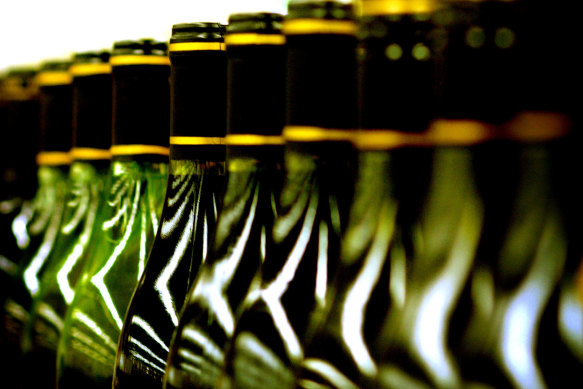
Juice bottles that are square instead of round and wine in lighter bottles or slim cans will become a more common sight on supermarket shelves as food and drink manufacturers prepare to make packaging lighter, cleaner and easier to recycle.
As Australians cycle through more than 7 million tonnes of paper, glass, plastic, metal and wood a year – the equivalent of 264 kilograms per person – food manufacturers are innovating on packaging to save on costs, reduce waste and stay a step ahead of new laws.
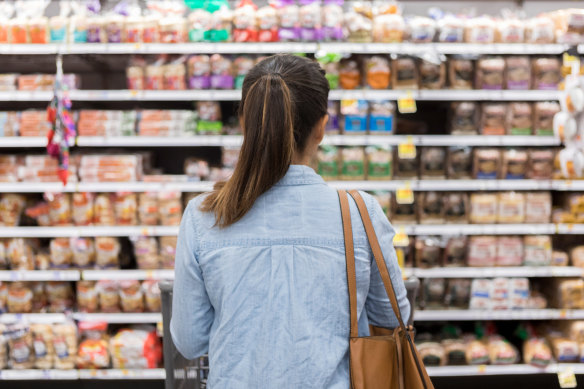
Food manufacturers are innovating in packaging, and experts say it can influence shopper behaviour.Credit: Nine News
These moves are also likely to improve margins for major food retailers as more compact packaging can mean more units can fit per pallet, making transport more efficient and reducing fuel costs. They’re also easier to stack, leading to fewer broken items.
Changes in food packaging can have a powerful effect on influencing shopping habits, said ANZ head of agribusiness insights Michael Whitehead. “Consumers talk about how much their buying behaviour is impacted by sustainability of a product,” he said.
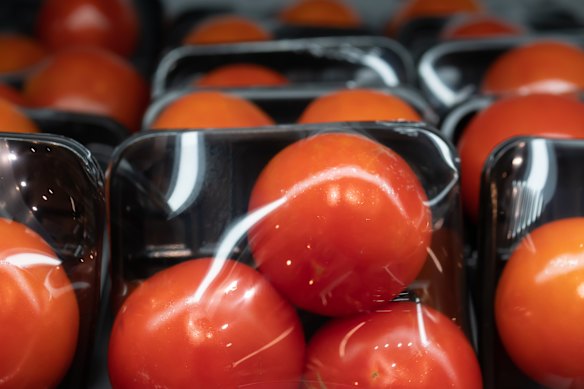
“Does it irritate you when you see all the cucumbers wrapped in plastic? How do I make my muesli stand out on the shelf better than yours? Packaging is always mini-advertising.”
Loading
Innovation in food packaging has already resulted in lighter wine bottles and cans, salad packets that keep leaves fresher for longer through “tiny laser pinholes” that prevent fog and keep leaves crisp, and clearer labels that indicate whether something should be rubbished or recycled.
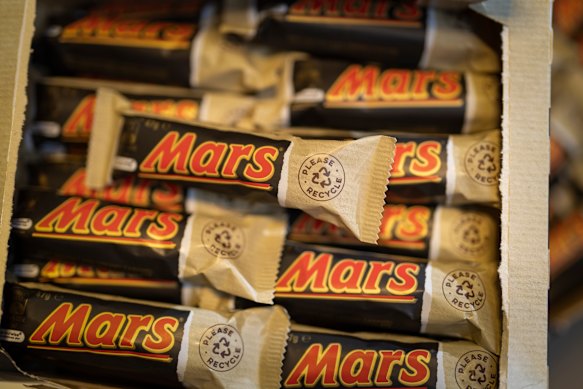
In his latest Food for Thought report, Whitehead outlined that packets that used multi-layered film now use a single plastic type that is detectable by scanners, ready-made meal trays are moving away from black (which is hard for scanners to detect), while more bottles are starting to shift towards a tethered cap that means the bottle and the lid can be sent to recycling together.
The developments can open up new markets, too: clever use of labels and QR codes readable by scanners can address specific requirements of various countries such as allergen and recycling information.