Stunning array of 400 rings in a 'reflection' nebula solves a 30-year-old star-formation mystery — Space photo of the week
The discovery is the first direct observational confirmation of a theory for how young stars feed on, and then explosively expel, surrounding material.
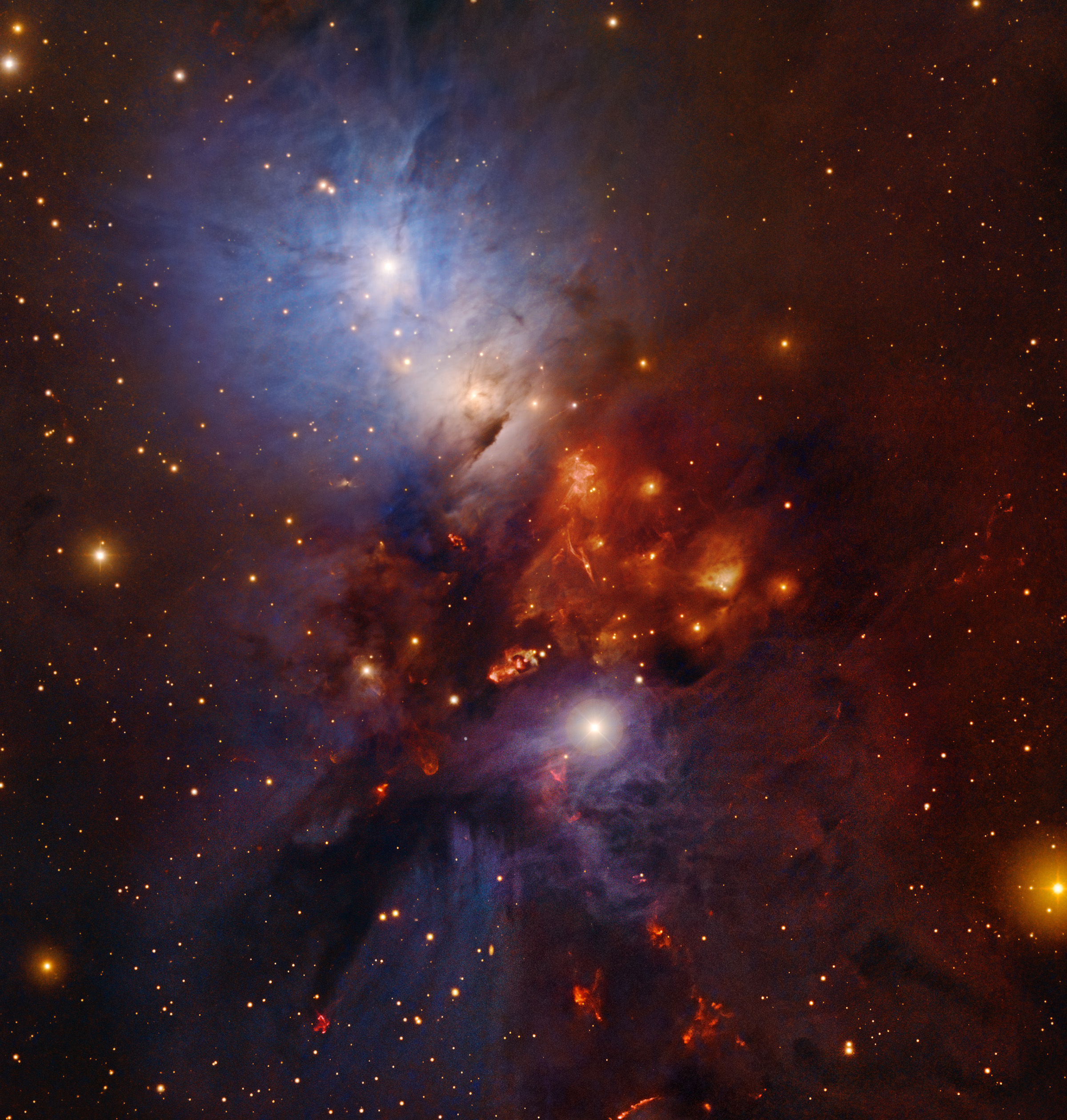
Composite image of the star-forming region NGC 1333 obtained by combining data from the 8.2 m Subaru Telescope and the Digitized Sky Survey. (Image credit: NAOJ, NOAO/AURA/NSF, Robert Gendler, Roberto Colombari)
QUICK FACTS
What it is: Reflection nebula NGC 1333 and binary star system SVS 13
Where it is: 1,000 light-years away in the constellation Perseus
When it was shared: Dec. 16, 2025.
Go outside after dark this winter and look to the southeast, and you'll see some of the brightest stars in the night sky — Orion's Belt, Betelgeuse, Sirius, Aldabaran and Capella. Just above this melee is the quieter constellation Perseus, which lacks bright stars but hosts something extraordinary that the naked eye can't see — the explosive birth of new stars.
The discovery, which the researchers described in the journal Nature Astronomy, marks the first direct observational confirmation of a long-standing theoretical model of how young stars feed on, and then explosively expel, surrounding material.
more space photos
The researchers captured the high-resolution, 3D view of a fast-moving jet emitted from one of SVS 13's young stars using the Atacama Large Millimeter/submillimeter Array (ALMA) radio telescope array in Chile. Within the image, they identified more than 400 ultra-thin, bow-shaped molecular rings. Like tree rings that mark the passage of time, each ring marks the aftermath of an energetic outburst from the young star's early history. Remarkably, the youngest ring matches a bright outburst seen in the SVS 13 system in the early 1990s, allowing researchers to directly connect a specific burst of activity in a forming star with a change in the speed of its jet. It's thought that sudden bursts in jet activity are caused by large amounts of gas falling onto a young star.
"These images give us a completely new way of reading a young star's history," said study co-author Gary Fuller, a professor at the University of Manchester. "Each group of rings is effectively a time-stamp of a past eruption. It gives us an important new insight into how young stars grow and how their developing planetary systems are shaped."