Sweeping so many inquiry reports under the carpet is unacceptable
SOURCE:Sydney Morning Herald
What an appalling state of affairs we have when issues deemed urgent enough to require in-depth examination are left abandoned in reports that gather dust.
The government’s non-response to reports from 67 bipartisan committee inquiries is appalling (“Antisemitism in unis and gambling ad ban among reports ignored for months”, December 30). Government inquiries are called because there are urgent issues that need to be addressed with considered and well-thought-out policy. What if parliament had to debate any reports not responded to within the six-month time limit and vote on any legislation coming out of them? Maybe then they wouldn’t be swept under the carpet as they are now. Such a waste of taxpayer money and a dereliction of the duty to govern. Jill Robinson, Randwick
Action stations: Prime Minister Anthony Albanese’s government is being urged to respond to committee inquiry reports.Credit: Alex Ellinghausen
Brittany Busch’s list of reports awaiting action by the Albanese government is incomplete. At least one other crucial report submitted to the government in October 2024 still awaits a response. The race relations commissioner of the Australian Human Rights Commission presented the findings and recommendations from consultations with more than 1200 people with lived experience of racism, including antisemitism, in a report with the title A National Anti-Racism Framework. This provided a blueprint for action on all forms of racism that has been endorsed by the Jewish Council of Australia in a recent open letter to the prime minister. Why has such a significant report been ignored by the government for more than 12 months? We know that successive Coalition governments abhorred the work of the Human Rights Commission, exemplified by their unrelenting attacks on its then-president, Gillian Triggs, but the Labor government is no different, treating such reports with absolute indifference. Effective guidelines for action on antisemitism, as one form of racism, are waiting for implementation, if only the government would accept the advice of its own Human Rights Commission. Further delays awaiting reports from more inquiries, or the years that a royal commission would require, delay the implementation of urgent action to combat this scourge. Doug Hewitt, Hamilton
The content of your editorial today is spot-on, but the heading is off the mark (“Clouds appear over promised transparency”, December 30). It is not a lack of transparency that is adversely affecting the PM and his leadership team, it is their focus on becoming Australia’s natural party of government. By driving to achieve this outcome they have become paranoid about being criticised, especially by the big end of town. This explains why many of the recommendations of the numerous inquiries sit gathering dust. Look at gambling advertising. The PM is on the record saying there are concerns about the impact those recommendations will have on the revenue of a few big companies. No public acknowledgment of the damage that advertising has and continues to do. A thin skin is not a characteristic of the natural party of government.
For my own understanding, what evidence supports the view that further arming a non-police group will reduce crime (“Further arming security group a small price to pay, says premier”, December 30)? There appears to be a tension between this approach and the broader gun-reform strategy now being promoted, which would benefit from clearer explanation. Increasing the number of firearms in public spaces feels counter-intuitive to prevailing rhetoric. There may well be evidence supporting this decision, and presenting it publicly would help the broader community understand why such an exception is considered necessary. Greater transparency could also benefit the Jewish community, as without clear justification some may perceive the approach as exceptionalism, rather than a proportionate response to a specific and elevated risk. Guy Klamer, Vaucluse
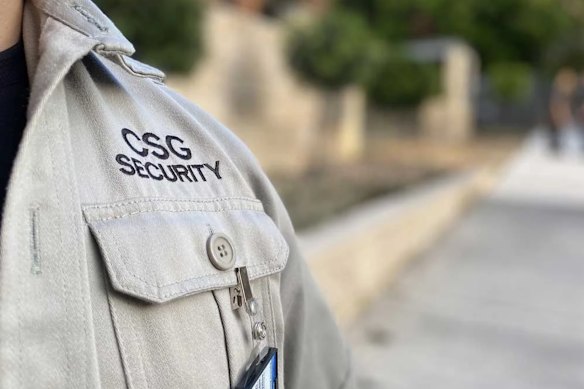
On the beat for decades: A member of the CSG, or Community Security Group. Credit:
It seems Premier Chris Minns thinks that if he allows CSG (Community Security Group) security members to carry guns it is OK because they can’t do anything wrong. This is a fallacy of the highest order. Would he allow other communities to carry guns like CSG? If the premier’s plan goes ahead, Sydney and eventually Australia will be “protected” by a bunch of vigilante cowboys for maintaining law and order, replacing the honest authorities. Do we want to go on that slippery slope? Minns is overreacting. Mukul Desai, Hunters Hill
Commission questions
Natassia Chrysanthos writes “now the Jewish community is asking for a royal commission” (“PM’s excuses on federal inquiry wearing thin”, December 30). The Jewish community is far from the only group “asking for a royal commission”. There are many others, including the PM’s own parliamentary colleagues. Alan Slade, Dover Heights
Let’s be very careful that our media reports do not turn asking for a federal royal commission into what happened at Bondi into something only the Jewish-Australian community wants. All Australians need an in-depth investigation into how 15 people were murdered at Bondi. Don’t make this just a “Jewish community” demand. That would once again be falling into the old cliche that the Jewish community is separate from the rest of us. This is a matter for our whole nation. Susan Rowe,St Ives
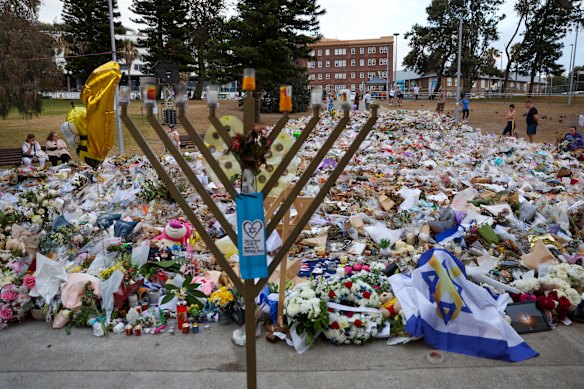
A menorah frames flowers laid in grief a week after the December 14 massacre at Bondi Beach.Credit: Getty Images
If the bereaved families from the tragedy at Bondi and the general public are clamouring for a royal commission into the shootings, I say yes, let’s do it – not having one just seems to be raising more questions and fuelling more anger (“Families lash out at PM over inquiry rejection”, December 30). However, I am really curious as to why your correspondent (Letters, December 30) thinks that the Palestinian community would be upset by it? If people think that the Palestinian protesters had anything to do with the tragedy then we definitely need a royal commission to discover the truth. People for Palestine are protesting for their basic human rights and for an end to the killing of civilians in Gaza and West Bank. Why would they be upset by a royal commission? Unfortunately, there has been so little coverage of what is happening in Gaza over the past two years, and even less coverage of the protest marches, and the truth of what has motivated a diverse group of people to protest weekly for the past two years. Recently, the Herald published a letter stating that these marches were “propaganda” marches. How would you know if you weren’t there? And so many remain ignorant about what has been happening in Gaza, and thus ignorant about why people march for Palestine. Everybody deserves to know the truth. Lisa Dixon, Croydon
I am at the point of turning off further media focus on the tragic shooting at Bondi. The attacks on the prime minister and other public services and organisations are unfair and only perpetuate further division, anger and hate. To heal these problems we all need to stand together as a community that refuses to scapegoat the innocent, and that supports the efforts being made to ensure the security and protection of all citizens who desire to live in peace, respect and goodwill with others. The saying often attributed to Gandhi is apposite here: “be the change you wish to see in the world”. Margaret Hinchey, Oatlands
Loading
I am flabbergasted by Tony Burke’s response to calls from the Jewish community and the families of the Bondi massacre victims for a federal royal commission. His response that it may “provide a public platform for some of the worst statements and worst voices” is evidence in itself that a federal royal commission is needed. That is precisely what inquiries are for: to expose uncomfortable realities so they can be confronted and addressed. Avoiding an investigation because its findings may be unpalatable is an astonishing case of heads-in-the-sand governance. What has become of us? Dov Hersh, Clovelly
I’m guessing the Herald letters page in 2027-28 will be full of people complaining about how long the royal commission into the Bondi shooting is taking. They will be the same people now calling for a royal commission and who refuse to accept how long such reviews take. Victor Marshall, Meander (Tas)
Rail with or against Opera House?
I have read today that people are carrying on about ruining the “heritage appearance of the Opera House steps” (“Historians, architects rail against proposal for Opera House steps”, December 30) – wrong. The Opera House was officially opened in October 1973, and I was one of thousands who attended. The handrails will not affect the 1970s style of the Opera House. I was 15 years old when the Opera House was officially opened by HRH Queen Elizabeth II. I am now 67, and I would appreciate the handrails being there, making accessibility much easier for me. I use a walking stick now and again; handrails for me are a godsend. You don’t have to have the handrails everywhere but maybe a few metres apart, so they don’t appear to detract from the appearance of the Opera House. I think a lot of regular attendees to opera would appreciate it. Bennelong Point is a beautiful area. Handrails won’t ruin that. I don’t think Mr Utzon would mind. Accessibility is important. Susan Dean, Ashfield
Rails run? The monumental steps at the Sydney Opera House can be difficult to climb for some.Credit: Flavio Brancaleone
Having set out and fought for disabled access to a building myself, I would join many in realising there is a limit to accessibility for all places for everyone. We know that we all have ability limits, be they due to physical, mental or age conditions. No one has installed handrails on the outside of various ancient pyramids around the world, and no one is going to provide a climbing ladder down Niagara or Katoomba Falls. The Opera House is accessible via stairs, lift and escalator and doesn’t need the world-famous stairs to be ruined by central rails, chairlift or any other experiential device. Donald Hawes, Peel
Going with the Chappell
Totally agree, Greg Chappell (“Today’s players trash rivalry our heroes bled for”, December 30). When curators, not cricketers, are doing the press conferences, something is really wrong. Test cricket is the only form that I enjoy (except for the women’s game, as they play more one-dayers and T20 matches than Tests), so for me, like many, the Boxing Day Test was a disappointment. The reactions of players to fallen wickets, and the constant commentary regarding the pitch demonstrated, as Chappell described, the lack of understanding of the game, its “history” and the requirements of “resilience in adversity, selflessness over ego”. Let’s hope we see better at the SCG and we are talking about the incredible skills of the cricketers and not the people who work to prepare the magnificent grounds that are played on in Australia. Lisa Williams, Dulwich Hill
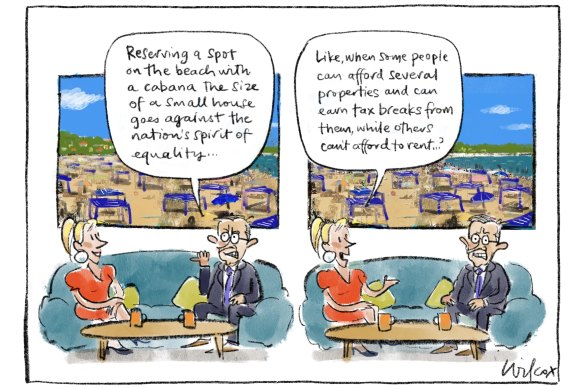
Cabanageddon.Credit: Cathy Wilcox
Greg Chappell must be commended for bringing some inconvenient truths to bear, on the MCG Boxing Day pitch and the woeful batting. The comments about batter reactions and the comparison with the Centenary Test should be absorbed by all current day cricketers. (I saw all five days of the Centenary Test – that was true cricket!) It was also instructive to be reminded of the pitch conditions in Bradman’s day – one must ask if any current-day cricketers could cope! It is reflective that when the Perth Test finished in two days, the Sydney media judged that to be the players’ fault, but in Melbourne it was judged, as usual, to be the fault of the pitch. That says rather more about the prejudices of some cricket writers than it does about the game. Brian Kidd,Mt Waverley (Vic)
Healthy discussion
I greatly enjoyed Vinay Rane’s exceptional article on obesity, with its costs and lack of preventative plans by governments (“Our obesity fix is only for the rich”, December 30). The only problem I saw was that it was hidden on page 31 instead of page one, where it needs to be. Society needs to confront the health costs of processed food and sedentary lifestyle. We need more education on healthy eating and exercise in schools, combined with restrictions on advertising high-sugar and high-fat foods to kids, and supported by government with measures such as a sugar tax used to subsidise the cost of fruit and vegetables. Confronting the processed-food lobby and entrenched behaviours sounds difficult but better than the epidemic of weight-related diseases we are now creating. Obesity should be minimised with preventative measures, not seen as an opportunity for big pharma to profit. Hugh Wolfenden, Bellevue Hill
Council salary outrage
Cindy Yin’s report on council chief executives’ salaries leaves me outraged to say the least (“Council CEOs with premier pay deals”, December 30). Many are paid more than the premier and nearly as much as the prime minister. No wonder our council rates are exorbitant, as other council executives are on ridiculous salaries. Local Government Minister Ron Hoenig recognises “there is community concern” but what is he going to do to rein in this extravagance? Denis Suttling,Newport Beach
Individuals will pay
Loading
Rob Firth is right on the money when he says individuals will pay (Letters, December 30). The decision makers who fast-track development of “major commercial investments” will not be anywhere near these investments to see their impacts, especially of data centres. My local suburban area has been a construction zone for well over a year, all in the effort to bring more water to a data centre. What is the government doing – looking to approve more in the same small area. Council doesn’t get a look-in as it’s deemed too large and important. Never mind the residents. Scott Farquhar should be conflicted. Elizabeth Darton, Lane Cove West
Good bike, bad bike
Those small bikes with fat tyres plaguing pedestrians are not e-bikes – they are motorbikes (Letters, December 30). An e-bike looks like a bicycle; it needs to be pedalled to move and, used responsibly, as most are, they are a convenient, healthy and safe mode of transport. A “fat bike” requires no exertion to propel it along and can reach speeds far in excess to that achievable on an e-bike. “Fat bikes” should be registered, their riders licensed and banned from footpaths and shared paths. The two modes of transport are different, and responsible e-bike riders, many of whom are elderly, should not be lumped together with the irresponsible young hoons roaring around our suburbs. Helen Robinson**,** Killcare
No-vice advice
Since my late 20s my New Year’s resolutions have had to do with losing weight. Now in my 90s and due to a serious health scare I have radically changed my eating habits and lost 10 kilos. I am the weight I was in my early 20s and feel fit as a flea. Having long ago given up smoking, being merely a social drinker and having abstained from sex since my husband died 15 years ago, I ask readers for help in forming a resolution. I cannot for the life of me think of any. I am already kind to animals. Coral Button, North Epping
To submit a letter to the Sydney Morning Herald, email letters@smh.com.au. Click here for tips on how to submit letters.
The Opinion newsletter is a weekly wrap of views that will challenge, champion and inform. Sign up here.