Test cricket doesn’t need five-day pitches to survive
The game wasn’t conceived to satisfy broadcast schedules or justify hotel bookings. It was invented to ask a single question: can you survive this?
Opinion
January 3, 2026 — 9.45am
January 3, 2026 — 9.45am
There appears to be something of an existential crisis unfolding in Test cricket: the quest to preserve the idea of the five-day Test match, with its attendant plot twists and uncertainty, while at the same time confronting the modern realities of aggressive tactics, commercial imperatives and pitches that seem to conspire against the format they are meant to serve.
But there is something unbalanced about the idea of engineering a five-day contest. Sport should be gloriously uncertain; and anyway, that’s what insurance is for. David Beckham once insured his legs for £100 million; surely there’s a market for insuring against losses triggered by two-day Tests.

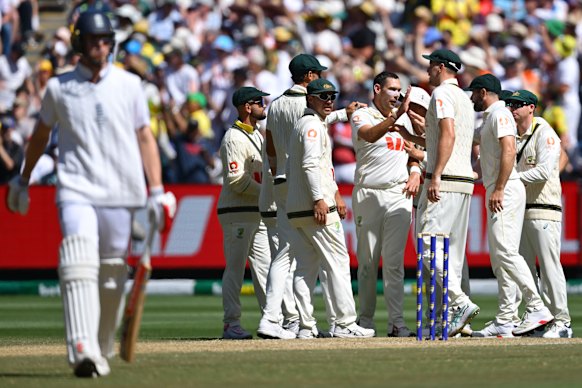
Mitchell Starc celebrates a wicket at the MCG.Credit: Getty Images
But this isn’t merely about the bottom line. It’s about the soul of Test cricket: the intertwining of skill and strategy and the meandering arc of uncertainty that sustains suspense. Yet the very conditions that should nurture that uncertainty – the pitch, the central stage upon which bat and ball do battle – fall victim to blame like never before.
The Cruising Yacht Club of Australia, which organises the Sydney to Hobart, has no influence regarding the direction from which the wind blows, let alone how strong. The Royal & Ancient can’t control the weather conditions for The Open Championship. But the rules that govern the preparation of Test cricket pitches warrant inspection.
The Marylebone Cricket Club remains the custodian and determinator of The Laws of Cricket. Sitting alongside those Laws is, relevantly, the International Cricket Council’s Men’s Test Match Playing Conditions.
You’d think that for Tests played in Australia, Cricket Australia would be conferred with the power as final decision-maker on how cricket pitches must be prepared. But the MCC’s Laws and the accompanying Playing Conditions make for instructive reading.
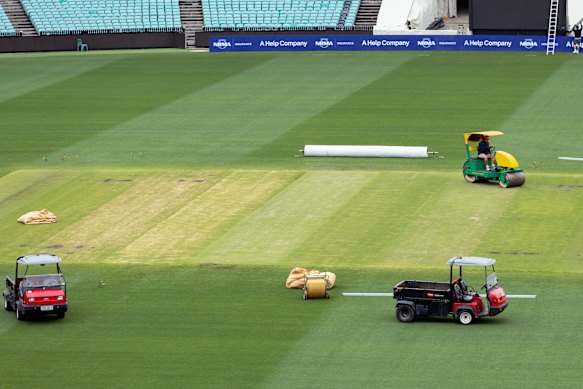
SCG ground staff prepare the wicket for the fifth Ashes Test.Credit: Dominic Lorrimer
Law 6.3 determines the “Ground Authority” is responsible for the selection and preparation of the pitch, but that for the duration of a match, the umpires control the use and maintenance of it.