The 2026 'Super Bowl of Astronomy' starts today — here's what's happening
Astronomers are gathering in Phoenix this week for the 247th meeting of the American Astronomical Society (AAS 247), where the latest discoveries from exoplanets, JWST and upcoming space missions will take center stage.
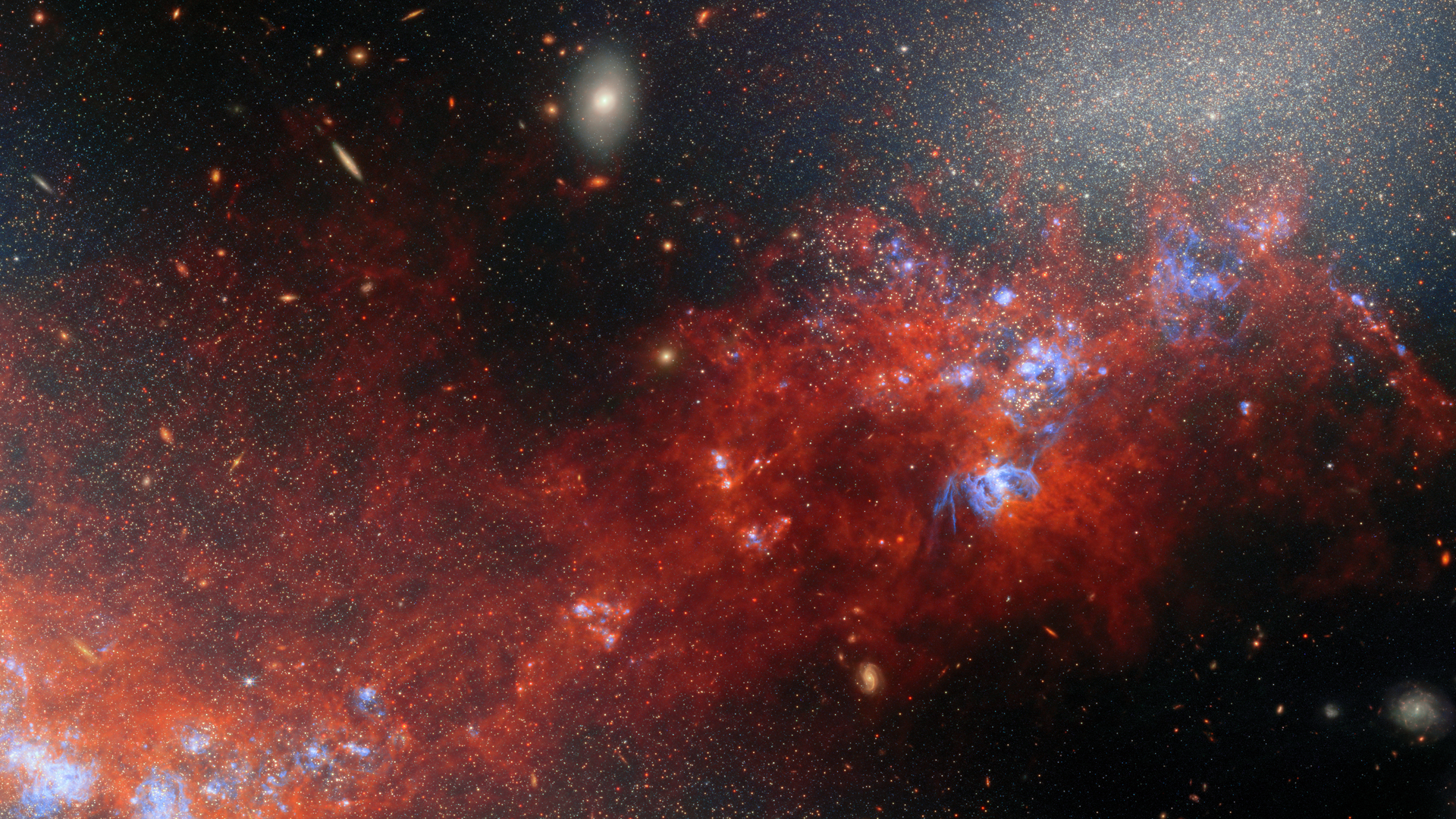
An image from the James Webb Space Telescope captures dwarf galaxies NGC 4490 on the left and NGC 4485 glowing at the upper right, connected by a glowing bridge of gas and dust dotted with bright blue star-forming regions. (Image credit: ESA/Webb, NASA & CSA, A. Adamo (Stockholm University), G. Bortolini, and the FEAST JWST team)
From distant exoplanets and the universe's first galaxies to the next generation of space telescopes, astronomy's biggest annual gathering is set to deliver a week of discoveries, debates and conversations that will shape the future of astronomy.
Thousands of astronomers, students, educators and space scientists are gathering in Phoenix, Arizona, this week as the 247th meeting of the American Astronomical Society (AAS 247) kicks off Monday — launching what many in the field consider the Super Bowl of astronomy. Running from Jan. 4–8 at the Phoenix Convention Center, the conference will feature panels, presentations and workshops covering everything from exoplanets and galaxy evolution to the future of flagship space telescopes.
Cosmic origins and galaxy evolution will also be featured prominently throughout the week. Several sessions will showcase new results from surveys that combine data from the James Webb Space Telescope (JWST), Hubble Space Telescope and the Atacama Large Millimeter/submillimeter Array (ALMA) in Chile, offering fresh insights into how galaxies formed and evolved in the early universe. Other talks will dive into the nature of brown dwarfs, faint dwarf galaxies and the structure of the Milky Way's outskirts, highlighting how recent findings are reshaping long-standing theories.
Meanwhile, NASA's Program Analysis Groups (PAGs) — including those focused on cosmic origins, physics of the cosmos and exoplanet exploration — are meeting to brainstorm science goals, mission concepts and future priorities.
Looking ahead, astronomy's next major observatory, the Nancy Grace Roman Space Telescope, will be the subject of a dedicated Town Hall meeting on the status of the mission and next steps, as well as several other breakout sessions. As Roman edges closer to launch — currently planned for no earlier than September 2026 — scientists are refining how the mission's wide-field capabilities can complement JWST and ground-based observatories, particularly in studies of dark energy, exoplanets and infrared astrophysics.