The $42m plan that nearly killed Roma Street Parkland
A secret 1995 plan would have traded Brisbane CBD’s “lungs” for luxury units, but a feared political backlash saved Roma Street Parkland.
Secret plans to open up what would eventually become the Roma Street Parkland were abandoned over fears of a public backlash, Queensland cabinet documents released for New Year’s Day show.
Then-administrative services minister Glen Milliner took three options to cabinet in February 1995, at which time the most contentious – the $42 million option C – was taken off the table.
At the time, the state-owned Roma Street railway yard was an inner-city eyesore, virtually abandoned for almost a decade after the railway yard moved to Acacia Ridge.
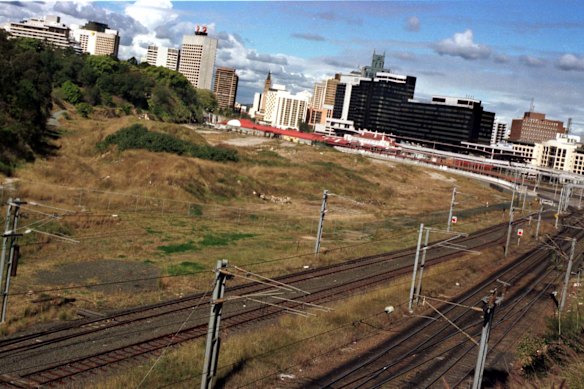
The abandoned Roma Street rail yard site pictured in 1997.Credit: Robert Rough
There was debate about what would be done with the site, including a new “super stadium” and, of course, its conversion to parkland.
“This large, unused parcel of land in the inner-city of Brisbane provides a unique and important opportunity for the future development of the city, especially in view of the increasing trend for urban renewal and inner-city redevelopment in Brisbane and throughout Australia,” Milliner submitted to cabinet.
“With close design control and proper development management, the final use of the site will provide a sound economic return to the Government. In the longer term, it will also provide a new city precinct that integrates with the commercial, social, residential and environmental character of other components of the city.”
Option C would have entailed a “take over” of Albert Park, which now forms the northern section of Roma Street Parkland, with residential buildings scattered across the site.
“[Option C] makes quality residential areas available on the College Road ridge, and provides a buffer between proposed residential areas and continuing railway operations,” Milliner said in his written submission to cabinet.
But Milliner conceded it would be a tough sell.
“It is difficult to understand how this option could be advanced without severe public outcry and strong backlash from the [Brisbane City Council],” Milliner said.
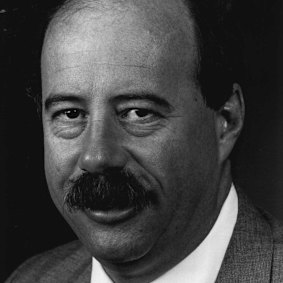
Goss government minister Glen Milliner, pictured in 1992.Credit: File photo