The 7 (practical) rules for a fitter, stronger body this year
SOURCE:Sydney Morning Herald|BY:Anna Maxted
If improving strength and fitness is on your to-do list for 2026, this simple and accessible approach from fitness phenomenon Caroline Idiens is a great way to start.
The cream rises – which explains why, amid the vast numbers of personal trainers teaching online, British trainer Caroline Idiens has become the go-to fitness coach for midlife women. Not just in the UK, but worldwide.
A personal trainer for 25 years, she built a small, devoted group of local clients before going stratospheric, attracting 2.3 million followers to a social media account she set up only five years ago.
When the pandemic hit and classes had to stop, her friends begged her to continue her transformative strength training sessions onscreen. Word spread, and now Caroline’s Circuits, with its half-hour workouts, is a global phenomenon, even though she still broadcasts, frill-free, from her living room.
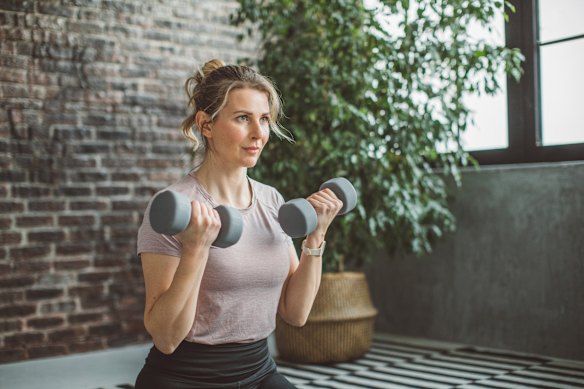
Hand weights are a great way to get into weight training.Credit: iStock
Caroline is passionate about helping women become healthier, fitter and stronger (men too – a modest 3 per cent of her audience; they use heavier weights).
However, she’s keen to reinforce the message that her emphasis is on being strong, not skinny. “It’s about how it makes you feel, your posture, how you hold yourself. But also,” she says, smiling, “in midlife specifically, it’s about going forward. It’s about longevity.” And if that sounds just the ticket, you couldn’t ask for a better guide.
In her own words, here are Caroline Idiens’ seven rules for boosting wellbeing, strength and vitality.
Loading
1. Make lifting weights a priority
Just two hours of strength training a week will make a huge difference. We need to exercise to stay stronger for longer, but it brings other benefits. Strength training is key for mood, immunity and weight regulation, as it powers our metabolism.
It also helps to protect and improve bone density, which decreases as we age, in particular in menopause. Women who lift with me regularly send me their DEXA scans showing improved bone density – they haven’t changed their lifestyle or diet, only the way they train.
I focus on compound functional exercises which mimic daily movement. If you’re getting out of a car, you rotate. If you pick up groceries or put something away in an overhead cupboard, it’s squatting, it’s pressing. My workouts put those movements together because that will really help us as we age. In fact, studies show that our quad, hamstring and glute strength is a key marker for mortality.
Consider your muscles as the organ of longevity we need to cherish. We start losing muscle from the age of 30, but even in our 50s or 60s it’s not too late to start rebuilding.
2. Fuel your body well
For me, eating is not about restriction, dieting, bikini bodies or 24-hour fixes – it’s about nourishing and fuelling my body correctly. I don’t have scales in my house, I don’t weigh my food. It’s a change in mindset for many midlife women – but if your aim is to become as healthy, strong and well as you can be, it’s imperative to shift the emphasis away from flat stomachs.
In the last decade, I’ve made protein a bigger part of my diet, and I advise including a solid source of protein in every meal. It keeps you satisfied for longer and avoids glucose dips, which make you hungry and tired. It’s also key for repairing muscle. I know roughly how much protein is in a chicken breast or an egg, but I don’t advise getting too fixated on numbers. Especially if you’re snacking on nuts, the protein count adds up.
Loading
I have a banana and coffee before my class, for that quick energy release – and after it, a protein breakfast (eggs, usually) or Greek yoghurt with berries. I make sure it’s got carbs too, healthy fats, for instance, avocado on sourdough, and fibre for my gut. It’s crucial not to cut out food groups. We need carbs for muscle repair and building too.
3. Value your sleep, rest and recovery
Sleep is your superpower – prioritise it. I try to get seven quality hours. If I do, it’s a game-changer for my whole day. Multiple research studies show that sleep is vital for every aspect of health, from immune function to muscle growth and tissue repair, memory and concentration.
Inadequate sleep increases our risk of obesity, type 2 diabetes and heart disease. If you haven’t slept well, you reach for the sugary things to perk you up, and too much coffee. So how to help boost your sleep? Getting outside in the morning light helps to regulate our circadian rhythm. And in the evening, I recommend getting off your screen at least three hours before bed.
I consciously wind down. And I don’t eat late at night. I also take magnesium glycinate at night in capsule form. It’s so good for muscle recovery too. I try to switch off the light before 11, as I wake up crazy early. I know I sleep better when I’ve exercised – it’s not just the physical fatigue, it helps with stress, anxiety and an overactive mind, all of which get in the way of restful sleep.
Research shows that moderate aerobic exercise increases the amount of deep sleep you get. Meanwhile, the days you don’t train are just as important as those you do. Two rest days a week are fundamental for muscle repair – and growth. I’m not suggesting you do nothing – you might go for a walk, do yoga, or you might be gardening or dancing. It’s all movement. But those rest days are key, or you will get injured.
4. Motion is lotion – work on flexibility
In midlife and beyond, our joints naturally get stiffer you might have noticed … And if we’re to retain and improve mobility we need to work regularly on our range of motion – whether by doing yoga, Pilates or straightforward stretching. Just 10 minutes of stretches daily can be transformative for your flexibility, posture, balance and joints.
It really is a question of “use it or lose it”. I advise stretching first thing – in your pyjamas, if you wish. Or squeeze in some mobility moves while the kettle boils. (Tacking on a new habit to an existing one – “habit stacking” – can make it stick.) Think of it as preparing your body for the day. For people who suffer with painful knees or wrists, I provide modifications to certain moves. You don’t have to squat if you can’t squat.
Loading
Not everyone can hold a plank, or do a press-up or do tricep dips. That’s absolutely fine – there are so many other exercises you can do instead. Another common complaint, restricting people’s movement, is lower back pain. But quite often it emerges that they’re not working their glutes. If glutes aren’t active, and therefore strong enough to sufficiently stabilise the pelvis and hips, lower back muscles are forced to overcompensate. The good news is, there are so many ways you can target the glutes, and that really helps.
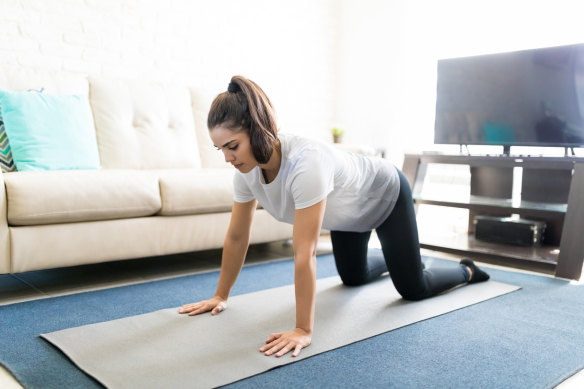
Yoga is a low intensity option for improving flexibility and balance.Credit: iStock
5. Don’t underestimate the power of walking
For me, walking is a must because I have dogs. But I’d walk daily anyway. Walking is underrated. It’s excellent for so many muscle movement patterns. You can walk for cardiovascular benefits – simply quicken your pace – and walking on an incline, or with a weighted backpack, helps build muscle in your legs. A 2021 study from the University of Massachusetts Amherst found that walking at least 7000 steps a day reduced middle-aged people’s risk of premature death from all causes by 50 to 70 per cent.
But walking doesn’t have to be a workout. The key thing is to walk to enjoy it. Even a 30-minute stroll is significant in terms of daily movement. Often, people do their workouts but forget their daily steps – it’s moving throughout the day that really makes the difference.
6. Hop, skip, jump
The thought of jumping horrifies some people, but explosive movement – combining strength and power – can be one of the best things you can do for yourself. Whether it’s hops, skips, jumps or shuttle runs (think, galloping sideways), if you leave the ground, you have to land – and that impact puts stress on our muscle, which pulls on the bone, and that “good” stress stimulates new bone cell growth.
Loading
You have to be careful if you’re at risk of osteoporosis, or concerned about injury, but there are low-impact options – a mini-trampoline or rebounder. Or simple heel raises. Or step-ups on the stairs. You don’t have to do jump squats or burpees. Some people tick the box with running, but it can be detrimental to joints. I do a lot of skaters. They’re brilliant because you’re working on single leg strength, which is key. You’re jumping laterally on one leg and landing, so you’re using your explosive power and focusing on your balance and core. I love any single leg exercise – single leg squats, single leg deadlifts – working on your stability is so important, especially as you get older.
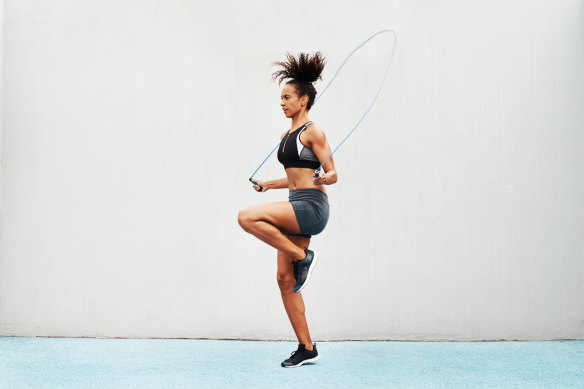
A simple piece of equipment such as skipping rope can set you on your way to meeting your fitness goals in 2026.Credit: iStock
7. Be consistent, and know how to motivate yourself
People often say, “It’s alright for you, you love exercise! How do I start?” I say, “Try to give exercise six weeks. In two weeks you’ll start to feel different. In four weeks you start to see a difference, and in six weeks it almost becomes a habit.”
Consistency is everything – so find something you actually enjoy. If you hate running, Couch to 5K is not for you. In midlife, it’s about training smarter, not harder and longer. Set small goals. My workouts are half an hour – they’re effective and tough. Research has shown that short workouts work, you don’t have to hit it hard for an hour.
Part of staying motivated is to not overdo it. I love running, but I’m not pounding the pavements every morning. I do a little 5K loop of Battersea Park once a week, and I come back buzzing. My advice is to exercise in the morning, first thing, before the day takes over. Set your alarm 10 minutes earlier. Lay out your kit the night before. Know what you’re doing. Have the class downloaded or booked, or arrange to exercise with a friend. Clear all mental obstacles. You don’t need to be perfect, you need to stick at it.
The Telegraph, London
Make the most of your health, relationships, fitness and nutrition with ourLive Well newsletter**.** Get it in your inbox every Monday.