The Bondi gunmen and the threat of leaderless terrorism
Bondi does not seem to come from a world of “networks” and “cells”. All signs are it was much more self-driven than that.
Opinion
January 2, 2026 — 5.00am
January 2, 2026 — 5.00am
One of the inescapable paradoxes of a terrorist attack is that we are most desperate for answers, and most moved to diagnose it, in its immediate aftermath when we know the least about it. In this respect, the tragedy of Bondi was no different, spawning a broad spectrum of immediate accounts.
For some, this was nothing less than the shocking return of Islamic State, which we had come to assume was a spent force after the destruction of its purported caliphate in 2019. At the other extreme, this was simply the work of two crazed people in isolation. A middle view, focusing especially on the pair’s recent trip to the southern Philippines, posits some kind of small network between them and the terrorist groups active in Mindanao.
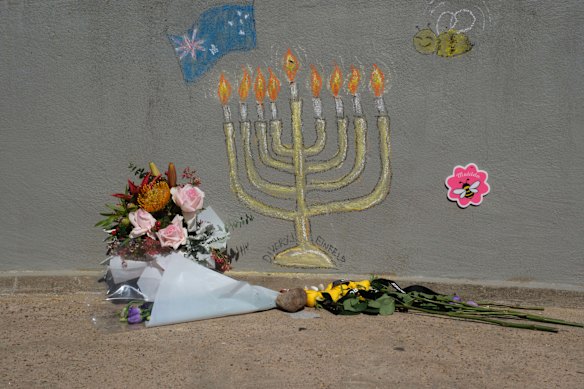
Flower tributes at the footbridge where the Bondi shootings took place.Credit: Oscar Colman
Now, after nearly three weeks of investigation, the Australian Federal Police has given us a fuller picture. As it stands, they believe the two men received no training or “logistical preparation” in the Philippines, and acted alone. No one – including the formal Islamic State organisation – directed them to undertake this slaughter. The commissioner stresses this is very much an “initial assessment”, and is therefore open to revision. Even so, it’s an important first marker: both predictable and hugely concerning. It is entirely in line with how terrorism is changing, and underscores just how difficult authorities’ task has become.
The truth is Islamic State is not “back” or “resurgent” in any meaningful way as an organisation, aside from its modest gains in Syria, sub-Saharan Africa, and in Afghanistan, where it is often fighting the Taliban. But not for years has it been able to direct attacks of its own in far-off lands. That’s no small mercy when you recall what those attacks were like. Recall the 2015 terror attacks in Paris in which 130 were killed, 90 at the Bataclan theatre and 40 others at a range of other sites: planned in Syria, then organised by a cell in Belgium. Bondi does not seem to come from a world of “networks” and “cells”. All signs are it was much more self-driven than that.
That’s apparently true, even of the infamous trip to the Philippines. The federal police’s current view is that the alleged terrorists barely left their hotel, which if true, suggests something ad hoc about the whole affair. Someone with connections to Islamic State representatives is unlikely to be so careless as to fly from Manila to Davao, leaving behind a trail. And someone who does that is unlikely even to know where Islamic State operatives are. With that in mind, the federal police’s preliminary assessment isn’t a surprise.