The Designer of the Year Award goes to... AI
That moment reshaped the industry. If neural networks could see, what else could they learn? The answer, as Jensen Huang would later discover, was nearly everything.

In The Matrix Reloaded, Morpheus, after his ship the Nebuchadnezzar is sunk, makes a biblical reference: I have dreamed a dream, but now the dream is gone from me. The line became a shorthand for the disappointment of hardcore Matrix fans who watched the pathbreaking original dissolve into bubble-gum pulp fiction sequels.
It is also a sentiment shared by those who have spent years waiting for the arrival of the deus ex machina of Artificial General Intelligence.Cinema trained us to expect Agent Smith or the Terminator. What we got instead were malfunctioning interns that forget their brief after three prompts, which is not entirely unlike regular interns. If there is one area where artificial intelligence has genuinely altered daily life, for better or worse, it is generative AI.
Prophets in the Wilderness
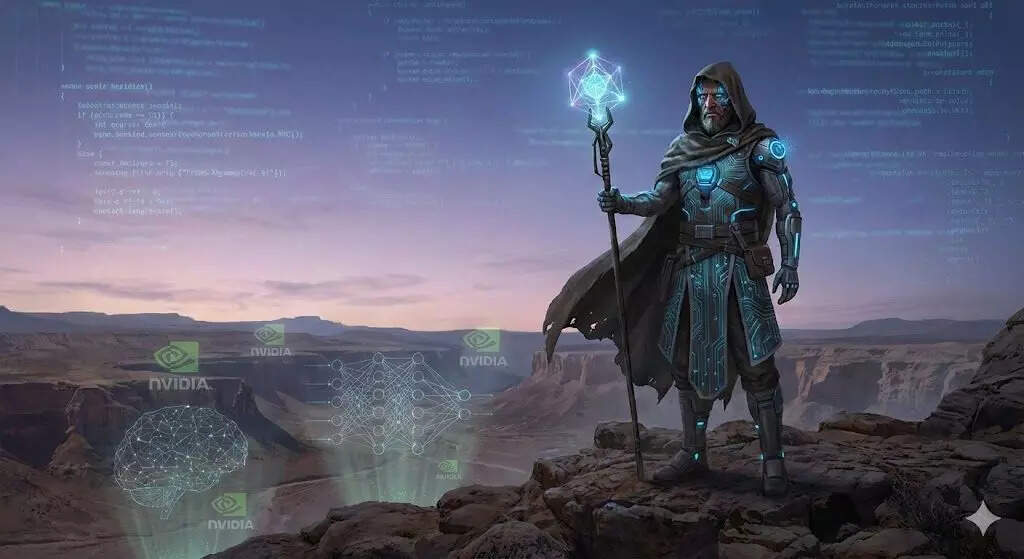
A decade and a half ago, people working seriously on neural networks were dismissed as prophets in the wilderness. One of them was Professor Geoffrey Hinton, whose research group used NVIDIA’s CUDA platform to recognise human speech. Hinton encouraged his students to experiment with GPUs. One of them, Alex Krizhevsky, along with Ilya Sutskever, trained a visual neural network using two consumer-grade NVIDIA graphics cards bought online.
Running them from Krizhevsky’s parents’ house, and racking up a sizeable electricity bill, they trained the model on millions of images in a week, achieving results that rivalled Google’s efforts using tens of thousands of CPUs.That moment reshaped the industry. If neural networks could see, what else could they learn? The answer, as Jensen Huang would later discover, was nearly everything.When ChatGPT launched and it became clear that OpenAI’s models were running on NVIDIA’s chips, market perception around the company shifted dramatically.
Valuations soared. The rest, as they say, is history.Hinton would go on to share the Nobel Prize in Physics in 2024. Huang emerged as the arms dealer of the AI race, building a company where vast numbers of employees became dollar millionaires. For laypeople, that was the true arrival of generative AI, and for capitalists, it promised something intoxicating: companies that scale without hiring, produce without friction, and grow without payroll.
The AI Dream
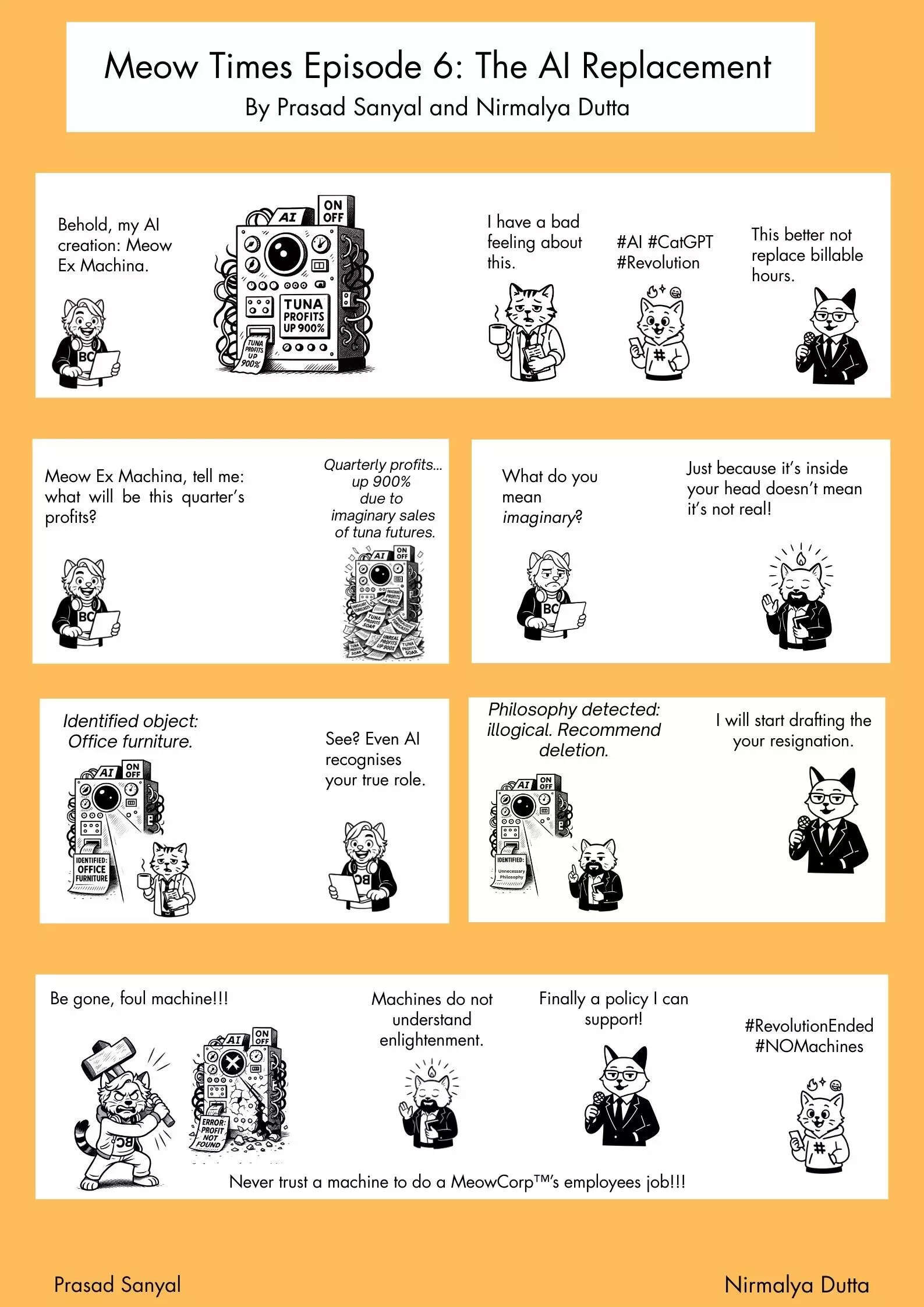
AI does not need smoke breaks. It does not badmouth its boss, unless the boss is Elon Musk. It does not require me-time. Yet the promised productivity miracle, the idea that AI would replace workers by making individuals superhumanly efficient, has mostly fizzled. In practice, it has flooded offices with AI slop, rendering LinkedIn posts and internal emails nearly unreadable.The disappointment was captured neatly in a viral tweet: I want AI to do my laundry and dishes so that I can do art and writing, not for AI to do my art and writing so that I can do my laundry and dishes.Like most proclamations from the platform formerly known as Twitter, this was an exaggeration. Generative AI has undeniably made certain tasks easier. Research is faster. Summaries are cleaner. Editing copy is less painful. For writers, it offers something rare: an unbiased copy editor that does not inject its own ideology into the text. And even if large language models never write great literature, they produced something unmistakable this year: genuinely good images.
