The pros and cons of a royal commission into the Bondi killings
The point of a royal commission into the Bondi shootings is not to tell us what happened, but how it was able to happen.
The families of those killed and injured in the Bondi terrorist attack want a royal commission into the reasons behind this attack; I can understand that (“Families unite for national inquiry”, December 29). Their grief and anxiety for their future security in their own country are enough to explain their plea. I support them and find all the excuses being given for not holding one, from the prime minister down, extraordinary. The real reasons probably have more to do with a wish to push the whole issue under the carpet, avoid the political pain, and a fear that it might upset the Palestinian community. After failures of security, lack of adequate support for the local police – who had to bear the brunt of the attack with inadequate weapons – and the rising anti-Jewish, anti-Israel attitudes that have been growing unabated in sections of the community, Australians need to take stock of where these attitudes and lack of response to them have led us, to the death of so many good citizens, and the damage to a community of Jewish people who have done nothing but contribute to the wellbeing and cultural flourishing of this country. Vivienne Parsons, Thornleigh
The point of a royal commission into the Bondi shootings is not to tell us what happened, but how it was able to happen, and to avert such an atrocity ever happening again. Judy Maynard, Rose Bay
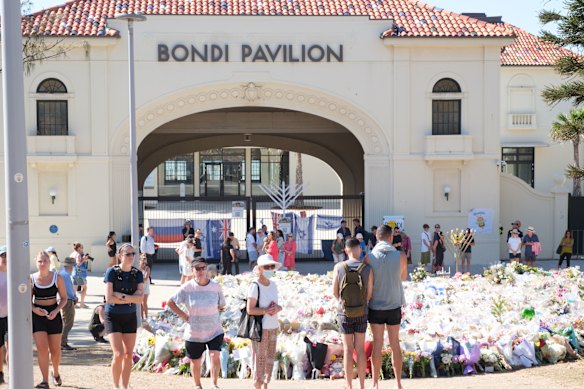
Mourners and tributes at Bondi Pavilion Credit: Oscar Colman
Albo, read the room. Call a federal royal commission. The victims of Bondi are after answers. Lifelong Labor supporters, such as my family, want it. Greg Lilly, Kincumber
The 51 Muslims who were murdered in their mosque were in New Zealand when they were attacked by an Australian man who had been radicalised in Australia and who had travelled to New Zealand for the purpose of terror. The fact a national border exists between New Zealand and Australia, given the intense connection between them, cannot alone account for the difference in response to that attack and the one in Bondi. If there is to be a royal commission into race or religion-based acts of terrorism and murder, then it should be looking at both antisemitism and Islamophobia. Patricia Loughlan, Glebe
A royal commission can take years to reach findings we already know and suggest recommendations that are obvious to all. Just get on with a bipartisan inquiry that can unite all areas of state and federal governments in the hope that a better, more organised terrorist response unit can be rapidly deployed in all states and territories. Denis Suttling, Newport Beach
Do we need a royal commission to tell us many of the answers we already know, such as: 1) Why don’t we have a National Gun Register? 2) Why don’t government agencies (state and federal) share security information? 3) Do we need to spend $50 million to $100 million of taxpayers’ money to conduct the royal commission? 4) If we did spend the money and conduct the inquiry – will we adopt the findings and make changes, as Chris Minns suggests we would? Our past performance suggests that we are not good at adopting all the findings and making changes. For example, the aged care royal commission, completed in March 2021 at a cost of $92 million, made 148 recommendations and only 31 had been adopted by mid-2025. The Royal Commission into Natural National Disaster Arrangements (bushfires) made 80 recommendations and only 15 have been adopted. The remaining 65 recommendations are the responsibility of state and territory governments – herein lies the problem. Ian Muir, Chatswood
Is not a royal commission merely “lip service” to what has happened? Blame is a branch of evil that divides the community. Tony DeGiovanni, Bawley Point
A national royal commission into rising antisemitism will only duplicate the already planned NSW inquiry. It would make more sense to have a national royal commission into the increase of all racial/religious discrimination, including that experienced by Muslims, Indians, Asians, Pacific Islanders and Indigenous Australians. It might be that the growth of intolerance is caused by global political tensions, or it could be triggered by growing financial inequity. It may even be a part of the long tail of the COVID outbreak, when large swaths of our cities were in lockdown. These are questions only a national inquiry can answer. Joanna Mendelssohn, Dulwich Hill
Do lawyers want a royal commission? Did Pooh Bear want more honey? Michael Britt, MacMasters Beach
Minns wrong about guns
What on earth is Premier Chris Minns thinking (“Police to carry guns ‘you haven’t seen before’ at New Year events”, December 29) when he says the government is “considering allowing members of the volunteer-led CSG [Community Security Group] to carry arms”? The establishment of an armed militia flies directly in the face of everything that has been done, and is proposed to be done, to control gun violence in our society. The idea is straight from the National Rifle Association’s playbook, i.e. that a good guy with a gun is always better than a bad guy with a gun. This type of thinking has led the US down the path of trained and armed school teachers and librarians, as well as open carry weapons in some states. Americans are, it seems, inured to the everyday slaughter of their own citizens by their own; is this where we want to be as a society, or should we stand up against gun violence in its totality and rely on the police and other legitimate services to protect us in times of need? Privately controlled armed groups are not part of a solution, but they will become part of the problem. Peter Cooper-Southam, Frenchs Forest
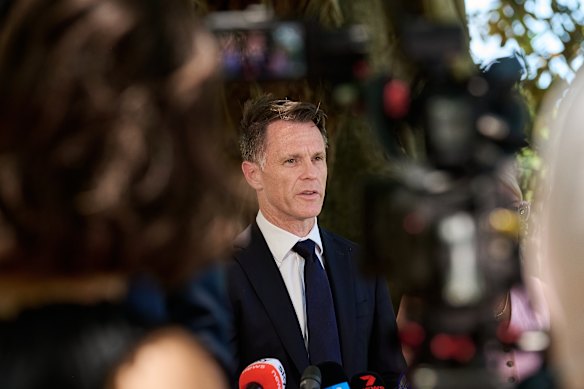
Premier Chris MinnsCredit: Flavio Brancaleone
A most disturbing sequelae of the Bondi shootings is Chris Minns’ unwillingness to rule out requesting the army be deployed to patrol the streets of Sydney to ensure public safety. Viv Mackenzie, Port Hacking
Chris Minns is wrong. If NSW Police are carrying long arms, the public will be much safer staying at home. John Christie, Oatley
We are told that police will be carrying special high-powered weapons at major New Year celebrations. If the NSW government and police think the risk of a violent incident warrants such action, surely the celebrations should be called off? Ian Adair, Hunters Hill
In putting police with serious weaponry on our streets, I wonder how the NSW government plans to keep the public safe from stray “friendly” fire? Greg Baker, Fitzroy Falls
I’m special. Are you?
Shane Wright laments the continuance of all those tax concessions we’ve come to love (“There’s nothing sweet about a tax system where concession costs soar by $50 billion”, December 29). Sadly, he only highlights the dollar costs involved and ignores the reality that dishing out those concessions is pure politics, with little to do with sound economics. The political advantage of entrenching the notion that “I’m special” into the minds of various voter classes cannot be overstated. Farmers, miners, employees, investors, the well-to-do and the socially disadvantaged are all given special treatment under the tax and welfare systems, which gives them a feeling of speciality regardless of the expense. And governments of all persuasions have used the tactic shamelessly since forever. It’s no good wailing about what it costs: the people with the power to fix it wouldn’t dream of actually doing so. Adrian Connelly, Springwood
AI will add to future climate bill
The Productivity Commission is to be commended for warning Australians of the eye-watering cost estimates of coping with future climate change in the built environment, and offering strategies to mitigate these costs (“Spend now to protect housing or face huge climate change bill”, December 29). The burden of these multibillion costs will fall on individuals, increasingly prohibitive insurance premiums – with many properties simply uninsurable – and, ultimately, government coffers. With this information about the present trajectory, it seems remarkable that the Albanese government is spruiking Australia for the burgeoning AI data centre industry, with the industry’s insatiable demand for two of our most valuable resources – energy and water. One of Australia’s leading renewables and tech business experts, Scott Farquhar, is on record acknowledging that he is “deeply conflicted” by the serious environmental impacts of the AI industry and his large personal stake as a frontrunner in the growth of AI. Even if the tech giants were to build their own data centres, they would presumably pull scarce labour resources and materials away from other large projects urgently needed for Australia’s transition to renewables. Let’s face it, AI is not essential for mankind ... so why exacerbate the serious climate mess we’re already facing? Rob Firth, Red Hill (ACT)
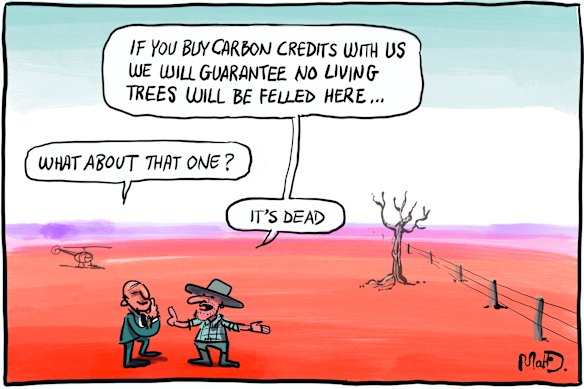
Carbon credits can be useful in a handful of cases for combating climate change.Credit: Matt Davidson
A couple of years ago, a friend of mine put his late mother’s home on the market, but worried that its location might negatively affect the price he’d receive. Unfortunately, studies showed that it would be prone to flooding in coming decades due to sea level rise. As it turned out, the house was snapped up by an eager buyer, leading my friend to jokingly conclude that climate deniers occasionally do serve a useful purpose. Seriously, though, by delaying action to halt temperature rises, humanity is setting itself up for massive problems down the track – more floods, more fires, longer, harsher droughts, stronger, more damaging storms and a higher rate of extinction in the natural world. These things are bad enough on their own, but the intergenerational inequity makes them intolerable. It’s people who haven’t even been born yet who will pay the biggest price for our selfishness, complacency and myopia. Ken Enderby, Concord
Sinking feeling
From the Trump Taj Mahal casino, to the Trump Castle casino, to the Trump University, to the Trump Airline, to the Trump steaks, to the Trump vodka, Donald Trump has deserted many a sinking battleship over his lifetime. So it’s not so unfathomable to imagine that Trump the president’s grandiose plans for a new “Golden Fleet” of “Trump Class” battleships designed by the “very aesthetic person” himself will be sunk, even before they are launched (“Vaunted Trump battleship is unlikely to fire”, December 29). Mary Carde, Parrearra (Qld)
Appalling e-bikes
Now that we’ve officially recognised that social media can pose psychological and moral dangers for under-16s, why not do the same with e-bikes (Letters, December 29), which pose a clear and frightening physical danger, not only for young riders, but also for anyone in their vicinity? For sure, footpaths aren’t the place for them, but I don’t agree that these high-powered vehicles being driven by children belong on the road either. I visited Kiama on the weekend, which was bustling with summer visitors, and the sight of groups of kids as young as 11 or 12 riding on the road at speed, swerving for fun and, I kid you not, doing wheelies in the middle of the traffic, was appalling. These kids are too young to have a licence, so why are they allowed on the road on their e-bikes? And will it sadly take a road fatality to wake up our lawmakers on this issue? Kerrie Wehbe, Blacktown
Dawkins’ team
Missing from the discussion about Richard Dawkins’ views on religion (Letters, December 29) are more recent comments he has made identifying himself as a “cultural Christian”. He embraces Christian traditions and ethics and acknowledges that Christianity is the bedrock of Western culture. He does all this while rejecting the existence of a supernatural God. He also famously declared “I’m on Team Christian” when considering the rise of other religions that are at odds with Western culture and values. Rob Fraser, Balmain
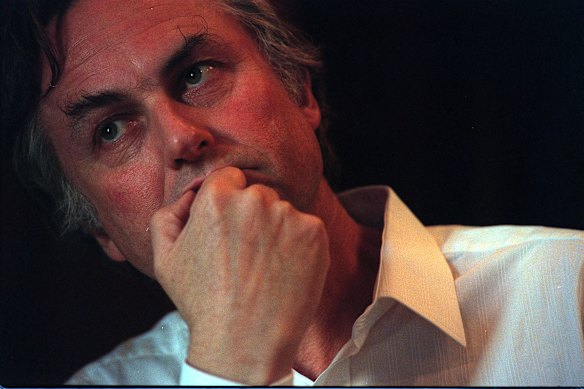
Richard Dawkins: just wonderingCredit: Fairfax Photographic
The Darwinian concept of “survival of the fittest” shows us why communism and indeed socialism fail. As animals, we seek dominance over the pack. Capitalism is an excellent vehicle for this. Religion merely is an aid in this process. To reach Nirvana, we must transcend our natures. Now there’s a New Year’s resolution. Wayne Duncombe, Lilyfield
Communism, as practised in the Eastern bloc and China, was a religion in all but name. It had unchallengeable precepts, saints like Mao, Lenin and Marx, and persecution of unbelievers. So no, a society without organised religion has never been tried, unfortunately. Andrew Taubman, Queens Park
On the subject of religion and whether there is something awaiting us after death, Barry Jones, who has the answers to most things in life and afterwards, said recently on the possibility of life after death “Dubito sum ergo”. This Latin phrase translates as “I doubt, therefore I am”. In Barry-speak I guess he means there is a chance of it. Reg Richardson, Mosman
Kids’ snacks

Brie’s the cheese you needCredit: Getty Images
The article about healthy snacks is most welcome (“Snacks that are healthier than you think”, December 29). There are many varieties of healthy snacks that are also very tasty. Recently, when I was in a major supermarket, I was horrified to see a substantial part of one aisle labelled “Kids snacks” with items with excessive sugar, salt and fat. Our children deserve better. Rod Watson, East Brighton (Vic)
Good old draw
Remember the good old days when a Test match lasted five days and ended in a draw (“Was this madness an outlier, or the future of Test cricket?” , December 29)? Rick Johnston, Potts Point
- To submit a letter to the Sydney Morning Herald, email letters@smh.com.au. Click here for tips on how to submit letters.
- The Opinion newsletter is a weekly wrap of views that will challenge, champion and inform. Sign up here.