The Queen’s Gambit made chess cool. This series turns it into a psychological thriller
Garry Kasparov’s battle against Deep Blue is painted not just as a pivotal, but as a harbinger of the looming computer age.
The Queen’s Gambit made chess cool. This series turns it into a psychological thriller
- ★★★½
- Culture
- TV & radio
- Review
By Paul Kalina
December 29, 2025 — 1.08pm
Rematch ★★★½
Watching a game of chess can be a thrilling experience – even for a novice with only a basic grasp of the game. Like Test cricket, classical chess is slow, contemplative, epic, thrilling and crushing. It’s the ultimate slow-burn; the decisive moments that alter the course of an hours-long match can happen at any given moment. There’s nowhere to hide when a player makes a fatal blunder or executes a winning move that their opponent didn’t see coming.
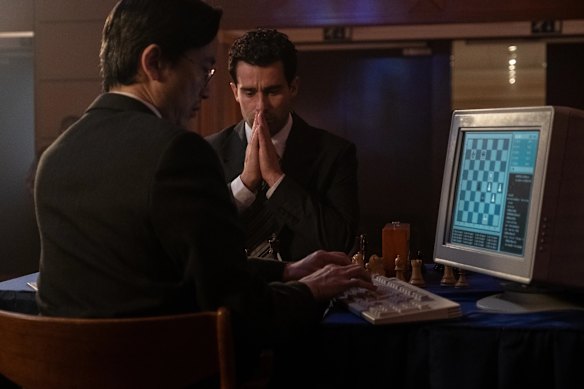
Orion Lee (left) as PC and Christian Cooke as Garry Kasparov in Rematch.
Despite its rich history and customs, chess doesn’t loom large in film and TV. In 2020, The Queen’s Gambit came out of nowhere, a super-charged, fictionalised story of a young prodigy with a troubled childhood, an addiction and a killer wardrobe who turns the stuffy world of competitive chess upside down.
It went on to become a critical and audience hit and was rightly applauded for its depictions of damaged personalities and insights to the dangers of obsession and competition.
There’s Searching For Bobby Fischer (1993) and Bobby Fischer Against The World (2011), which deal with one of chess’ most famous – if divisive – players, but there’s not a lot more out there.
The six-part drama Rematch gets a bet each way. It is based on the true story of Garry Kasparov, the Russian-Armenian who held the title of World Champion for an astonishing 15 years from 1985 to 2000.
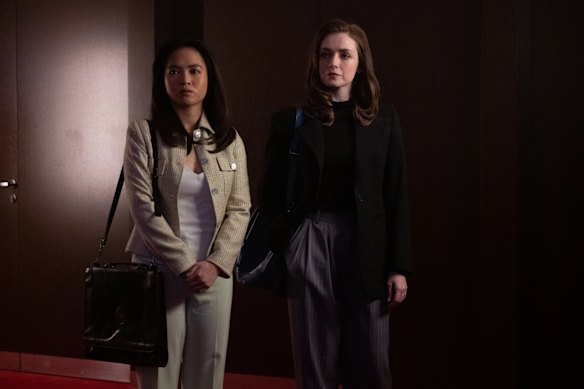
Molly Harris and Sarah Bolger in Rematch.
In the late 1990s, he agreed to play a series of matches against IBM’s supercomputer, Deep Blue. The games took place in Philadelphia and New York, and were broadcast all over the world. Key chapters of Kasparov’s life also play out in flashbacks and digressions, some more convincingly than others.