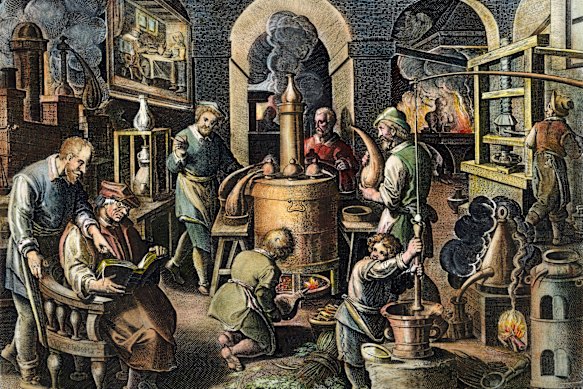
The story of how ancient alchemy led to the birth of modern science
Philip Ball’s new book traces the origins of alchemy, once seen as akin to witchcraft.
By Pat Sheil
December 31, 2025 — 4.00pm
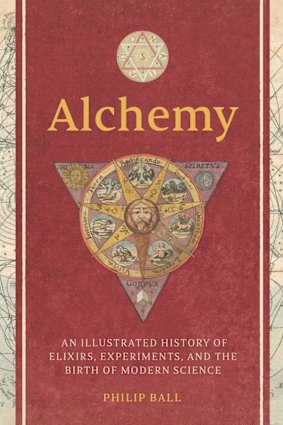
**SCIENCE
Alchemy
**Philip Ball
Yale University Press $61.95
Towards the end of Philip Ball’s marvellous book on the history of alchemy he tells the story of pioneering nuclear physicist Ernest Rutherford being told in 1901, by his co-worker Frederick Soddy, that the decay of radioactive thorium into radon gas meant they had witnessed the transmutation of one chemical element into another.
“For Mike’s sake, Soddy, don’t call it ‘transmutation’,” Rutherford cried. “They’ll have our heads off as alchemists!”
Now, watching thorium transforming itself into radon isn’t exactly turning base metals into gold, the Holy Grail of alchemy for centuries, but in 1980 the deed was eventually done. A few thousand atoms of gold were created by bombarding bismuth atoms with carbon 12.
A few thousand atoms would not have impressed the 16th-century Holy Roman Emperor Rudolph II, a staggeringly wealthy patron of alchemists, astrologers, astronomers, artists and radical thinkers of every stripe. Rudolph was an ineffective and negligent monarch, partly responsible for the ghastly wars that convulsed Europe for decades after his death, but his lavish court encapsulated many of the threads of Ball’s fascinating tale.
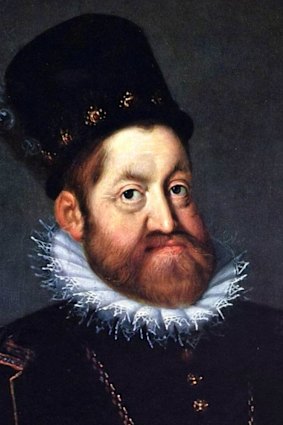
Holy Roman Emperor Rudolph II as a patron of alchemists, astrologers, astronomers, artists, and radical thinkers.Credit: Alamy Stock Photo
Alchemy is subtitled An Illustrated History of Elixirs, Experiments, and the Birth of Modern Science, and while Ball traces alchemy’s origins from Ancient Egypt, China, Greece and the Middle East, it is in medieval and Renaissance Europe that we meet the most remarkable practitioners of chrysopoeia (a glorious word for the artificial creation of gold).
The author writes with elegant economy as he sketches the characters who devoted their lives to alchemy over the centuries, and a roll call of the brilliant natural philosophers and outright charlatans who made their way to Rudolph’s palaces gives an insight into his thesis: these men (for men they mostly were), whatever we might make of them today, were creatures of their times.