There’s More to Look at Than Learn in 100 Nights of Hero
The film faithfully translates the feminist commentary of Isabel Greenberg's graphic novel while deemphasizing its more complex narrative techniques.
The film faithfully translates the feminist commentary of Isabel Greenberg's graphic novel while deemphasizing its more complex narrative techniques.

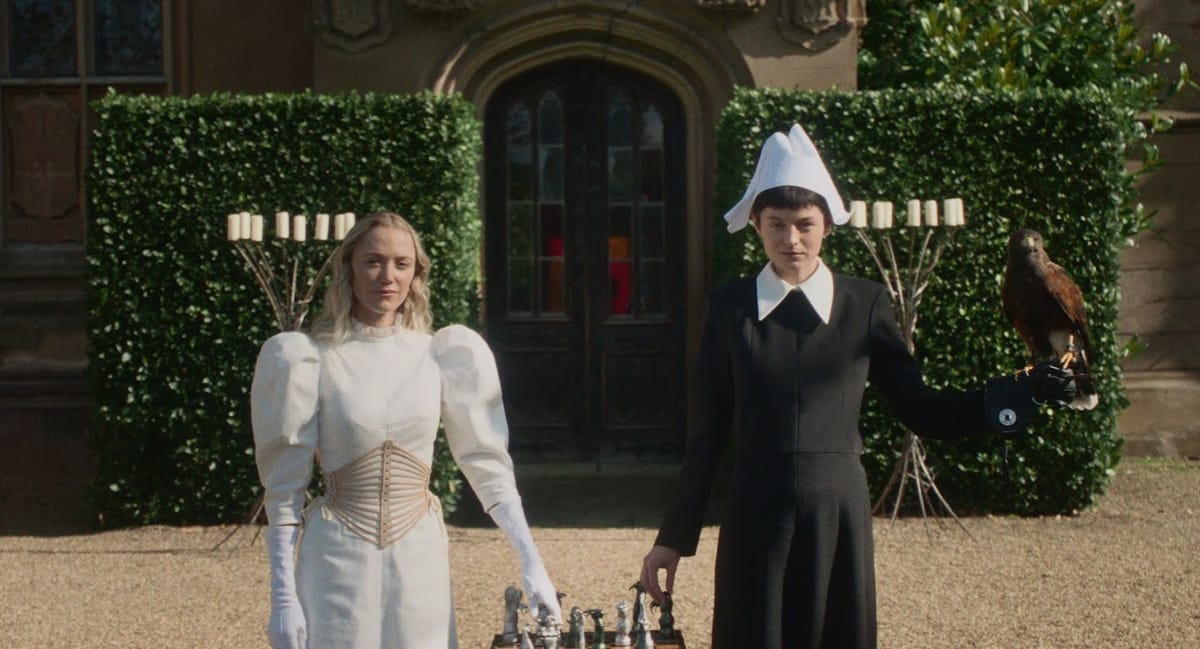
Emma Corrin and Maika Monroe in Julia Jackman’s 100 Nights of Hero (courtesy Independent Film Company, an Independent Film Company Release)
Isabel Greenberg is deeply invested in alternate universes. She constructed “Early Earth,” the setting of two of her graphic novels, The Encyclopedia of Early Earth (2013) and The One Hundred Nights of Hero (2016). The former is a collection of creation myths for Early Earth, while the other is modeled on One Thousand and One Nights and its frame story of a woman delaying a man’s predation by distracting him with storytelling. The latter book has been adapted into a feature film, 100 Nights of Hero, which faithfully translates the book’s feminist commentary while disappointingly deemphasizing its more complex narrative techniques.
Greenberg sets her book in a region of Early Earth characterized by stifling gender-based oppression, a country where women are forbidden to read or write and can be executed on the whims of their husbands. Young noblewoman Cherry (played in the film by Maika Monroe) learns that her husband has wagered with his friend Manfred (Nicholas Galitzine) that she can resist the latter’s seduction for 100 nights. To rebuff Manfred, who makes it clear that he won’t take “no” for an answer, Cherry’s maid and secret lover, Hero (Emma Corrin), employs the Scheherazade gambit, occupying him with stories each evening until he falls asleep.
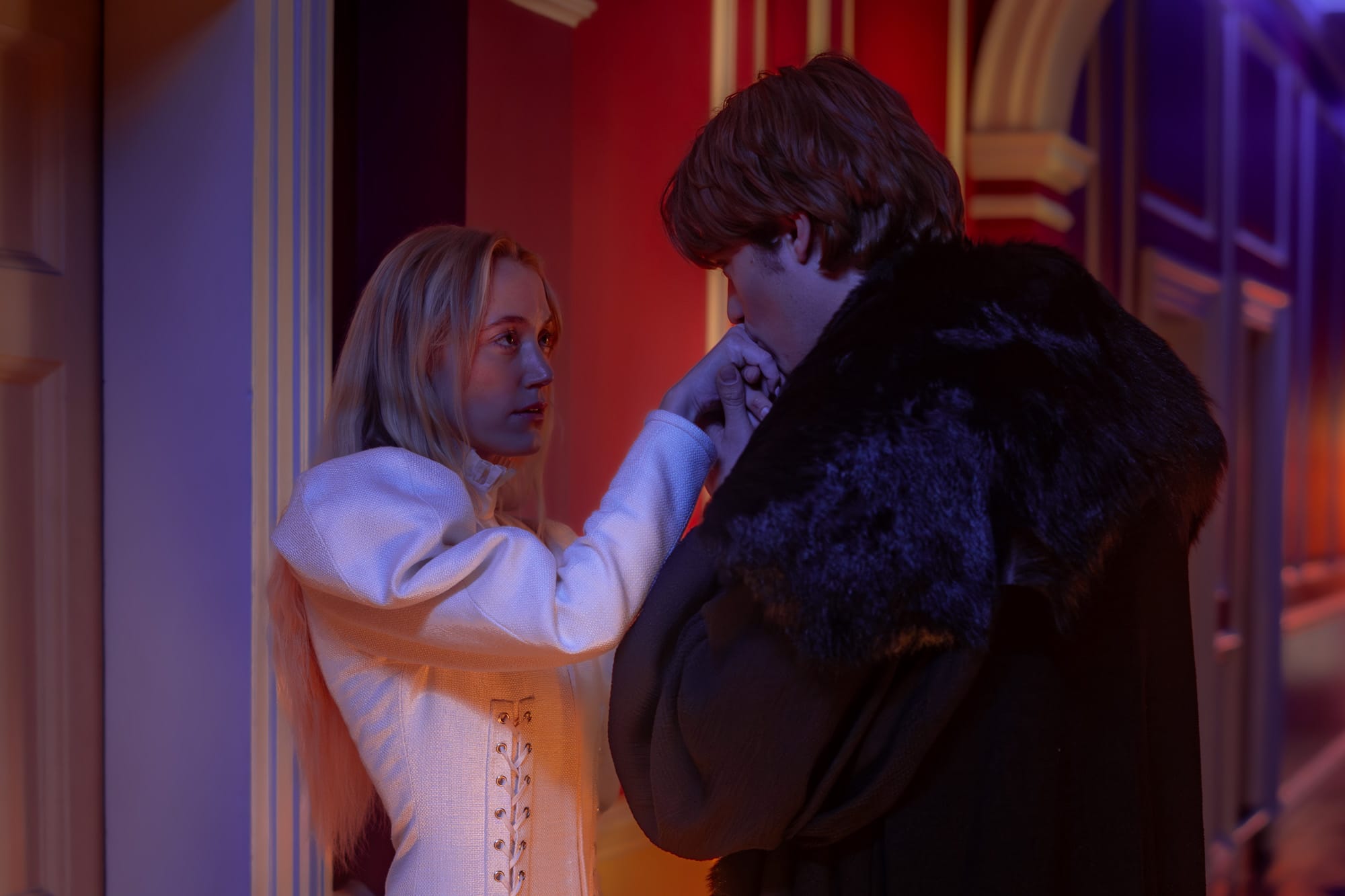
Nicholas Galitzine and Maika Monroe in Julia Jackman’s 100 Nights of Hero (courtesy Matthew Towers, an Independent Film Company Release)
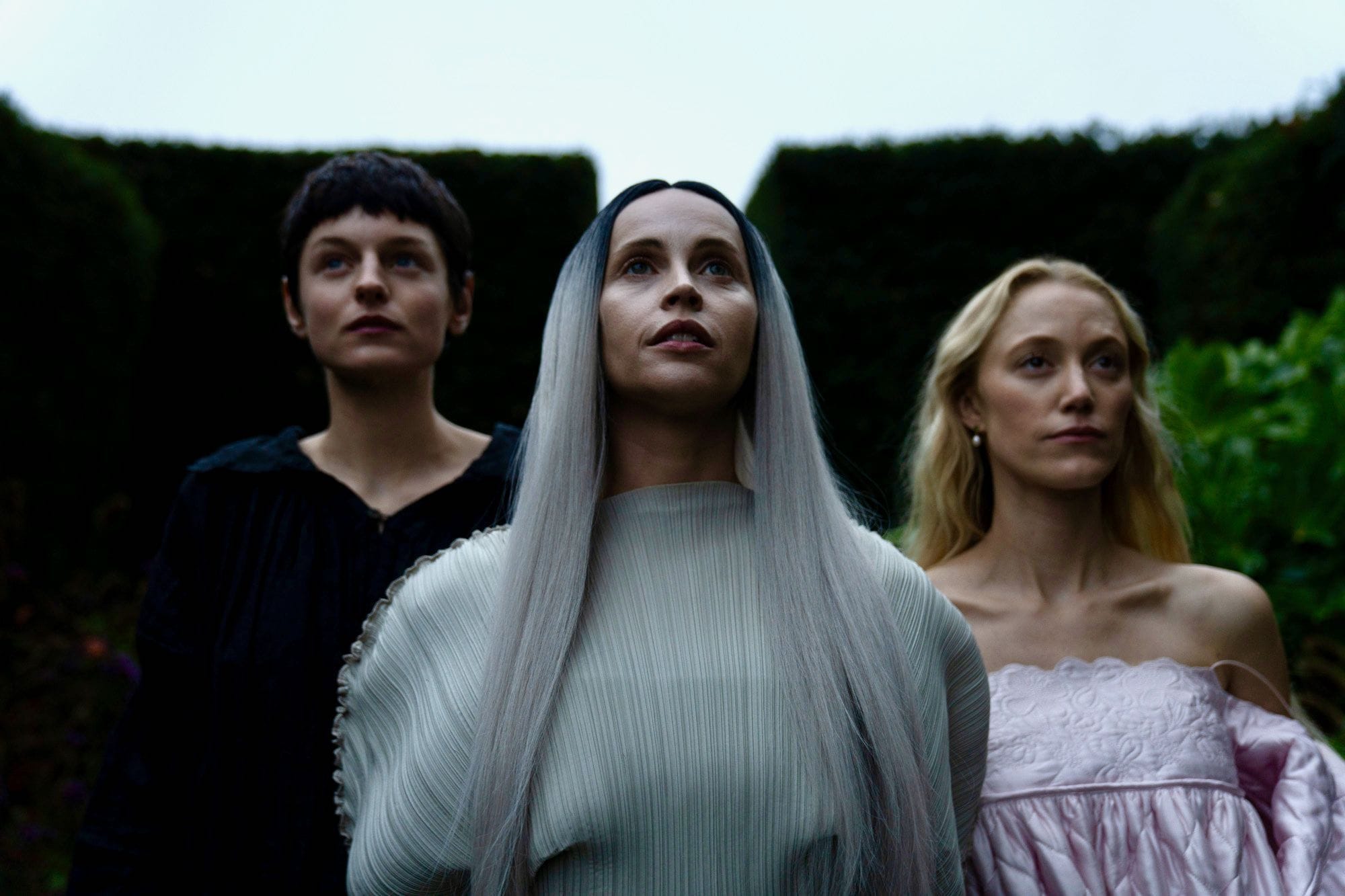
As the book relates a variety of these stories, mixing folklore and myth, their connections to Hero’s past eventually become clear. The film has just one story within the larger one, a tale of three sisters (distractingly, one is played by Charli xcx) who cause a scandal when their literacy is revealed. Instead of an interwoven anthology, the movie cuts back and forth between the two threads. That simplification, likely employed to streamline the production, weakens Greenberg’s overarching investigation into how storytelling and coded meanings can subvert oppression. It is also just odd that the characters continually attest to how vital it is that women tell each other their own stories when none of those stories are actually accessible to the audience.