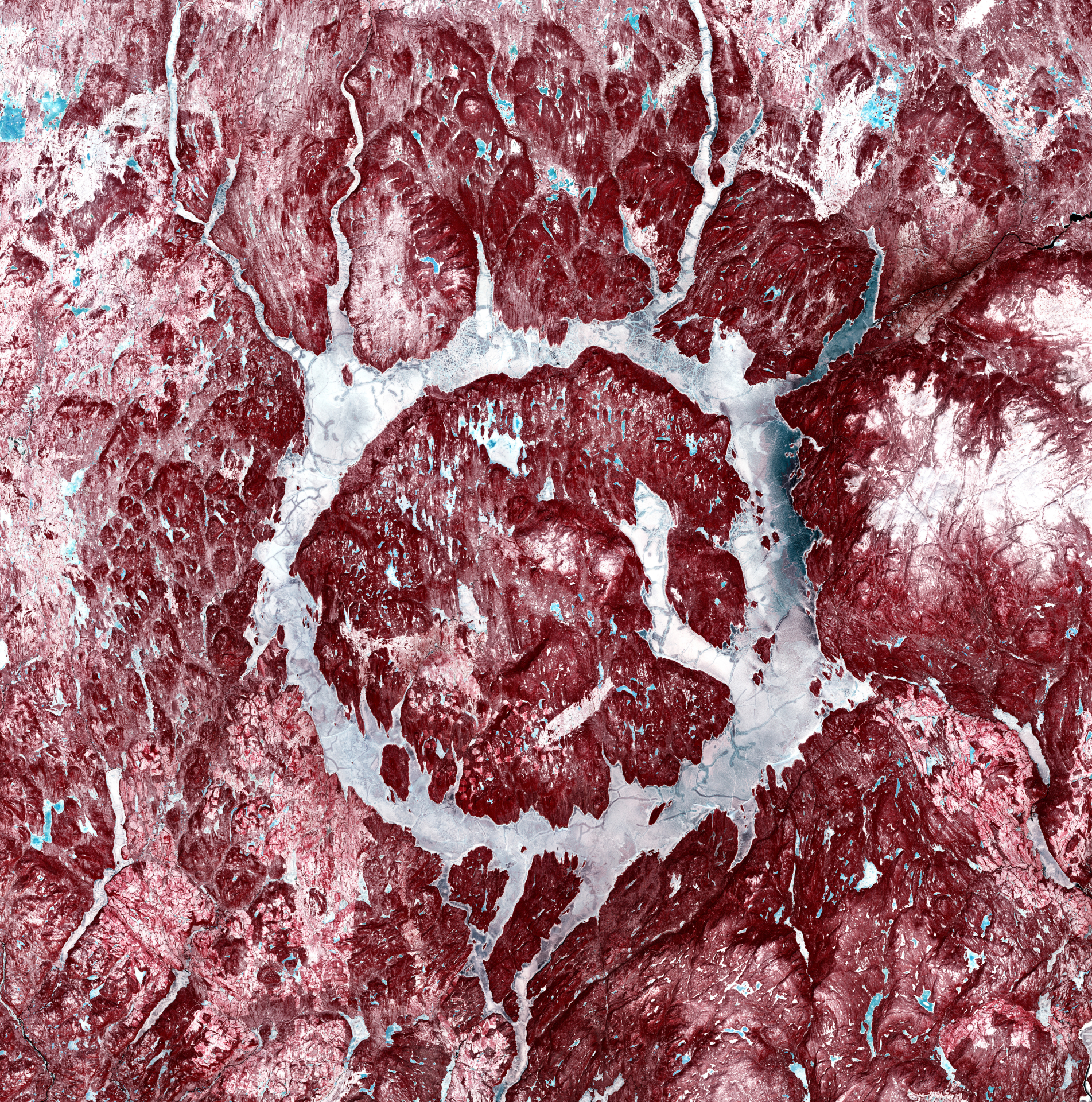
This Canadian crater looks like marbled meat | Space photo of the day for Jan. 6, 2026
The reservoir seen in this image is sometimes referred to as the "eye of Quebec."
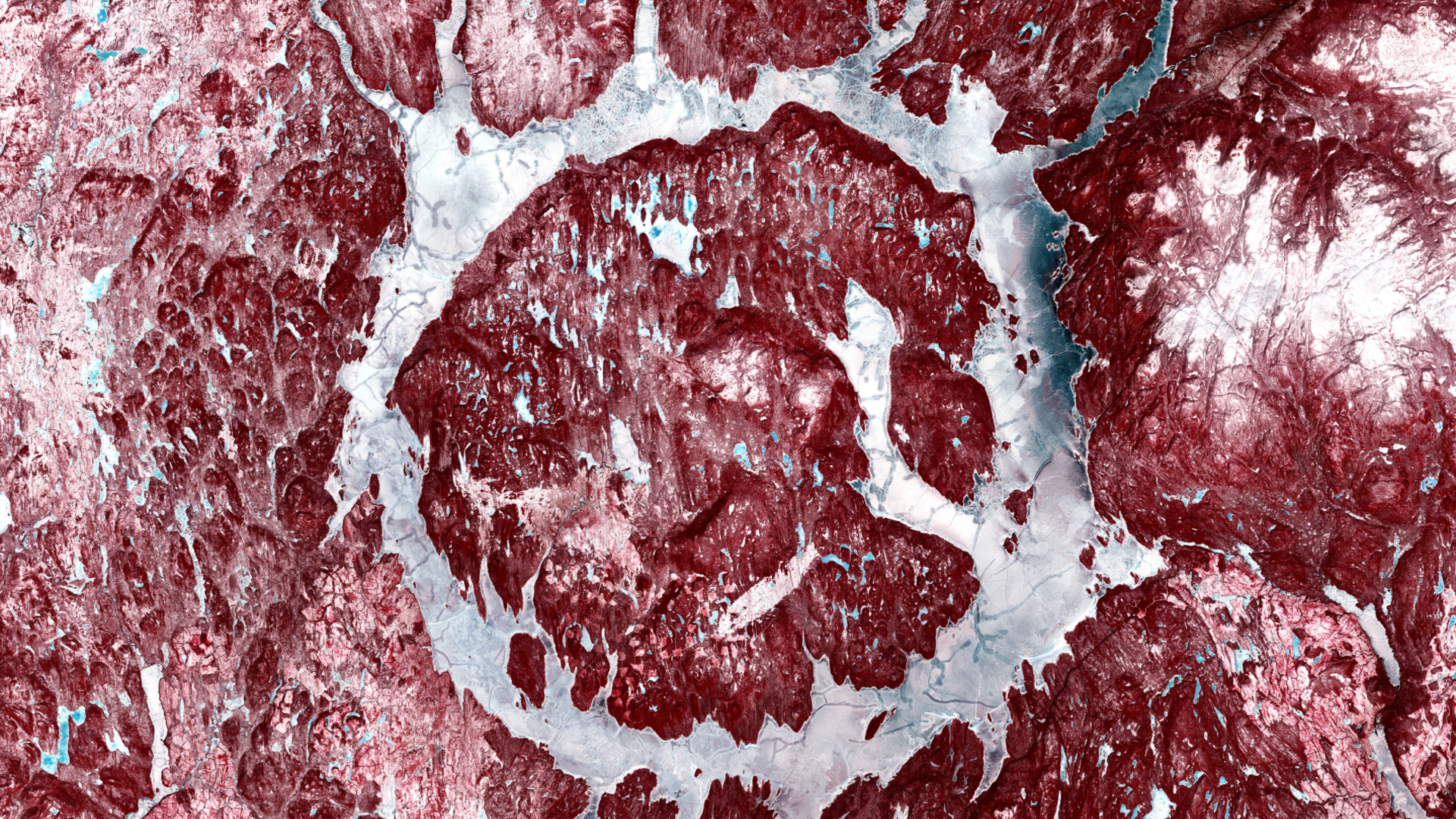
This false color image makes the Canadian landscape look very meaty. (Image credit: Contains modified Copernicus Sentinel data (2022), processed by ESA)
From orbit, Earth often looks more like art than geography. Satellites such as the European Union's Copernicus Sentinel missions are designed to turn that beauty into information. Rather than taking only "normal" photographs, the Sentinel-2 satellites record Earth in multiple wavelengths of light, including bands beyond human vision. Scientists then combine those wavelengths into false-color images that make it easier to tell forests from tundra, open water from ice, or bare ground from snow. The result is a view that can feel stylized while actually being highly diagnostic.
What is it?
In a recent false-color image, a Sentinel-2 satellite saw a "bauble" on Earth's surface. At a glance it resembles a red-and-white holiday ornament set into a wintry landscape. But the "bauble" is not decorative at all — it is Manicouagan crater in the Canadian province of Quebec, a remarkably circular structure that stands out even among Earth's most visible geological features.
The crater formed around 214 million years ago when an asteroid struck the region, leaving a ring-shaped scar that remains visible from space. Because of its eye-like symmetry, the formation is sometimes called the "eye of Quebec." René-Levasseur Island sits like a pupil at the center of this "eye." The feature lies roughly 435 miles (700 kilometers) northeast of Quebec City and spans about 45 miles (72 km) from east to west.
The asteroid responsible for this impact is thought to have been roughly 3 miles (5 km) in diameter, small by cosmic standards but immense by human ones. The force of that collision reshaped the bedrock, creating a structure so persistent that its geometry still dominates the landscape hundreds of millions of years later.
Where is it?
This image was taken from low Earth orbit of Manicouagan crater in the Canadian province of Quebec.