Thoughts on the Capture of Maduro and Trump's Attack on Venezuela
Maduro is a brutal dictator who is getting what he deserves. But Trump's actions are still illegal, because lacking proper congressional authorization. Whether they result in a beneficial regime change in Venezuela remains to be seen.
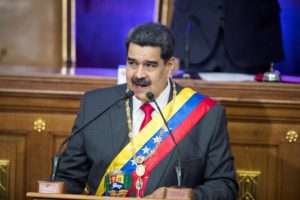
Nicolas Maduro. (Rayner Pena/EPA/Newscom)
Last night, US forces launched strikes on Venezuela and seized that country's dictator Nicolas Maduro, bringing him back to the US to face charges for drug smuggling. Maduro is getting what he deserves, even if for the wrong reasons. But the US attack is illegal, and it is far from clear whether it will really lead to a beneficial regime change in Venezuela.
I shed no tears for Maduro, who is a brutally oppressive dictator and not the legitimate ruler of his country (given his falsification of the 2024 election results). His real crime is not drug smuggling or "narco-terrorism" but repression and murder on a massive scale, creating the biggest refugee crisis in the history of the Western Hemisphere. The recent history of Venezuela is an abject lesson in the perils of "democratic socialism." That sort of regime leads to poverty and massive human rights violations - and doesn't stay democratic for long.
If Maduro ends up spending the rest of his life in a US prison, it will be just punishment for his many crimes, though drug smuggling is not what he really deserves to be punished for. The US War on Drugs is itself deeply unjust and turning it into a real war makes it worse.
But, the evils of Maduro notwithstanding, the US attack is still illegal, because lacking proper congressional authorization. I have long argued (most recently here) that the initiation of any large-scale military action requires congressional authorization, and this case surely fits the bill. Extensive air strikes combined with insertion of ground forces to seize a national leader is more than just some minor action that the president can take on his own authority. That's even more true if Trump really plans to have the US "run" Venezuela until a new government can be established. Doing that would likely require a much larger US military intervention.
Defenders of the legality of Trump's actions cite the 1989 invasion of Panama, which was undertaken in large part for the purpose of apprehending Panamian dictator Manuel Noriega; like Maduro, Noriega was charged with smuggling illegal drugs into the US. But the 1989 Panama precedent does not actually justify Trump's actions. On December 15, 1989 (five days before the US invasion), Noriega thereby creating conflict between the two countries that did not exist in the Venezuela case. In addition, Panamanian forces , and detained other American citizens. Unlike Noriega in 1989, the Venezuelan regime did not declare war on the US or otherwise initiate a military conflict. Thus, congressional authorization is needed to make any US military intervention constitutional.