Up in smoke: How one budget burnt a $115 billion hole in the nation’s finances
It’s now clear two decisions by Scott Morrison and Josh Frydenberg in 2018-19 have created huge fiscal headaches for all taxpayers.
To pay for those tax cuts, the government needed money. And, like previous governments, it went after tobacco.
It decided to change the point at which importers paid excise on cigarettes.
It was described as a much-needed step against illicit tobacco. But it came with the added bonus of an extra $3.3 billion in tobacco excise in the 2019-20 budget year.
A promised budget surplus, which Morrison said was due to good economic management, would really be built on higher taxes on ciggies.
The crackdown on tobacco across the nation’s wharves (plus higher excise rates) would swell expected cigarette excise to a record $17 billion in 2019-20.
So gung-ho were our tax collectors that just a few months later they upgraded expected excise collections by another $400 million in 2019-20 and by $3.2 billion over the following three years.
But it quickly became apparent that the tobacco cash cow was in trouble.
Instead of collecting $17.4 billion in 2019-20, the government raised $16.3 billion.
Coupled with the increases in excise (from 80¢ a stick in 2018 to $1.40 today), the change in when tobacco was taxed was the financial incentive needed for organised crime to flood Australia with dodgy cigarettes.
This was the starting point for the huge tobacco-excise hole in the current budget.
By March 2022-23, for which Frydenberg had forecast tobacco excise of almost $17 billion, the actual amount collected was $12.6 billion.
That same budget, Frydenberg forecast excise would raise $13.6 billion in 2025-26. Chalmers last month revealed it will be closer to $5.5 billion this financial year.
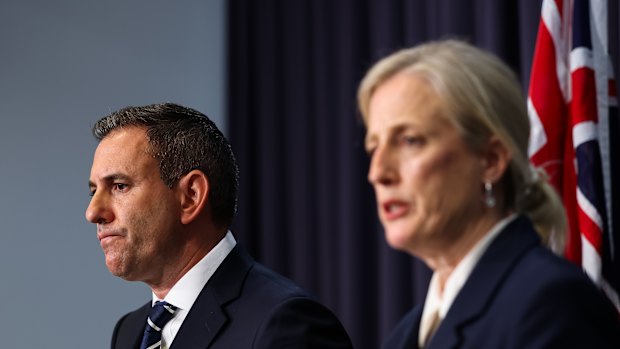
Treasurer Jim Chalmers and Finance Minister Katy Gallagher revealed in the mid-year budget update in December another increase in the cost of the GST deal.Credit: Alex Ellinghausen
The gap between what the government was expecting in tobacco excise back in 2018-19 and what it is forecasting to receive by 2029-30 is now an eye-watering $67 billion.
To be clear, what happened with the tobacco revenue collapse is not Morrison’s fault. The experts who backed the change in taxing arrangements did not foresee the reaction of criminals and law-abiding smokers.
Loading
But seven years on, with governments throwing more money at policing dodgy tobacco outlets and a war among criminal gangs playing out on the nation’s streets, no one can deny the problem that was created.
