Watch SpaceX launch NASA's Pandora exoplanet-studying satellite on Jan. 11
Liftoff is scheduled for 8:19 a.m. ET on Sunday (Jan. 11).
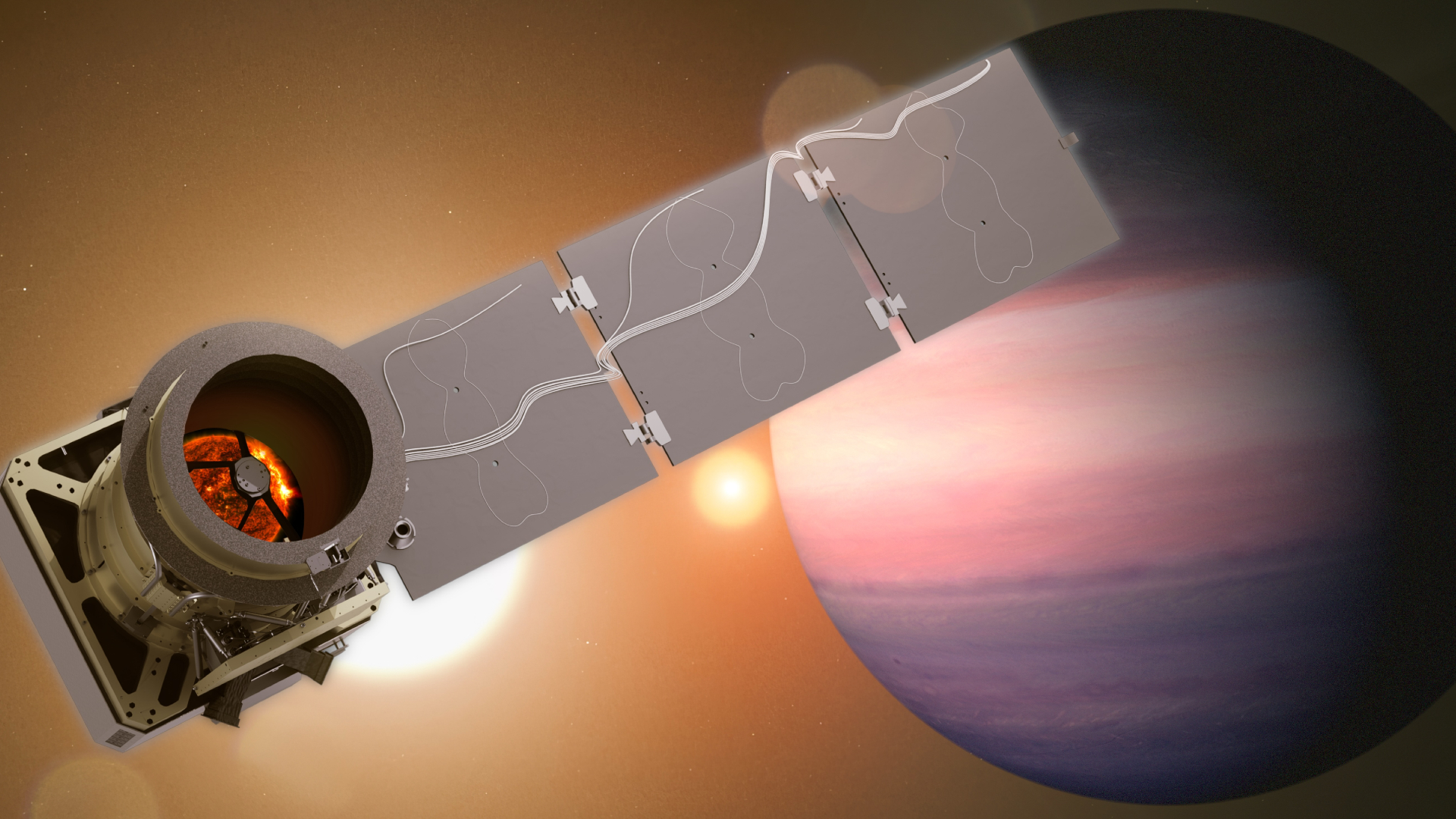
Artist's concept of NASA's Pandora mission, which will help scientists untangle the signals from exoplanets' atmospheres — worlds beyond our solar system — and their stars. (Image credit: NASA's Goddard Space Flight Center/Conceptual Image Lab)
SpaceX will launch NASA's next exoplanet mission on Sunday morning (Jan. 11), and you can watch the action live.
A Falcon 9 rocket carrying about 40 payloads, including NASA's Pandora exoplanet satellite, is scheduled to lift off from California's Vandenberg Space Force Base during a 57-minute window that opens at 8:19 a.m. EST (1319 GMT and 5:19 a.m. local California time).
During its yearlong orbital mission, the 716-pound (325 kilograms) Pandora will study at least 20 known exoplanets using a 17-inch-wide (45 centimeters) telescope, which it will train on the worlds as they "transit," or cross the face of, their host stars from the satellite's perspective.
Such transits cause a small dip in the host star's brightness, which exoplanet hunters have used to great advantage: Most of the more than 6,000 alien planets we know of have been discovered via the "transit method."
Transits also allow astronomers to characterize known exoplanets, especially their atmospheres. Different elements and molecules absorb light at specific wavelengths, so studying the spectrum of starlight that has passed through an atmosphere can reveal a great deal about that atmosphere's composition.
However, such work is complicated by stellar complexity. Star surfaces are not uniform; they often feature patches of varying brightness, like the sunspots that speckle our own star. Pandora will help astronomers account for such complexity, if all goes to plan.
Breaking space news, the latest updates on rocket launches, skywatching events and more!
"Pandora aims to disentangle the star and planet spectra by monitoring the brightness of the exoplanet's host star in visible light while simultaneously collecting infrared data," NASA officials wrote in a mission description. "Together, these multiwavelength observations will provide constraints on the star's spot coverage to separate the star's spectrum from the planet's."
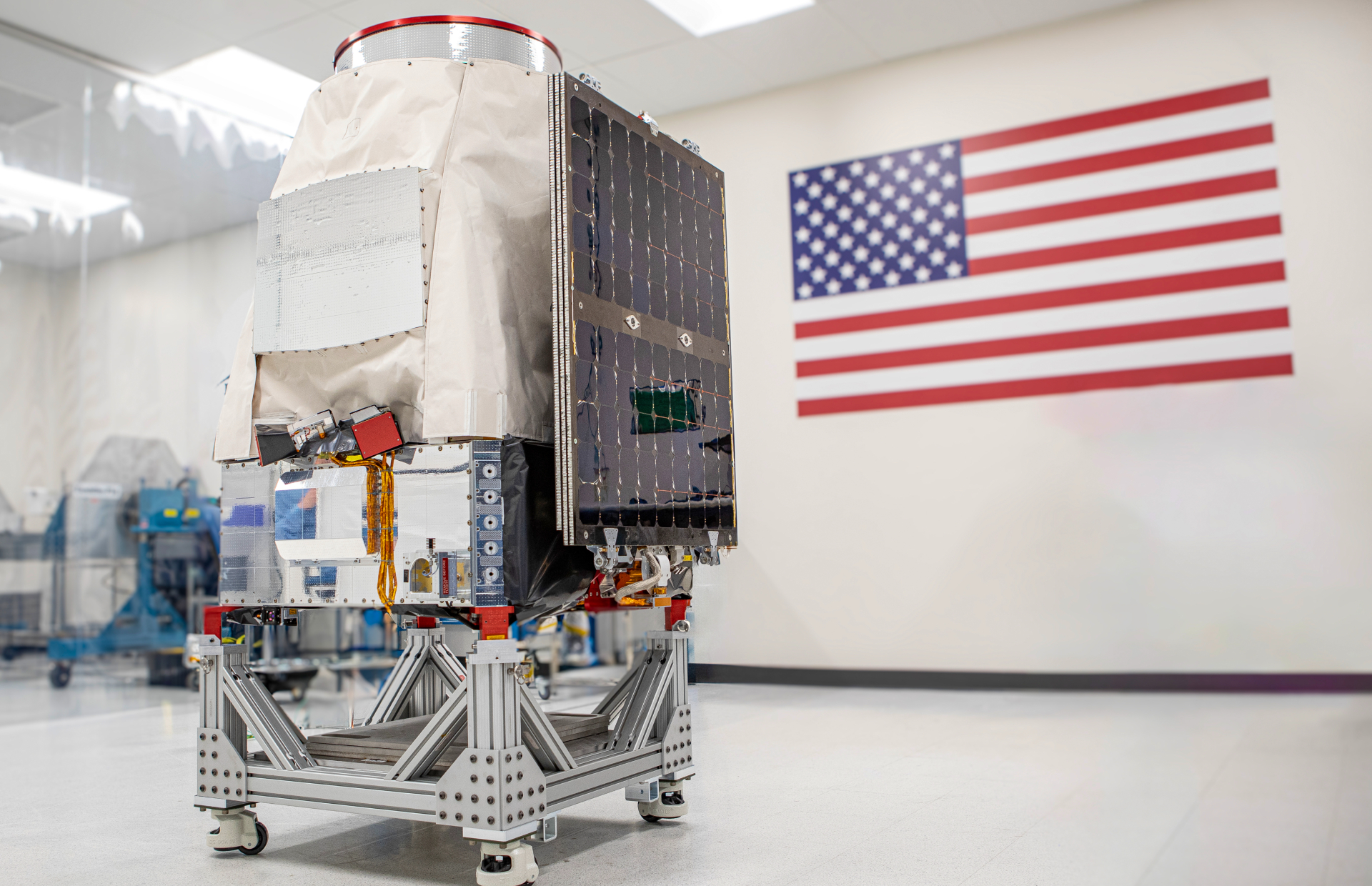
This view of the fully integrated Pandora spacecraft was taken May 19, 2025, following the mission’s successful environmental test campaign at Blue Canyon Technologies in Lafayette, Colorado. (Image credit: NASA/BCT)
Pandora will focus on planets with atmospheres that are dominated by water or hydrogen, agency officials added.
The other three dozen or so satellites going up on the Twilight mission are a diverse group. Among them are 10 of Kepler Communications' Aether spacecraft and two of Capella Space's advanced new Acadia Earth-imaging radar satellites.
SpaceX is no stranger to rideshare missions like Twilight. To date, the company has launched 15 such flights in its Transporter series and four via a different program known as Bandwagon.
Twilight will mark the fifth liftoff for this particular Falcon 9's first stage. If all goes according to plan, the booster will land back at Vandenberg about 8.5 minutes after liftoff.
Michael Wall is a Senior Space Writer with Space.com and joined the team in 2010. He primarily covers exoplanets, spaceflight and military space, but has been known to dabble in the space art beat. His book about the search for alien life, "Out There," was published on Nov. 13, 2018. Before becoming a science writer, Michael worked as a herpetologist and wildlife biologist. He has a Ph.D. in evolutionary biology from the University of Sydney, Australia, a bachelor's degree from the University of Arizona, and a graduate certificate in science writing from the University of California, Santa Cruz. To find out what his latest project is, you can follow Michael on Twitter.
You must confirm your public display name before commenting
Please logout and then login again, you will then be prompted to enter your display name.