Wellness in 2025: Why consistency beat crash-diets and 5 am guilt
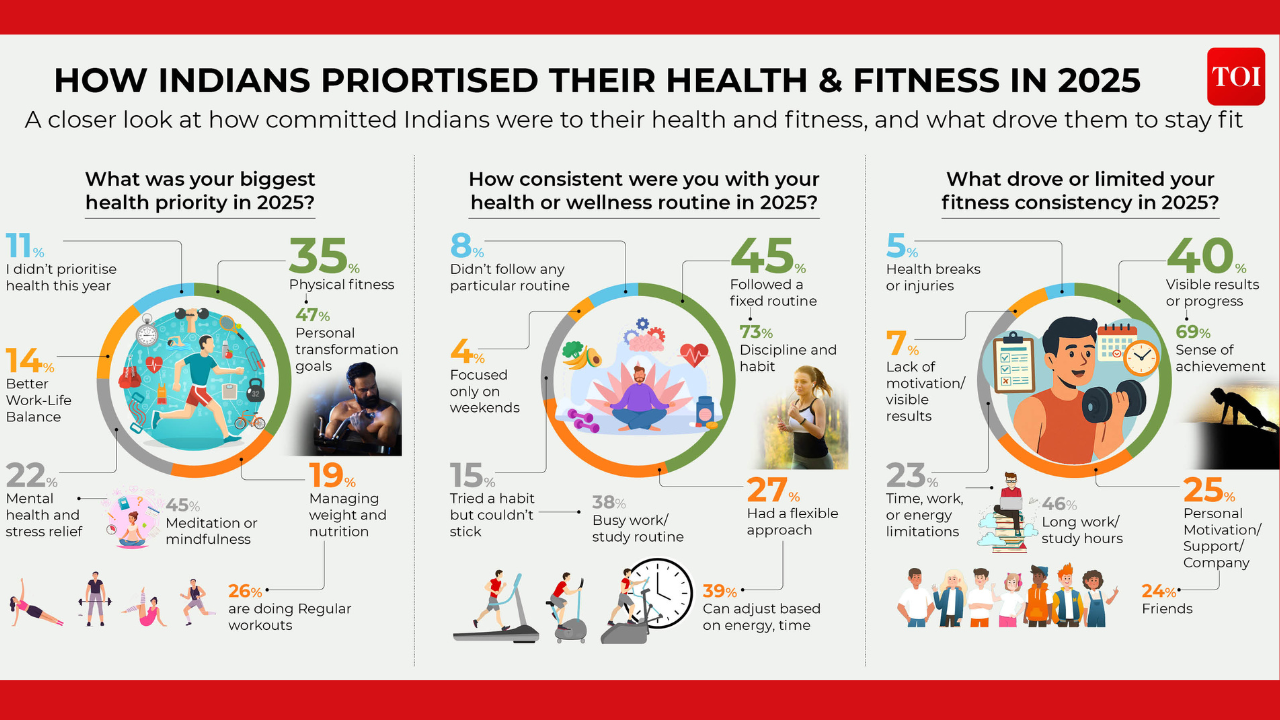
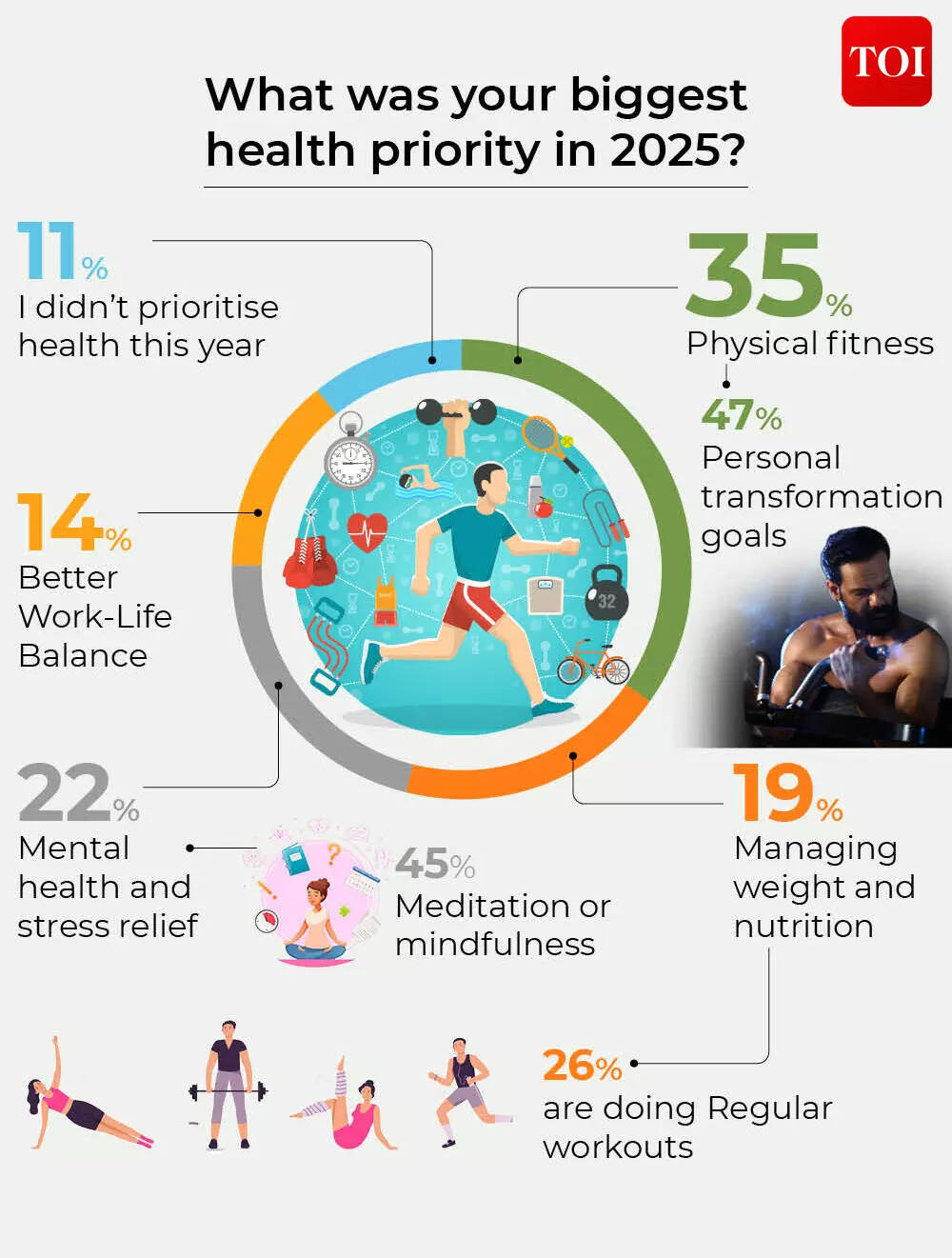
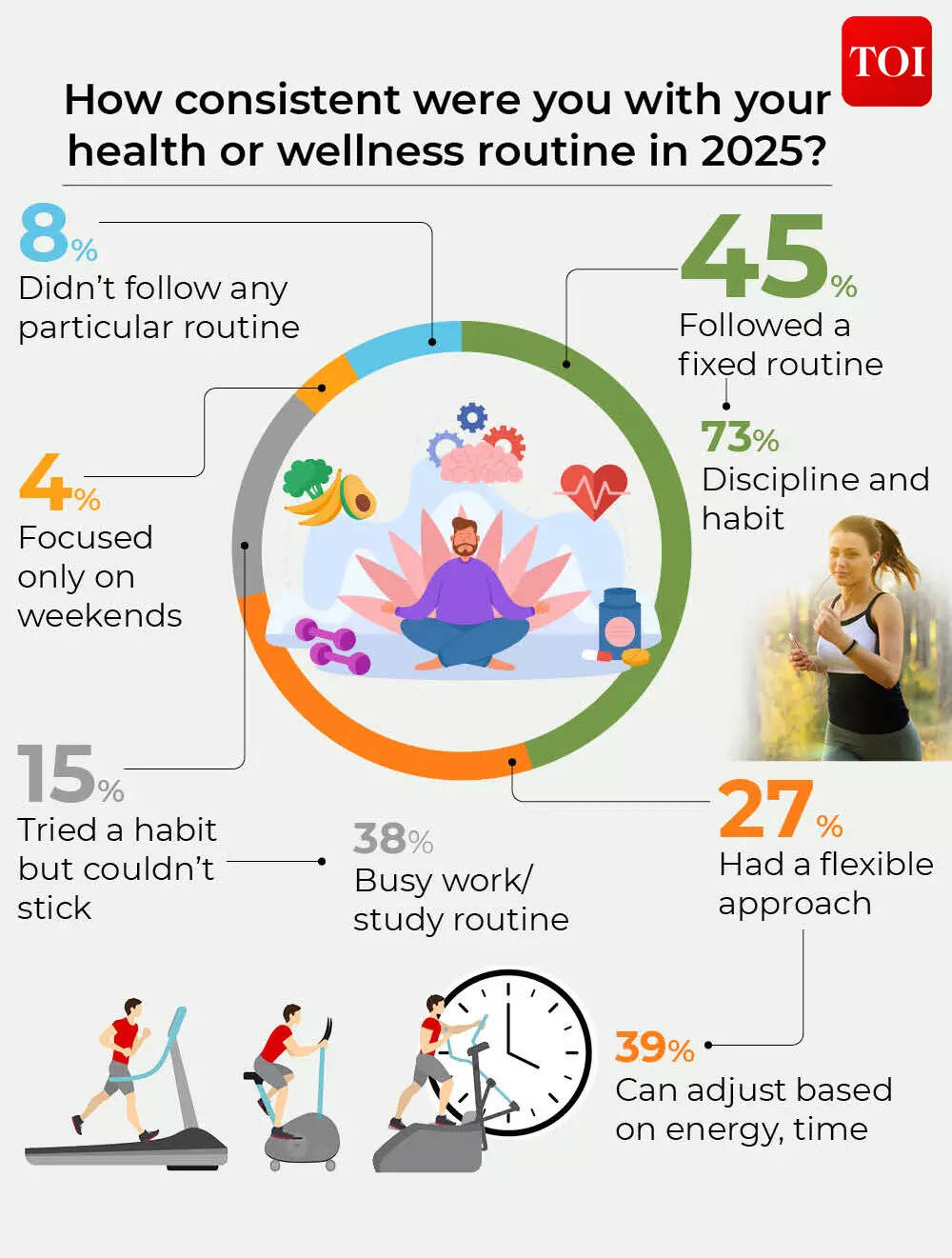
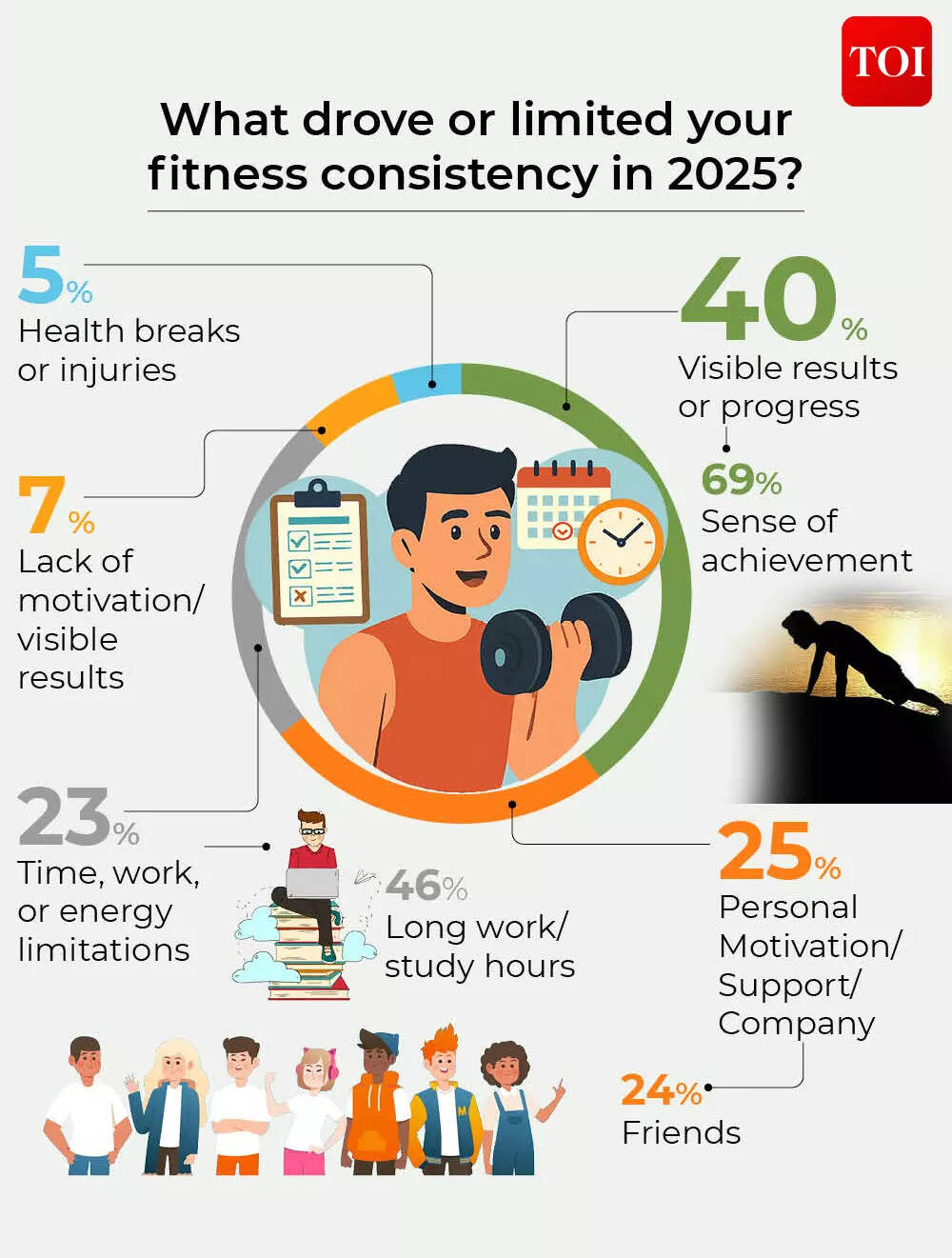
In 2025, Indians shifted their health priorities beyond resolutions, focusing on personal transformation and mental well-being. While consistency remained a challenge, driven by busy schedules, people embraced flexible routines and the power of habit over motivation. This year redefined health as a human, ongoing journey rather than a perfect destination.
If there’s one thing 2025 quietly taught us, it’s this: Indians are no longer waiting for a medical report to scare them into taking health seriously. This year, health and fitness stopped being a “New Year resolution that fades by February” and became something far more real, and far more personal.The TOI Habit Index data paints a fascinating picture of how Indians approached health in 2025. And no, it’s not about everyone waking up at 5 am or surviving on smoothies. It’s about priorities shifting, routines bending, and people doing the best they could with the time, energy, and motivation they had.
About TOI Habit Index
The respondents came from all stages of life, which makes the insights even more relatable. A large chunk,32.5%, are still in school or college, showing how health conversations are starting early.
Those early in their careers made up 17.47%, juggling new jobs and long hours. Mid-career professionals accounted for 19.48%, often balancing work, family, and fitness. Another 21.37% were experienced professionals, likely more conscious about long-term health.
Meanwhile, 9.19% were either taking a break or retired, reminding us that wellness matters at every age and phase.Responses were gathered through simple, relatable questions such as “What was your biggest health priority in 2025?”, “How consistent were you with your health or wellness routine?” and *“What helped or held you back from staying fit this year?” Instead of complicated jargon, people could choose everyday options that actually reflect real life from medical reasons and fitness challenges to small but meaningful changes like cutting down on caffeine or managing daily stress.
The idea was to capture honest, lived experiences rather than picture-perfect health routines.The responses came from people living in very different settings, which adds depth to the findings. A majority, 56.2%, spend most of their time in metro cities like Mumbai or Delhi, where fast-paced lives, long commutes, and packed schedules often shape health choices. Another 19.84% live in growing cities such as Indore or Lucknow, where urban lifestyles are catching up quickly, along with new fitness trends.
Meanwhile, 23.97% come from smaller towns or semi-urban areas, showing that conversations around health and wellness are no longer limited to big cities.In terms of how people identify themselves, most respondents, 70.96%, preferred He/Him, while 24.01% chose She/Her. A smaller but important 5.02% selected They/Them or preferred not to say, reminding us that inclusivity matters in conversations about health.
Together, these responses reflect a diverse mix of locations and identities, making the insights feel more real, grounded, and truly representative of everyday lives across India.