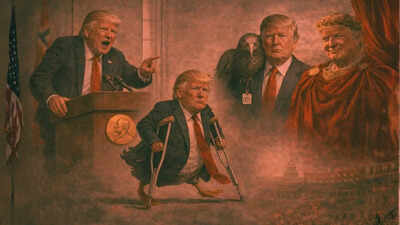
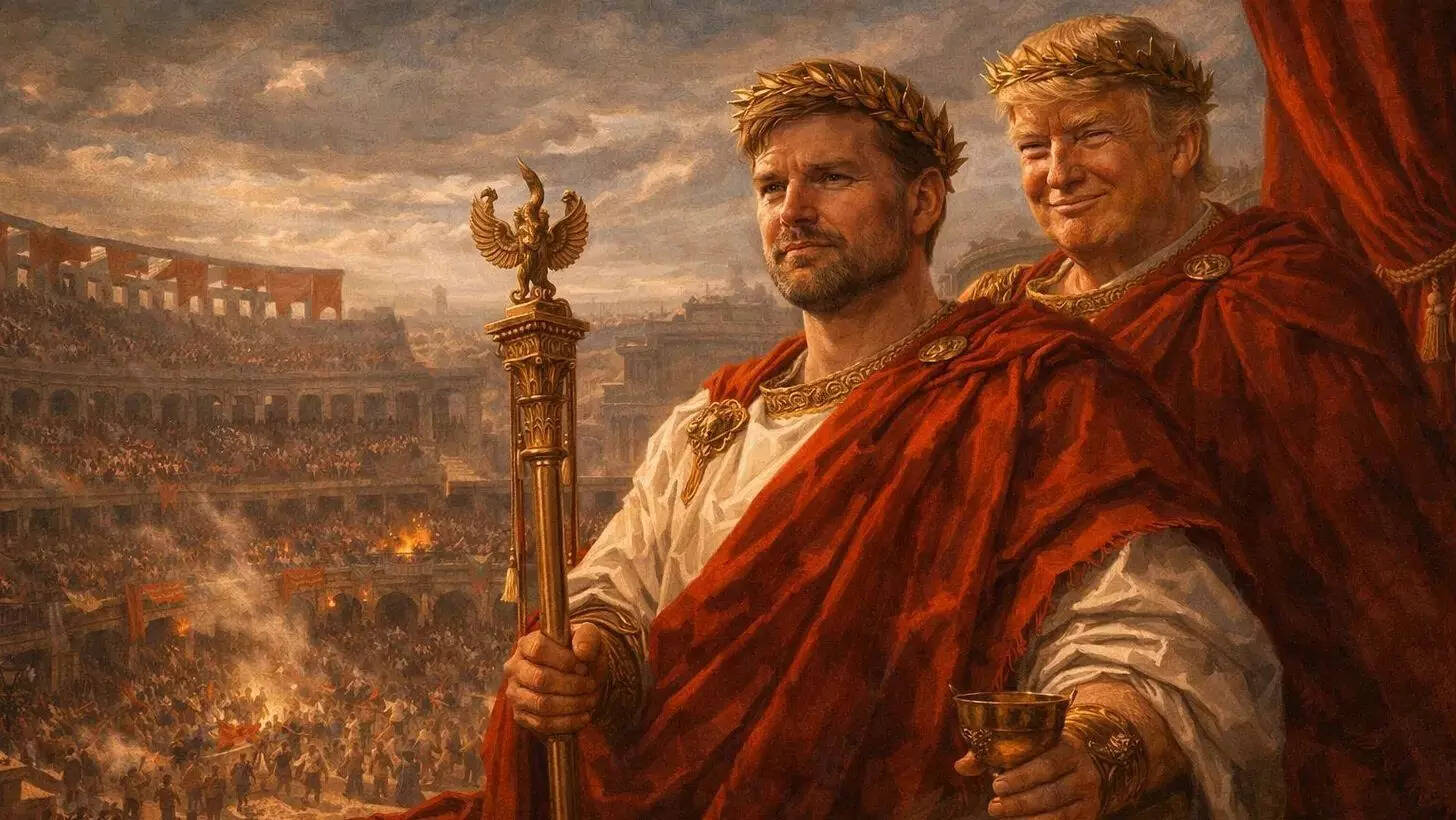
While conquering the world geographically is a tad hard these days, there is no semblance of doubt that 2025 was Donald Trump’s year, a man who rode back into the White House and instantly went about dismantling everything: American soft power, the “deep state”, the global economy, the rules-based international order, the White House’s East Wing, and anything else he could get his hands on.
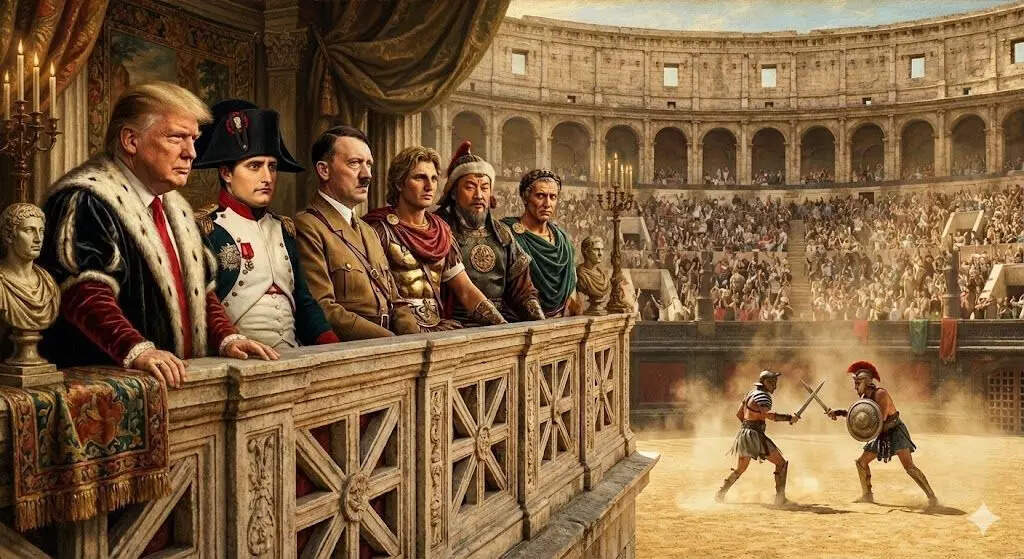
Throughout history, there are moments when the global order occasionally collapses, like a wave function when observed, to one man’s will.In 334 BCE, Alexander the Great marched from Macedon to the edge of India, shattering the Persian Empire en route.Two centuries later, Julius Caesar crossed the Rubicon to conquer Rome itself, proving that institutions fall faster than cities once a man decides the law no longer binds him.Between them came Genghis Khan, who unified the Mongol tribes and conquered 22% of the world’s landmass.In the early nineteenth century, Napoleon Bonaparte turned Europe into a battlefield, crowned himself emperor, rewrote borders and laws, and reduced kings to placeholders.The twentieth century produced its darkest iteration in Adolf Hitler, who fused obsession with industrial war and propaganda, forcing the world to live in anticipation of one man’s next move.The received wisdom is that each conqueror was inspired by the last.Alexander wanted to be the mythical Achilles. Caesar wanted to be Alexander.Napoleon wanted to be Caesar. Hitler wanted to be Napoleon. And to put a neat little bow on it, Donald Trump probably wants to be all of them put together.
The best ever. In his own words.
The Napoleon Award | Yes, Minister | BBC Comedy Greats
While conquering the world geographically is a tad hard these days, there is no semblance of doubt that 2025 was Donald Trump’s year, a man who rode back into the White House and instantly went about dismantling everything: American soft power, the “deep state”, the global economy, the rules-based international order, the White House’s East Wing, and anything else he could get his hands on.And boy did he get his hands on things. The Qataris gave him a jet. The Saudis a leopard. Netanyahu handed over a golden pager, which caused some consternation. Big Tech promised to build his ballroom. NATO called him “Daddy”, showing Europe had come a long way from colonising the world to sell opium.But it wasn’t all fun and games. The Nobel Peace Committee refused to hand over the gong.The Epstein files cast a long shadow on his term, making the DoJ work hard to put black tape on every Trump photograph.
An internecine civil war threatened a MAGA split. Meanwhile, in his hometown, a young upstart socialist seized control of the city he used to call home, making the GOP wonder if the new challenger had not already risen. A teetering economy, frayed international relations, and an inability to stop the war he promised to end in one day cast a pall over his year.
Read: Why MAGA thinks Europe is irrelevantAll of which brings us back to our question about what the fates portend for Trump and America in 2026.
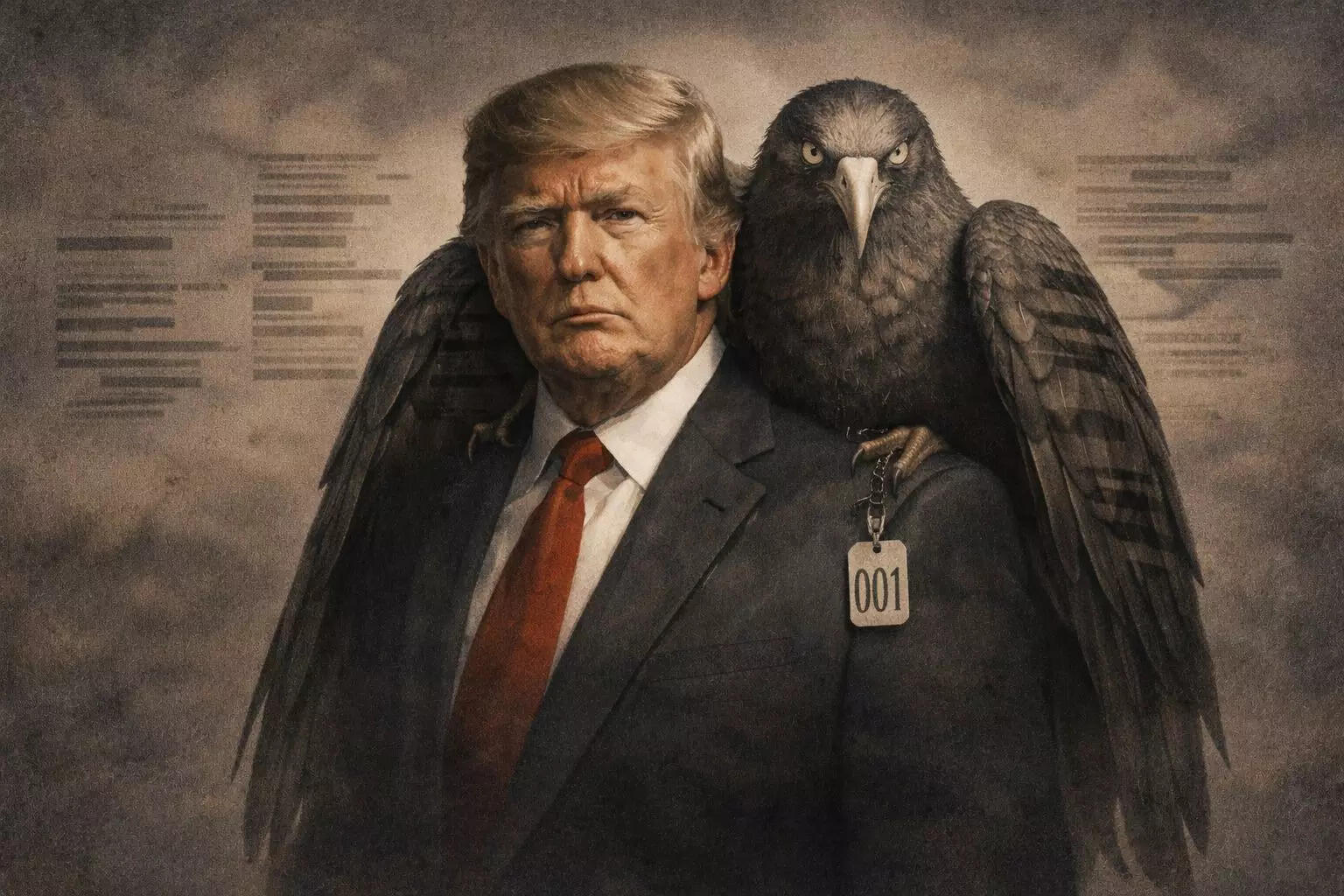
Will the Epstein files become an albatross around his neck?
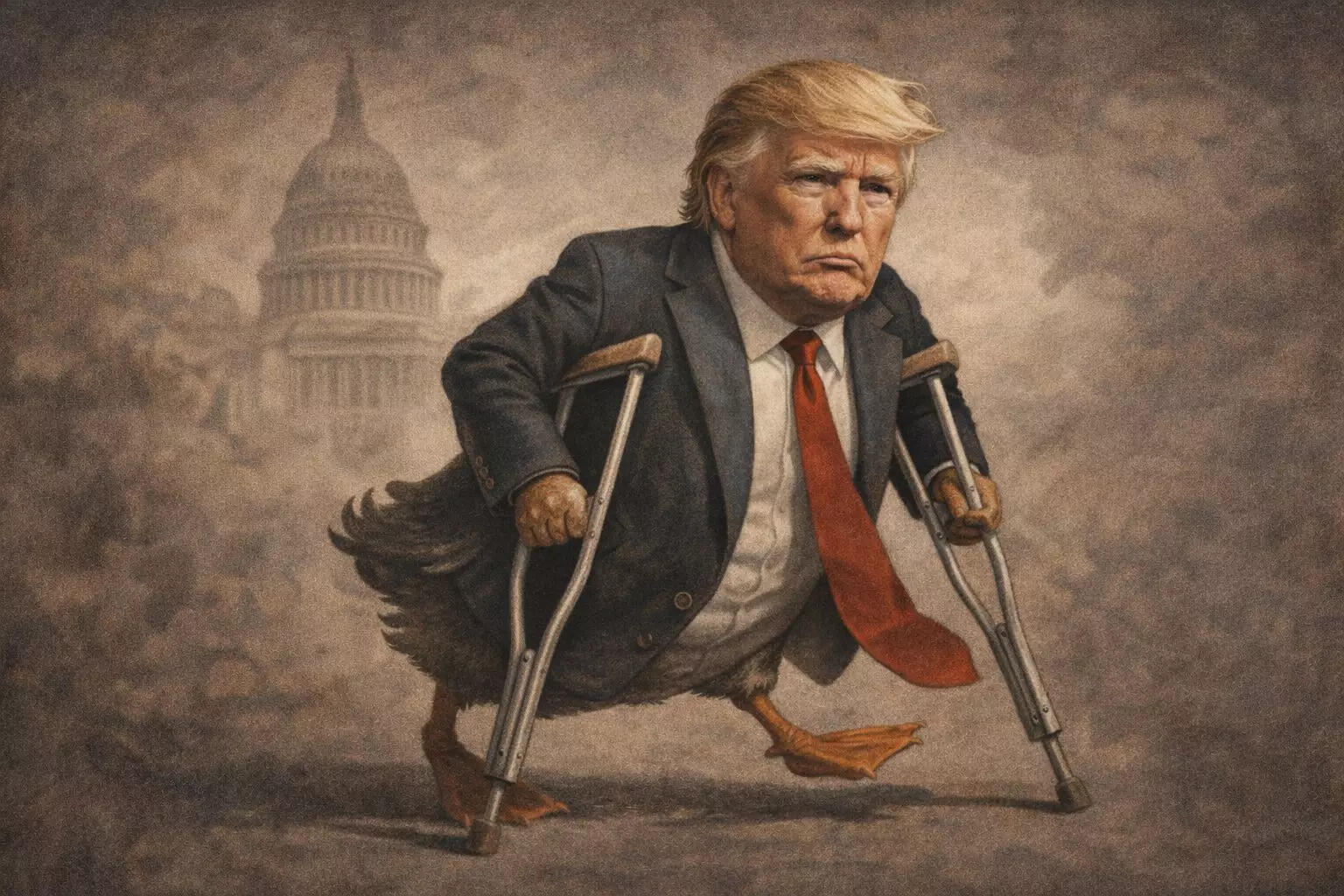
Will a midterm reversal make him a lame-duck president?
Meanwhile, will Trump’s beta noire, Zohran Mamdani, stage a Democratic comeback?
Will MAGA split before Trump’s term is over?
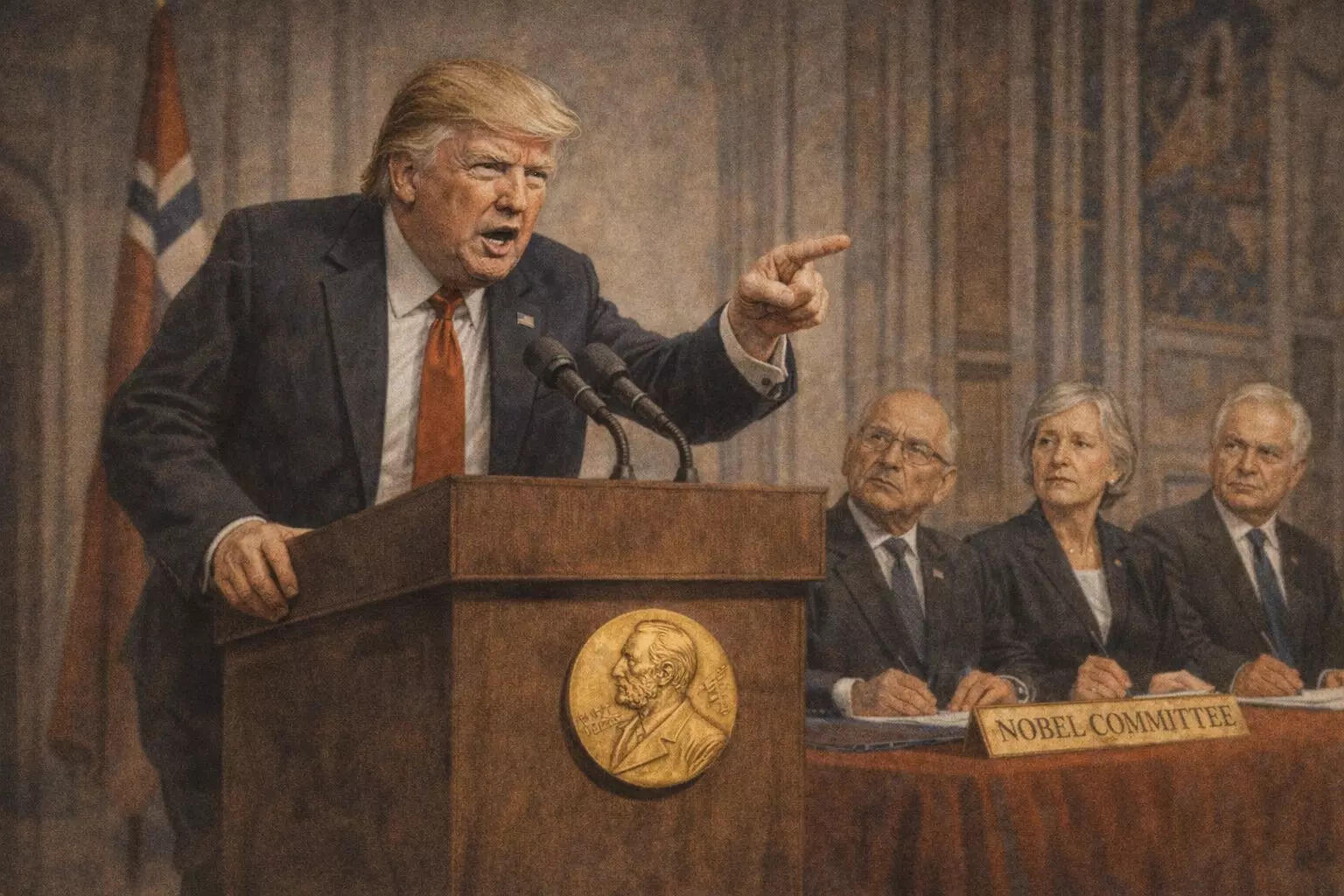
And finally, will Trump get the Nobel Prize he so covets?
These are some of the questions that we try to answer in our outlook for 2026.
Will the Epstein files become Trump’s albatross?
Short answer: Likely yes, but politically, not legally.Donald Trump has the Bart Simpson-like ability not to pay for his own mistakes — the divine gift of saying anything, contradicting himself moments later, and still walking away untouched. That uncanny immunity helped pave his road back to the White House. But there’s one issue that even God’s chosen warrior is not able to shrug off: the Epstein saga.The Epstein saga is nothing short of surreal.A schoolteacher without a college degree transformed himself into an international fixer, one who explained the mechanics of global finance to Noam Chomsky, jetted Stephen Hawking across the globe, and hosted Bill Gates for private dinners — all the while running one of the most grotesque sex-trafficking operations in modern history.Though Epstein died in his jail cell in 2019, his shadow looms larger than ever, particularly for those who once orbited his sphere.
What began as a scandal is morphing into a legacy — and for Donald Trump, it’s beginning to look Macbethian.Before returning to power, Trump and his MAGA cadre made one promise louder than most: they would finally open the Epstein vault.Attorney General Pam Bondi announced a “client list” was sitting on her desk and that a “truckload” of files had been delivered to her office.MAGA exploded with anticipation before the energy quickly soured.
Soon, the DOJ released a heavily redacted memo stating no official “client list” existed.The MAGA base, which had waited years for vindication, was left with old flight logs and a few blurry chalkboard photos from Epstein’s island. There were no bombshells, no big names, no arrests. The silence was deafening.And Trump? He pivoted fast. By mid-summer, he was calling the files “boring” and dismissing the whole affair as “a Democrat hoax.”
At one point, he told reporters: “Are you still talking about Jeffrey Epstein? This creep? Unbelievable.” On Truth Social, he ranted that it was “made up by Comey, Obama, Biden” and that “nobody cares.”The whiplash has been staggering. Kash Patel, once a loud advocate for release, now parrots the same party line: nothing to see here. Susie Wiles, Trump’s campaign boss, admitted that “there is no client list,” and that they had misjudged how much MAGA voters cared.
Marjorie Taylor Greene — one of the few dissenters — accused Trump of backing down to protect “his friends,” and was quietly sidelined from party leadership.So what happens in 2026?This much is clear: the Epstein story isn’t going away. Federal courts have ordered the release of thousands of additional pages. The Judiciary Committee still has grand jury testimony to publish. New FOIA suits are pushing for more records.
Even if the most salacious material never surfaces, the steady drip of photos, emails, and depositions will keep the story alive.Strategically, it’s a minefield for Republicans. Trump’s pivot has confused the base. Polls suggest only 40% of GOP voters approve of how he handled the Epstein files — a dangerous drop for someone who relies on unshakable loyalty. Some independents view the about-face as a cover-up. And with midterms looming, Democrats are salivating at the opportunity to link MAGA to Epstein — even if circumstantially.The real danger for Trump isn’t legal. It’s narrative. The Epstein files were supposed to be the ultimate symbol of Trumpian justice: the outsider exposing the rot. Instead, the files have made him look complicit, hypocritical, or worse — afraid.For now, he’s falling back on an old strategy: mock the story, minimise its relevance, and blame the press. But unlike past scandals, this one isn’t going quietly. And in 2026, Trump may find that for the first time in years, a scandal is sticking — not because of what’s in the files, but because of how he handled them.
Whether that becomes an albatross or just another blip will depend on what leaks next — and how long Trumpworld can keep pretending there’s nothing to see.
Will the 2026 midterms make Trump a lame-duck president?
Short answer: The House will decide Trump’s fate.The 2026 US midterms are shaping up less as a routine electoral checkpoint and more as a referendum on Trumpism in power. Donald Trump will not be on the ballot, but everything else about the election will orbit him: the economy, internal Republican fractures, cultural fatigue, and the limits of permanent mobilisation politics.On paper, Republicans remain relatively well positioned in the Senate. The map favours the GOP, and unless a genuine wave materialises, they are likely to hold the chamber. The House, however, is a different story. With Republicans clinging to a razor-thin majority, even a modest swing could flip control. Democrats need only a handful of seats, and current indicators suggest volatility rather than stability.If Republicans lose control of the House, Donald Trump would almost immediately become a lame-duck president.
A Democratic House would be able to launch investigations, stall legislation, block funding priorities, and turn the second half of Trump’s term into an exercise in damage control rather than dominance. For a presidency built on spectacle, authority, and momentum, the loss of the House would be structurally debilitating, not just symbolic.The deeper issue is not seat math but political physics. MAGA thrives on grievance, confrontation and permanent campaign mode.
Midterms, by contrast, reward turnout discipline, persuasion in marginal districts, and economic credibility. That is where the strain begins to show.Economically, Trump enters 2026 on shaky ground. Inflation has cooled but remains high enough to irritate voters. Real wages are largely flat. Housing costs continue to squeeze households. Trump’s approval on economic management has slipped into dangerous territory for an incumbent, with voters overwhelmingly blaming him for cost-of-living pressures.
Even a mild slowdown would sharpen that dissatisfaction.
MAGA rhetoric works best against abstract enemies; it works poorly against supermarket bills.Culturally, Republicans face diminishing returns. Immigration crackdowns and culture-war signalling still energise the base, but they increasingly repel suburban and independent voters who decide House races. The lesson of recent cycles is clear: outrage dominates social media; material concerns decide elections.The MAGA coalition itself is also less cohesive than it appears. Trump retains loyalty, but fractures are widening over foreign policy, Israel, ideological purity tests, and personality feuds. These divisions matter because they shape candidate quality. In swing districts, nominees forged in maximalist primaries often struggle to pivot towards persuasion.Trump’s shadow cuts both ways. His endorsements still dominate primaries and energise loyalists, but his national approval remains weak.
Scandals, including the Epstein fallout, have compounded voter fatigue. Republicans again face a familiar dilemma: Trump boosts base turnout while alienating the moderates who are necessary to hold marginal seats.So will MAGA get a reality check? Possibly.Republicans are unlikely to collapse, and the Senate may survive. But if the House flips, Trump becomes a lame-duck president, and the message will be unmistakable: grievance politics can win elections, but governing without economic relief has limits.
Or to borrow a line from Bill Clinton advisor James Carville: it's the economy, stupid. And the economy could very well shatter the myth of permanent dominance.
Will Trump’s beta noire, Zohran Mamdani, succeed?
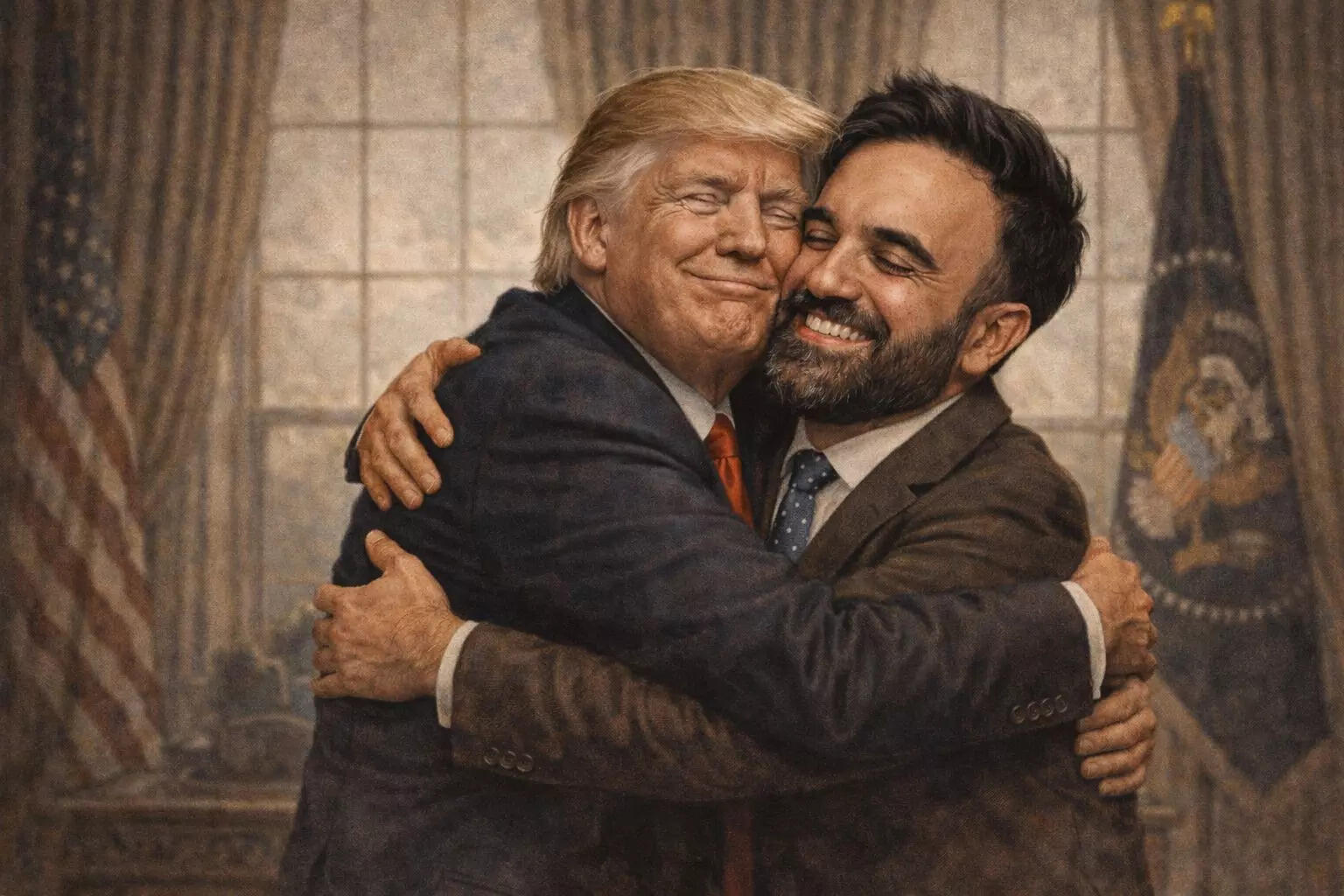
Short answer: He will win the argument before he wins the balance sheet.When Zohran Mamdani met Donald Trump, few folks expected Trump to greet his beta noire like a favourite uncle reunited with his errant nephew. Despite their history of Mean Girls style repartees, the rapper-turned-socialist and the former reality star looked like they would happily do taxes and laundry together in another life.
Perhaps they recognised each other for what they really were: nepo babies with an instinct for spectacle.That oddly warm tableau matters because it punctures the caricature. Zohran Mamdani is not an accidental radical who wandered into power. He is a politician with a theory of change, now loosely branded as Zohranomics. And Zohranomics is not about seizing the means of production.Strip away the slogans and Zohranomics rests on three pillars: price relief for essentials, aggressive redistribution at the top, and public provisioning where markets have failed.
Economists broadly accept the diagnosis. Where they diverge from Mamdani is on method. The feasibility of his promises depends on which pillar you interrogate, and how seriously you take the arithmetic.Read: Inside Trump's bromance with ZohranFree buses are the most defensible promise on the board. Mamdani has already helped normalise fare-free pilots. Expanding them citywide is expensive but administratively straightforward if Albany and the MTA cooperate.
Transport economists acknowledge that ridership rises when fares disappear. But as Avner Shilo and Kofi Ofosu-Kwabe note in their work on fare-free systems, higher demand does not automatically translate into better outcomes.
Removing fares increases congestion and operating strain without creating a self-sustaining funding loop. Zohranomics accepts this trade-off. Remove a daily cost, make life visibly cheaper, and force opponents to explain why turnstiles are sacred.
The economics are fragile, but the politics are clean.The same logic applies to childcare. Economists agree childcare is economically productive, but they are far less enthusiastic about universalism at scale. The Wharton Budget Model warns that large, debt-financed universal childcare programmes risk fiscal drag, noting that long-term productivity gains often fail to offset upfront costs. Zohranomics is not blind to this.
It simply prioritises immediacy over optimisation.
Expanded childcare is treated not as an investment spreadsheet, but as social infrastructure that legitimises the state in everyday life.Then comes the grey zone.Read:Why some liberals think Zohran is the new ObamaCity-run grocery stores sit somewhere between policy and provocation. John McNeal’s Vanderbilt analysis on public grocery stores is blunt about the structural problem: grocery retail is a “low-margin, high-volume” business with punishing logistics and waste costs.
Economists writing for the Library of Economics and Liberty argue that municipal grocers distort competition by using taxpayer support to undercut private firms, eventually reducing choice rather than expanding it.
Mamdani’s defence is implicit rather than explicit. The goal is not to replace private supermarkets, but to threaten them. Zohranomics treats public options as leverage. Economists call this inefficiency.
Mamdani calls it discipline.Housing is where Zohranomics is writing cheques that reality cannot cash.A rent freeze is emotionally powerful and politically combustible. Economists are remarkably consistent here. Rebecca Diamond, Timothy McQuade and Franklin Qian, in their National Bureau of Economic Research study on rent control, found that expanding rent control reduced rental housing supply by roughly 15 percent and increased rents elsewhere in the city.
Their conclusion is precise, not ideological: rent control “benefited long-term tenants” but “lowered overall housing availability and increased city-wide rents.
” In New York, where supply is already constrained by zoning and land costs, the effect would be sharper. Legally, a mayor also lacks unilateral authority. Rent guidelines boards, state law and courts all intervene. At best, Mamdani can engineer a temporary freeze or squeeze.
A permanent citywide freeze is close to impossible. This is where Zohranomics overpromises and under-controls.Taxing the rich follows the same pattern. The numbers sound dramatic on a campaign stage. In practice, city income and corporate tax hikes require state approval and political consent that does not exist. Economists like David Neumark and William Wascher, writing for the NBER on wage and tax shocks, repeatedly return to the same constraint: large, sudden cost increases tend to produce avoidance, automation or exit.
Capital, unlike rhetoric, moves. Zohranomics assumes pressure will overcome inertia. History and biology suggest inertia often wins.Mamdani is not promising delivery in the traditional managerial sense. He is promising confrontation. Zohranomics is less an economic programme than a governing posture: force fights, expose veto points, and make obstruction visible. When things fail, the failure itself becomes the argument.
Economists call this “fiscal illusion,” where benefits appear immediate while costs arrive later in slower growth, weaker investment and service decay.
Mamdani calls it politics.That is also the risk. A mayor who governs by escalation can exhaust institutions and voters alike. Morality without incentives collapses. The poorest suffer most when systems crack. If rents stay high, taxes stay unchanged and grocery stores remain theoretical, symbolism curdles into disappointment.Trump understood this instinctively. He rarely delivered policy coherence, but he mastered narrative dominance. Mamdani’s task is harder. He must deliver some tangible wins while sustaining the story.So what is feasible?Free buses, expanded childcare in stages, limited municipal groceries, modest tenant protections.What is not? A permanent rent freeze, sweeping new taxes without Albany, or a wholesale remaking of New York’s economy.Zohranomics will not remake capitalism. The economists are right about that. But it may yet succeed at something subtler: making affordability the non-negotiable centre of urban politics. Whether that is enough depends on how long New Yorkers are willing to wait for laundry day to finally turn into policy.
Will the MAGA civil war subside?
Short answer: No. It will metastasise quietly.After Rome destroyed Carthage, Sallust warned that the real danger would begin only once the enemy was gone, because fear had imposed discipline and victory removed it.
MAGA has reached that moment not with a bang but with a slow, visible unravelling that now defines the movement more than any shared purpose.Read: MAGA's Carthage MomentIsrael, once an unquestioned conservative pillar, has become a live fracture, with one faction still treating unconditional support as a moral red line, while the America First wing increasingly frames Middle East commitments as elite decadence and national self-harm. In the process, Trump’s own Gaza ceasefire has been turned from a show of strength into a point of open rebellion.Immigration has blown the split wider. Trump’s backing of high-skilled visas and his alignment with tech figures triggered a furious backlash from nativists and Groypers who see Indian-American appointees, H-1B visas and Silicon Valley meritocracy not as American strength but as demographic invasion. It exposes a disagreement so basic it cannot be papered over: whether America is a civic project defined by contribution, or an inherited identity guarded by lineage.Race and belonging, once managed through euphemism and denial, are now argued in the open. The Tucker Carlson–Nick Fuentes episode forced MAGA to confront a question it long avoided: whether blood-and-soil nationalism has a legitimate place inside the tent. The reckoning has left Jewish conservatives, Indian-American conservatives and even long-standing loyalists suddenly treated as suspect by the very movement they defended.The Epstein saga has turned the anti-elite instinct inward, transforming what was once a unifying attack on “the swamp” into a loyalty test within MAGA itself. Marjorie Taylor Greene’s break from Trump revealed a faction that now treats governance, compromise and even victory as proof of corruption rather than success.Read: The year America normalised anti-India hateAnd in the shadows, waiting for his turn, sits JD Vance, hoping this coalition will hold long enough to help him waltz into the White House in 2028. He made that appeal at Turning Point USA, trying to downplay the Groypers and the factionalism, asking: “Would you rather lead a movement of free thinkers who sometimes disagree than a bunch of drones who take their orders from George Soros?”Vance has perfected the art of vacillating between issues to appeal to all bases, showing a kind of oratory that is occasionally Bill Clinton–esque in its ability to stray beyond party orthodoxy without alienating the base.
Behind the scenes, he has already played a role in thawing relations between Trump and Elon Musk, who was instrumental in getting him onto Trump’s running ticket. Vance reportedly talked Musk down from launching a new party that would have crippled Republicans.
In his own way, he is attempting a Genghis Khan manoeuvre: reuniting warring tribes while keeping the Groypers at bay.Read: Hillybilly HopeIt is unlikely MAGA will splinter into two formally warring factions in 2026.
What is more likely is the emergence of two splinters wearing the same colours and chanting the same slogans while sabotaging each other in practice. One will be oriented towards elections, donors and administration. The other will thrive on grievance, absolutism and permanent rebellion, turning primaries into ideological tribunals and exhausting voters who once thrived on unity through anger.Rome survived after Carthage fell, but it was never the same Rome again.
MAGA will survive this moment too, banners intact and crowds loud, yet diminished by the same ancient truth: once the enemy is gone, the empire begins fighting itself. The difference is that Carthage could not come back. History suggests the Democrats almost certainly will.Read: When Trump channeled Vivek Ramaswamy
Will Trump finally win his coveted Nobel Peace Prize?
Short answer: Almost certainly not.There are numerous ways to entice Donald Trump. Crypto, land deals, planes. But one sure way to get into his good books is to nominate him for the Nobel Peace Prize.
Countries as far apart as Israel and Pakistan have done it. The flattery costs nothing. The return is immediate.Donald Trump’s fixation on the Nobel Peace Prize has long crossed from vanity into political theatre. From his first term to his improbable return to power in 2025, he has insisted that he deserves the prize and that its denial proves how rigged the world is against him. “They’ll never give it to me,” he told supporters last year.
“I’ve done more for peace than anyone. But they’re too political.”What sustains the obsession is not just ego. It is rivalry. Trump does not want the Nobel in isolation. He wants it because Barack Obama has one.Obama won the Peace Prize in 2009, less than a year into his presidency, largely for what he symbolised rather than what he had accomplished. That decision still divides opinion in Oslo, but it also planted a grievance Trump has never let go.
In Trump’s mental ledger, Obama was canonised for promise while he, the self-styled dealmaker, was denied recognition for action. Every time Trump demands the medal, he is not competing with Alfred Nobel’s will.
He is competing with Obama’s ghost.Read: Why Trump is unlikely to win the Nobel Peace PrizeThat rivalry explains Trump’s reinvention as a peacemaker. On the campaign trail and from the White House, he reels off a list of conflicts he claims to have ended. “I stopped eight wars,” he said in 2025, calling the Israel–Hamas ceasefire “number eight” and suggesting Ukraine–Russia could be “number nine”.The problem is that the record does not cooperate. Many of these were not wars in any conventional sense. Others were temporary pauses shaped by regional pressure rather than American diplomacy. Trump routinely counts Armenia–Azerbaijan, Rwanda–DRC, and Israel–Iran cooling periods that either predated US involvement or collapsed soon after. India publicly rejected his claim that Washington played any role in easing India–Pakistan tensions.
The boasts persist because they are politically useful, not because they are durable.The one partial exception is the 2025 Gaza hostage-release deal, facilitated with Egypt and Qatar. Even here, Trump’s role was limited. The framework existed before US engagement, and the ceasefire remains fragile. One former State Department official described it privately as a handover rather than a breakthrough.Beyond the factual disputes lies the deeper question of eligibility.
The Nobel Peace Prize is meant to reward sustained work towards fraternity between nations. Trump’s foreign policy record points the other way. He withdrew from multilateral agreements, hollowed out international institutions, and treated diplomacy as spectacle. Scholars in Oslo have been blunt. Historians like Asle Sveen have said Trump has no chance.
Nina Græger of the Peace Research Institute Oslo has argued that Trump’s confrontational style and disdain for alliances place him at odds with the prize’s spirit.Symbolic nominations do not alter that calculus. Benjamin Netanyahu’s decision to nominate Trump for 2026 was widely read as political signalling, not a serious bid. The Nobel Committee actively dislikes lobbying. The harder Trump pushes, the colder the response.Cold forecasting reflects this reality. A panel of The Economist’s “superforecasters” assessed Trump’s chances of winning the Nobel Peace Prize in 2026 at just 2%.
Their reasoning was simple. Bluster is not diplomacy, and temporary pauses do not add up to peace-building.Trump’s defenders reply with a familiar argument. He has confounded expectations before. He lost an election and returned. He was written off and reclaimed the presidency. Why not Oslo too?The answer lies in motive. Trump does not want the Nobel to validate peace. He wants it to settle a score. He wants the photograph that proves he belongs in the same moral frame as Obama, or better still, that he surpassed him.The Nobel Peace Prize does many questionable things. What it does not do is award medals to resolve personal rivalries. That is why, for all Trump’s improbabilities, the answer for 2026 remains unchanged.
The man history could not exile
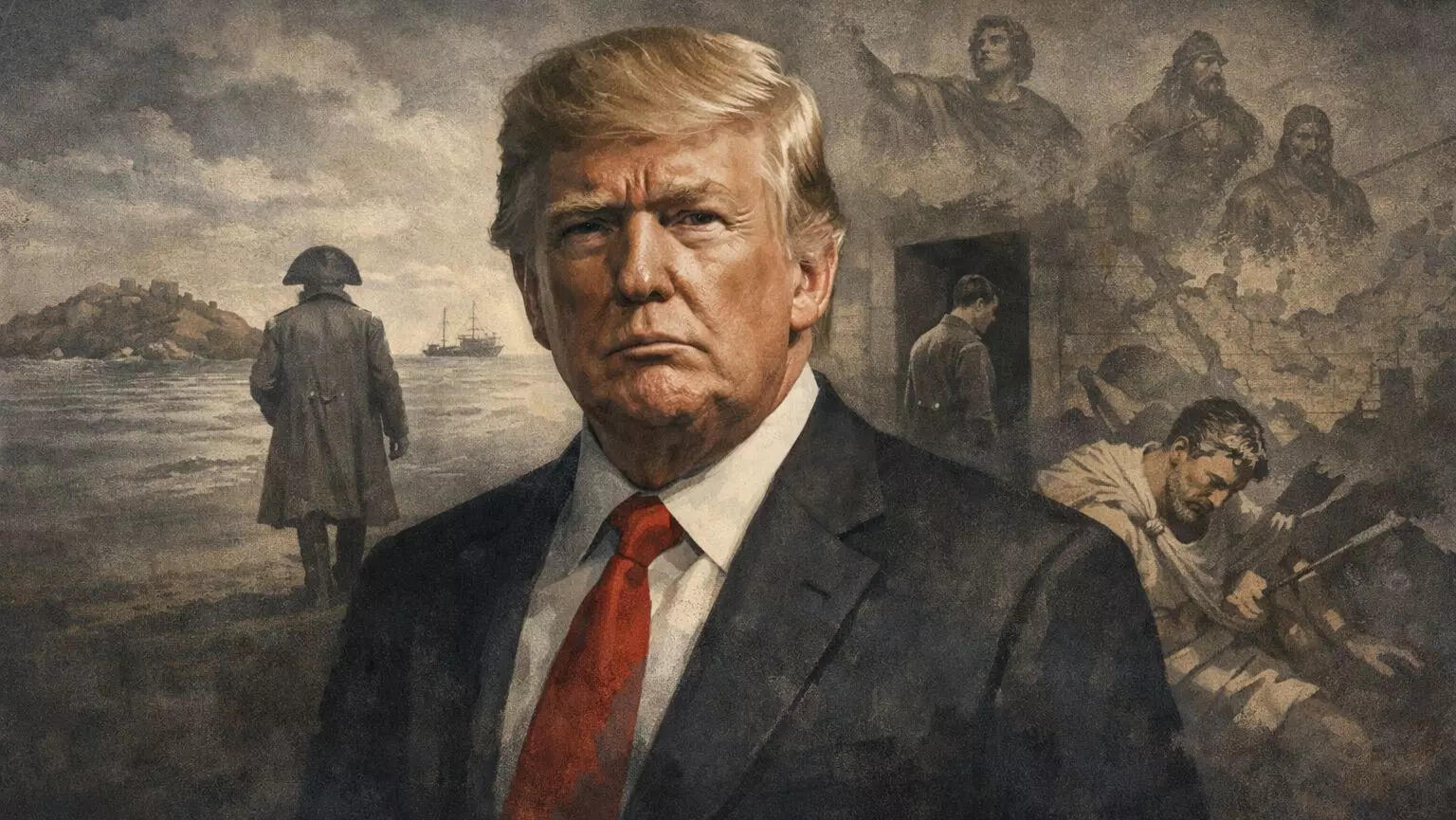
All in all, irrespective of what happens, one thing is already clear. Much like Alexander, Caesar, Genghis Khan, Napoleon, or Hitler, Donald Trump belongs to the lineage of men who bent the world around their will and forced history to organise itself in reaction to them.
But there is one crucial difference.They were all ultimately defeated. Trump was not.Alexander died undefeated but young, his empire collapsing the moment he did. Caesar was stabbed by the very republic he claimed to save. Genghis Khan’s empire fractured into khanates almost as soon as his heirs tried to rule it. Napoleon was sent into exile, returned for a hundred days, and was then exiled again, this time permanently, to rot on a distant island.
Hitler fled into a bunker and ended his reign in annihilation.
Each of them, in different ways, exited history decisively. Their power ended. Their spell broke.Trump’s did not.In 2020, he lost an election, was disgraced, impeached, indicted, banned from platforms, raided by the FBI, and written off as a relic of a deranged moment. In any other era, that would have been exile. In any other historical parallel, that would have been the end.
Napoleon never governed France again after Waterloo. Caesar never returned after the Senate turned on him. Trump survived an assassination and came back.
History usually does not grant second acts.Trump, on the other hand, was so sui generis, that he got one anyway.
And when he returned, he ensured he got the men and women who would work with him to bend the American republic – including its four estates – and by extension most of the world to his will.Where Napoleon had to escape Elba, Trump escaped something more modern and more insidious: political death by consensus. He broke the assumption that losing delegitimises you. He broke the idea that scandal exhausts a leader. He broke the notion that institutions, once activated, are irreversible.That is why 2026 matters far more than the fate of any single policy, scandal, or prize. Trump is no longer just a man in office.
He is proof of concept.Proof that exile is no longer terminal. Proof that defeat is now negotiable. Proof that modern politics rewards narrative dominance over finality.Whatever the fates have in store for Trump, they will not play out quietly or locally. They will shape how power is pursued, how institutions are tested, and how leaders across the world calculate risk. If Trump survives Epstein, the midterms, MAGA’s internal fractures, and another year without his Nobel, the lesson will be unmistakable: history’s old rules no longer apply. And that, more than Trump himself, is what the world will have to reckon with next.